



 Close Menu
 World
World
 Biography
 Health
 Education
 Business
 Lifestyle
 Sports
 Technology
 Animals
 History
 Food
Food
 Religious
 Startups
 Movies
 Politics
 Fashion
 Covid
Covid
 Diet
Diet
 Fitness
 Marketing
 Travel
 Science
 Reviews
 Social media
 Stories
 Facts
Facts
 Art
Art
 Entertainment
ServicEnsure

Marketing
Long-Tail Keywords vs Short-Tail Keywords
 ServicEnsure
Keywords are the foundation of every successful SEO strategy. They help search engines understand website content and connect businesses with potential customers searching online. However, not all keywords are the same. Understanding the difference between Long-Tail Keywords vs Short-Tail Keywords is essential for businesses looking to improve search rankings, attract qualified traffic, and increase conversions.
Both keyword types play important roles in SEO, but they serve different purposes and deliver different results. Knowing when and how to use each can significantly impact your digital marketing success.
What Are Short-Tail Keywords?
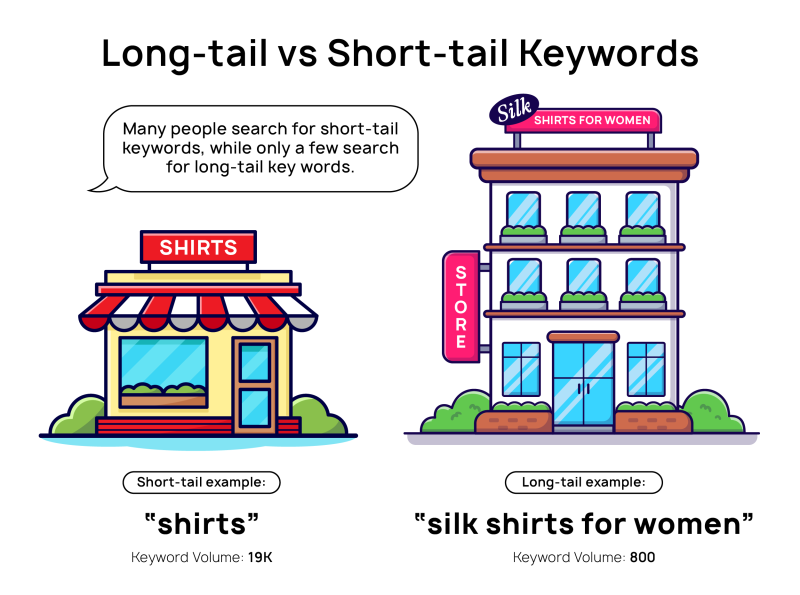
Short-tail keywords, also known as head keywords, are broad search terms that usually consist of one to three words.
Examples include:
- SEO
- Digital Marketing
- Web Design
- Google Ads
- Content Marketing
These keywords generally have high search volume because many users search for them. However, they are also highly competitive, making it difficult for businesses to rank for them, especially newer websites.
Short-tail keywords often have unclear search intent because users may be looking for information, services, products, or general knowledge.
What Are Long-Tail Keywords?
Long-tail keywords are more specific search phrases that typically contain three or more words.
Examples include:
- Best SEO services for small businesses
- How to improve website ranking on Google
- Affordable digital marketing agency for startups
- Local SEO strategies for restaurants
These keywords usually have lower search volume but attract highly targeted users with clear intent.
Long-tail keywords often generate better conversion rates because searchers know exactly what they are looking for.
Key Differences Between Long-Tail and Short-Tail Keywords
Search Volume
Short-tail keywords typically receive a large number of monthly searches because they are broad and generic.
Long-tail keywords generally have lower search volume but attract more qualified traffic.
For example:
- "SEO" may receive thousands of searches.
- "SEO services for healthcare businesses" may receive fewer searches but target a specific audience.
Competition Level
One of the biggest differences is keyword competition.
Short-tail keywords are highly competitive because many businesses target them. Ranking for these terms often requires significant SEO resources and authority.
Long-tail keywords usually face less competition, making it easier for businesses to achieve higher rankings.
Many businesses work with an experienced seo company in gurgaon to identify valuable long-tail keyword opportunities that improve organic visibility.
User Intent
Search intent is often clearer with long-tail keywords.
For example:
Short-tail keyword: "SEO"
Possible intent:
- Learn about SEO
- Find SEO services
- Read SEO guides
- Compare SEO tools
Long-tail keyword: "SEO services for local businesses"
Intent:
- Looking for an SEO service provider
Because long-tail keywords reveal stronger intent, they often attract users who are closer to making a purchasing decision.
Conversion Rates
Long-tail keywords typically generate higher conversion rates than short-tail keywords.
Users searching for specific phrases are often:
- Further along in the buying process
- More informed
- Ready to take action
For example, someone searching for "best digital marketing agency for startups" is more likely to become a lead than someone simply searching for "marketing."
This makes long-tail keywords particularly valuable for lead generation campaigns.
SEO Benefits of Long-Tail Keywords
Long-tail keywords offer several advantages:
Easier Rankings
Lower competition makes it easier for websites to rank, especially for newer businesses.
Better Targeting
They attract highly relevant visitors who match specific customer profiles.
Higher Engagement
Visitors arriving through long-tail searches often spend more time on websites because the content closely matches their needs.
Improved Conversion Potential
Specific search intent leads to better lead quality and higher conversion rates.
Businesses investing in professional seo services in gurgaon often prioritize long-tail keyword strategies to generate qualified traffic and measurable business results.
Benefits of Short-Tail Keywords
Although long-tail keywords offer many advantages, short-tail keywords remain important.
Benefits include:
- Higher search volume
- Greater brand visibility
- Broader audience reach
- Strong authority-building opportunities
Established websites often target short-tail keywords as part of a long-term SEO strategy to increase overall market visibility.
Which Keyword Type Should Businesses Focus On?
The ideal SEO strategy includes a combination of both keyword types.
Use Short-Tail Keywords For:
- Building brand awareness
- Broad industry topics
- Long-term SEO goals
- High-level category pages
Use Long-Tail Keywords For:
- Blog content
- Lead generation
- Local SEO
- Product and service pages
- Conversion-focused campaigns
Combining both approaches creates a balanced SEO strategy that supports traffic growth and business objectives.
How Long-Tail Keywords Support Modern SEO
Search behavior has evolved significantly due to voice search and AI-powered search engines. Users increasingly search using conversational and detailed phrases.
Examples include:
- "How can I improve my website's SEO?"
- "Best SEO agency for local businesses"
- "Affordable digital marketing services near me"
These natural-language searches align perfectly with long-tail keyword optimization.
As search engines become better at understanding user intent, long-tail keywords continue to grow in importance.
Conclusion
Understanding Long-Tail Keywords vs Short-Tail Keywords is crucial for developing an effective SEO strategy. While short-tail keywords offer high search volume and broader visibility, long-tail keywords provide better targeting, lower competition, and higher conversion rates.
The most successful SEO campaigns use a balanced approach that combines both keyword types to attract traffic at different stages of the customer journey. Partnering with a trusted seo company in gurgaon or leveraging professional seo services in gurgaon can help businesses identify the right keyword opportunities and create strategies that drive sustainable organic growth.
By understanding how each keyword type contributes to SEO success, businesses can improve search visibility, attract qualified leads, and achieve long-term digital marketing results.
Source:
Click for the: Full Story
You might like









You Might Like this