Close Menu
 World
World
 Biography
 Health
 Education
 Business
 Lifestyle
 Sports
 Technology
 Animals
 History
 Food
Food
 Religious
 Startups
 Movies
 Politics
 Fashion
 Covid
Covid
 Diet
Diet
 Fitness
 Marketing
 Travel
 Science
 Reviews
 Social media
 Stories
 Facts
Facts
 Art
Art
 Entertainment
ayushi rawat

Education
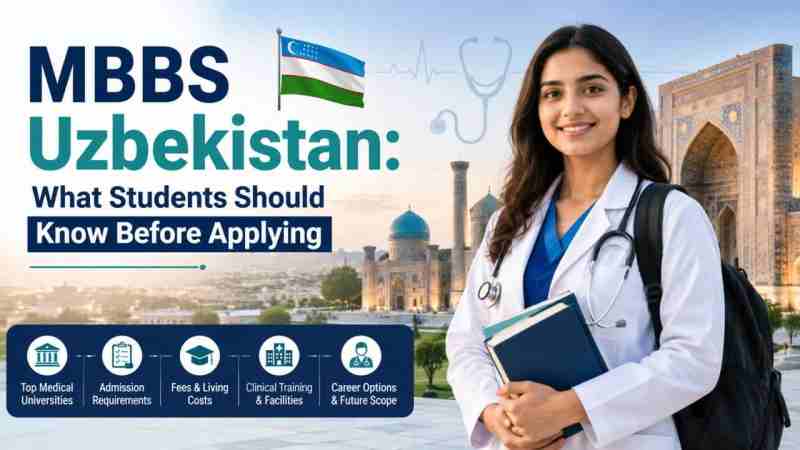
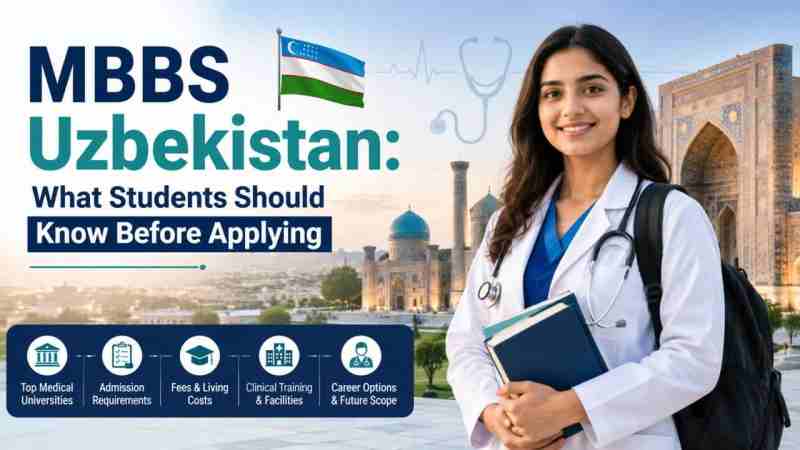
MBBS Uzbekistan: What Students Should Know Before Applying
 ayushi rawat
Choosing where to study medicine is a major decision, especially for students planning to pursue their medical education abroad. MBBS Uzbekistan has become an option worth exploring for students who want to study medicine outside India and are comparing universities, admission requirements, costs, academic standards, and future career pathways.
Uzbekistan offers medical universities with established programs for international students, including students from India. However, selecting a university should involve more than comparing tuition fees. Students should verify the university's recognition, curriculum, clinical training, admission requirements, living arrangements, and the rules that apply when they return to India.
This guide explains the important factors students should understand before applying for MBBS in Uzbekistan, helping them make a more informed decision.
Why Consider MBBS in Uzbekistan?
Uzbekistan has developed its higher-education infrastructure over the years, and medical education is one of the areas attracting international students. For many applicants, studying medicine in Uzbekistan can offer an opportunity to experience a different academic environment while pursuing a medical degree.
Some factors that make MBBS Uzbekistan worth researching include:
- Medical programs designed for international students
- Exposure to a multicultural learning environment
- Opportunities for practical and clinical education
- Relatively accessible admission processes at some institutions
- Lower overall education and living costs compared with several Western destinations
- Availability of English-taught medical programs at selected universities
However, these advantages can vary significantly between institutions. Students should therefore evaluate universities individually rather than assuming that every medical college offers the same quality or facilities.
What Should Students Check Before Applying?
Before submitting an application for MBBS from Uzbekistan, students should investigate several important areas.
1. University Recognition and Accreditation
Recognition should be one of the first things students verify. A university's name, ranking, or online popularity should not be the only basis for choosing a medical school.
Check whether the institution is appropriately recognized or accredited by the relevant authorities in Uzbekistan and whether its medical qualification fits the requirements of the country where you intend to practice.
For Indian students, this is particularly important because the requirements governing foreign medical graduates can change. Students should consult the current regulations of the National Medical Commission (NMC) and verify the university-specific requirements before enrolling.
2. Eligibility Requirements
Admission requirements depend on the university and the applicant's nationality. Students generally need to have completed the required higher-secondary education with relevant science subjects.
For Indian applicants, subjects such as Physics, Chemistry, and Biology are particularly important when assessing eligibility for medical education abroad.
Students should also check:
- Minimum academic requirements
- Age requirements
- NEET requirements applicable to Indian students
- Passport requirements
- Medical fitness requirements
- Required academic documents
- University-specific admission conditions
Because regulations can change, relying on information from old blogs or social media posts can create unnecessary problems.
3. Understand the Course Structure
Before choosing MBBS in Uzbekistan, review the curriculum carefully.
A medical degree is not simply about attending lectures. Students should understand how much time is allocated to basic sciences, pre-clinical subjects, clinical subjects, laboratory work, and hospital-based training.
Ask the university for information about:
- Total course duration
- Teaching language
- Clinical rotation structure
- Hospital affiliations
- Practical training
- Internship or clinical practice requirements
- Assessment methods
- Graduation requirements
A transparent curriculum can help students understand what their academic journey will actually look like.
4. Language of Instruction
Language is an important consideration for international medical students.
Several universities offer medical programs in English, but students should confirm exactly how much of the academic program is delivered in English. It is also useful to ask whether clinical interactions involve local languages.
Even when classroom teaching is in English, learning basic Uzbek or Russian terminology may help students communicate more effectively with patients and hospital staff during clinical exposure.
For students considering MBBS from Uzbekistan, language preparation should therefore be part of their planning rather than an afterthought.
5. Clinical Training Matters
Medical education becomes increasingly practical as students progress into clinical subjects. Therefore, students should investigate where clinical training takes place and how students are assigned to hospitals.
Important questions include:
- Which hospitals are affiliated with the university?
- When does clinical training begin?
- How much hands-on exposure do students receive?
- Are students allowed to observe or participate in clinical procedures?
- How large are the clinical groups?
- What specialties are covered?
Good clinical exposure can make a substantial difference to a student's medical education and confidence.
6. Calculate the Complete Cost
Tuition fees are only one part of the cost of studying medicine abroad.
Students planning MBBS Uzbekistan should create a realistic budget covering:
- Tuition fees
- Hostel or accommodation
- Food
- Local transportation
- Health insurance
- Visa-related expenses
- Study materials
- Travel between India and Uzbekistan
- Personal expenses
- Emergency funds
The cheapest university is not automatically the best option. A slightly higher cost may be reasonable if it provides stronger academic infrastructure, better clinical exposure, safer accommodation, or more comprehensive student support.
7. Accommodation and Student Life
Moving to another country involves more than academics. Students should investigate accommodation before travelling.
Find out whether the university provides hostels, what facilities are available, how many students share a room, whether food options are accessible, and what security arrangements are in place.
Students should also consider the local climate, transportation, cultural environment, and access to everyday necessities.
For international students, a supportive environment can make the transition to university life considerably easier.
8. Career Planning After Graduation
One of the most important questions is what happens after completing the medical degree.
Students intending to return to India must understand the current regulatory requirements for foreign medical graduates. Completing a degree abroad does not automatically mean that a graduate can begin medical practice in India.
Before choosing MBBS from Uzbekistan, students should research the applicable NMC rules, screening or licensing requirements, internship requirements, documentation, and other conditions that may apply at the time of graduation.
Students planning to work in another country should similarly investigate that country's medical licensing pathway.
Axis Institutes can be considered as one source of guidance when students are comparing their study options, but applicants should independently verify official university and regulatory information before making a final decision.
How to Choose the Right Medical University
Rather than choosing a university solely because of advertisements or low fees, create a comparison checklist.
Factor
What to Check
Recognition
Current accreditation and recognition status
Curriculum
Subjects, duration and academic structure
Language
Actual language used in teaching and clinical settings
Clinical Training
Hospitals, rotations and practical exposure
Fees
Tuition plus additional expenses
Accommodation
Hostel facilities and safety
Student Support
International student assistance
Career Path
Requirements for practicing after graduation
This approach can help students compare universities objectively.
Common Mistakes Students Should Avoid
Several mistakes can complicate the process of studying medicine abroad.
Choosing Only on the Basis of Fees
Low tuition may look attractive, but academic quality, clinical exposure, recognition, and student support should carry equal or greater importance.
Relying on Outdated Information
Admission rules and medical licensing regulations can change. Always verify important requirements through current official sources.
Ignoring Clinical Exposure
A medical degree requires practical learning. Students should investigate hospital training before enrolling.
Not Reading the University Agreement
Students should understand the fee structure, refund policies, academic requirements, accommodation terms, and other conditions before making payments.
Assuming Graduation Guarantees Medical Registration
A foreign medical degree is only one part of the process. Licensing and registration requirements must be checked separately.
Is MBBS Uzbekistan a Good Option?
There is no single answer that applies to every student. MBBS Uzbekistan may be worth considering for students who want an international medical education and have carefully evaluated the university, curriculum, clinical training, costs, and future licensing requirements.
The right decision depends on the student's academic goals, financial circumstances, preferred learning environment, and long-term career plans.
Students should compare multiple universities, verify current regulations, speak with existing students where possible, and review official documentation before paying any admission-related fees.
Final Thoughts
Choosing MBBS in Uzbekistan should be treated as a long-term academic and career decision rather than simply an overseas study opportunity. University recognition, curriculum quality, clinical exposure, teaching language, total cost, accommodation, and post-graduation licensing requirements all deserve careful consideration.
Students researching MBBS Uzbekistan should take time to verify every important detail from reliable and current sources. Guidance from education consultants such as Axis Institutes may help applicants understand the application process, but students should still independently confirm university and regulatory information before making their final decision.
A well-researched choice at the beginning can help students avoid costly complications later and approach their medical education with greater confidence.
Frequently Asked Questions
1. Is MBBS Uzbekistan suitable for Indian students?
MBBS Uzbekistan can be an option for Indian students, but eligibility and future practice requirements should be checked carefully. Students should verify the university's current recognition status and applicable NMC requirements before applying.
2. What should I check before applying for MBBS in Uzbekistan?
Students should check university recognition, curriculum, teaching language, clinical training, total costs, accommodation, admission requirements, and the medical licensing rules applicable after graduation.
3. Is NEET required for Indian students planning to study MBBS abroad?
Indian students should check the current NMC rules and applicable admission requirements before applying. NEET-related eligibility requirements for studying medicine abroad can be subject to regulatory changes.
4. Is MBBS from Uzbekistan valid in India?
The validity of a foreign medical qualification for practice in India depends on meeting the applicable regulatory requirements. Students should review the latest NMC rules rather than relying on general claims about recognition.
5. How can students choose the right MBBS university in Uzbekistan?
Compare universities based on recognition, curriculum, clinical exposure, teaching language, facilities, total costs, accommodation, student support, and future licensing requirements. Independent verification is essential before enrollment.
For More Information Click Here:- https://www.axisinstitutes.com/mbbs-from-uzbekistan
Source:
Click for the: Full Story
You might like