



 Close Menu
 World
World
 Biography
 Health
 Education
 Business
 Lifestyle
 Sports
 Technology
 Animals
 History
 Food
Food
 Religious
 Startups
 Movies
 Politics
 Fashion
 Covid
Covid
 Diet
Diet
 Fitness
 Marketing
 Travel
 Science
 Reviews
 Social media
 Stories
 Facts
Facts
 Art
Art
 Entertainment
IT TEAM

Education
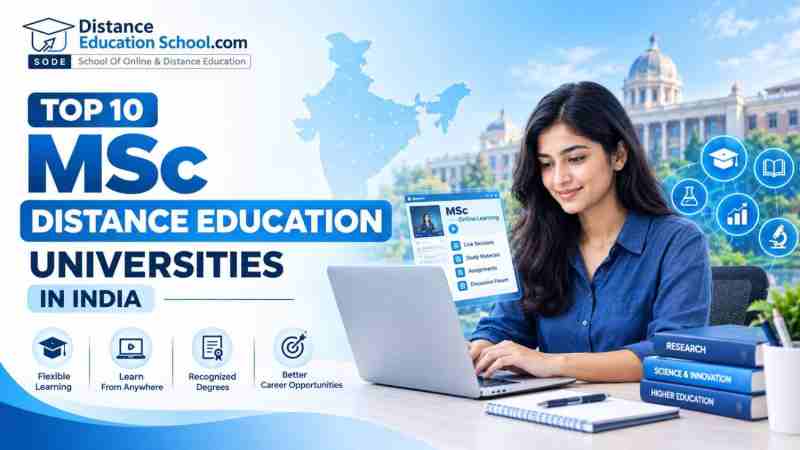
MSc Distance Education Universities in India: How to Choose the Right University
 IT TEAM
Choosing the right postgraduate science program is not only about finding a well-known university. Students looking for MSc Distance Education Universities should also compare the specialization, eligibility, learning resources, practical exposure, fee structure, examination process, and career relevance of each program.
Distance MSc programs can be useful for graduates and working professionals who want to continue higher education without following a conventional classroom schedule. Different universities offer different subject areas, so the right choice depends on the student's academic background and long-term career objective.
Searches such as best MSc colleges in India, top science colleges in India, and top MSc colleges in India can produce a large number of options. However, students interested specifically in distance education should narrow the comparison to universities that offer the required MSc program through an appropriate recognized mode.
Overview of MSc Distance Education Universities
Factor What to Compare University Institution offering the distance MSc program Specialization Subject or MSc discipline available Eligibility Required bachelor's degree and subject background Duration Program duration and applicable completion period Learning Resources Study materials, digital content and academic support Practical Exposure Projects, practical activities, labs or other academic requirements Fees Tuition and other applicable charges Career Relevance Alignment between the specialization and intended career What Is MSc Distance Education?
MSc Distance Education is a postgraduate Master of Science program delivered through a distance learning format. Students generally study through university-provided academic materials and learning resources rather than attending regular classroom sessions.
Depending on the university and subject, learning may include printed study materials, digital resources, online academic platforms, assignments, examinations, projects, practical activities, or other academic components.
The exact structure differs between universities and specializations. Therefore, students should check the current program information before applying.
Why Consider Distance MSc Universities?
A distance MSc can provide flexibility to graduates who want to continue higher education while managing work, personal responsibilities, or other commitments.
Flexible Study Schedule
Students can organize their study time around their existing schedule instead of attending regular physical classes every day.
Continue Working While Studying
Working professionals can potentially continue their employment while pursuing postgraduate science education, subject to their ability to manage academic requirements.
Multiple Science Disciplines
Different universities offer MSc programs in different areas. Students can therefore compare institutions according to their preferred subject rather than selecting a university first and specialization later.
Independent Learning
Distance education requires students to take responsibility for reading, revision, assignments, examinations, and other academic requirements. This can help develop independent study habits.
Top 10 Distance MSc Universities to Consider
The following universities are presented on the referenced Distance Education School page as a 10-university shortlist for distance MSc options. Students should treat the list as a starting point for comparison rather than assuming that one university is universally the best for every student.
University MSc Areas Mentioned Location Lovely Professional University Information Technology Phagwara, Punjab Mangalayatan University MSc programs Aligarh, Uttar Pradesh IGNOU Dietetics, Food Service Management, Counselling and Family Therapy New Delhi University of Mumbai Mathematics and Information Technology Mumbai, Maharashtra Karnataka State Open University Mathematics, Computer Science and Environmental Science Mysore, Karnataka Nalanda Open University Environmental Science, Geography and Botany Patna, Bihar Andhra University Psychology, Zoology, Botany, Organic Chemistry and Physics Visakhapatnam, Andhra Pradesh Bharathiar University Mathematics, Environmental Sciences and Computer Science Coimbatore, Tamil Nadu Osmania University Mathematics and Statistics Hyderabad, Telangana Sri Venkateswara University Mathematics, Computer Science and Chemistry Tirupati, Andhra Pradesh How to Choose Among MSc Colleges in India?
Students searching for MSc colleges in India should first identify whether they want a regular, online, or distance learning format. Once the learning mode is decided, the comparison becomes more specific.
Start With Your Bachelor's Background
Your undergraduate subject combination can influence which MSc programs you are eligible for. A student with a mathematics background may consider Mathematics or Statistics, while another graduate may be interested in computer science, environmental science, or another discipline where the eligibility requirements are satisfied.
Identify the Desired Specialization
The specialization should be one of the first filters when comparing universities. There is little value in choosing a highly reputed institution if it does not offer the subject you want to study through the required mode.
Compare the Curriculum
Review the syllabus and identify core subjects, electives, practical components, projects, research-related subjects, and other academic requirements.
Evaluate Learning Resources
Distance learners depend heavily on academic resources. Check whether the university provides printed materials, e-books, digital learning content, online platforms, recorded resources, or other forms of academic support.
Best MSc Colleges in India: What Does "Best" Mean?
The term best MSc colleges in India can mean different things to different students. One learner may prioritize academic reputation, another may focus on affordability, while a working professional may give greater importance to flexibility.
A better approach is to define your own selection criteria before comparing universities.
Student Priority What to Focus On Affordable Education Total program fee and payment structure Working Professional Flexibility and learning resources Science Career Subject depth and practical components Technology Career Computer science, IT, data or related curriculum Research Interest Research-oriented subjects and project opportunities Career Switch Eligibility and relevance of the new specialization Top Science Colleges in India vs Distance MSc Universities
Students often search for top science colleges in India when looking for postgraduate education. However, a ranking or reputation associated with traditional campus education does not automatically determine whether a university is the right choice for distance learning.
For distance education, students should specifically evaluate the institution's distance learning structure, available MSc programs, study resources, assessment system, practical requirements, and applicable recognition for the academic session.
This distinction is particularly important for students who want flexibility instead of conventional campus attendance.
How Specialization Should Influence Your Choice
MSc Mathematics
Students interested in mathematical modelling, teaching, statistics, analytics, or further academic study may consider programs focused on mathematics. The curriculum and eligibility requirements should be checked carefully before admission.
MSc Computer Science or Information Technology
Students interested in software, systems, technology, databases, or computing careers can compare programs that offer computer science or IT-related MSc options.
MSc Environmental Science
Environmental science can be relevant to students interested in sustainability, environmental assessment, conservation, and related areas. Practical and field-related requirements should be reviewed before selecting a distance program.
MSc Chemistry
Chemistry-focused programs can suit learners planning careers or further study in chemical sciences. Students should pay particular attention to practical and laboratory requirements.
MSc Physics
Students interested in physical sciences should compare the curriculum, practical requirements, project structure, and eligibility conditions of available programs.
Can Distance MSc Provide Practical Learning?
Practical learning is an important consideration when selecting a science postgraduate program. Unlike purely theoretical subjects, many science disciplines involve laboratory, experimental, field, or project-based work.
The practical structure can vary significantly between universities and subjects. Students should check whether the selected program includes practical sessions, projects, laboratory arrangements, contact components, virtual resources, or other academic alternatives.
A student should not assume that every distance MSc program provides the same practical experience.
MSc Fees and Budget Planning
Fees differ between universities and programs. Students should compare the complete cost rather than relying only on the first semester's advertised amount.
The financial comparison can include tuition, registration, examination charges, study materials, project-related costs, and other university-specific expenses.
Students should also check the payment schedule and determine whether fees are payable semester-wise, annually, or according to another structure.
Eligibility for Distance MSc
MSc eligibility depends on the university and specialization. Some programs may require a bachelor's degree in a particular subject or subject combination, while others may have broader eligibility requirements.
Students should therefore verify the exact academic requirements of the selected MSc program rather than assuming that graduation in any discipline will qualify them.
How to Compare the Top MSc Colleges in India
- Choose the learning mode: Decide whether distance education fits your academic and professional requirements.
- Shortlist specializations: Identify the science subject you want to study.
- Check eligibility: Confirm that your bachelor's background meets the program requirements.
- Compare universities: Review curriculum, learning resources, fees, and academic support.
- Review practical requirements: Check laboratory, project, fieldwork, or other practical components.
- Verify recognition: Confirm the institution and specific program for the academic session before admission.
- Evaluate career relevance: Select the program that fits your intended career or further-study plan.
Career Opportunities After Distance MSc
Career opportunities depend on the chosen specialization, technical or subject-specific skills, experience, projects, and employer requirements. Depending on the subject, graduates may explore opportunities in education, research support, laboratories, IT, analytics, environmental services, scientific organizations, technical roles, and other related areas.
Students planning to enter specialized industries should also identify the additional certifications, practical experience, technical tools, or professional qualifications that may be expected for their target roles.
Common Mistakes When Choosing MSc Distance Education Universities
- Choosing a university only because it appears in a "top" list.
- Ignoring the specific MSc specialization.
- Assuming every university has identical eligibility requirements.
- Comparing only tuition fees.
- Ignoring practical or laboratory requirements.
- Not checking the learning resources.
- Failing to verify current recognition for the intended academic session.
- Choosing a specialization without considering career relevance.
Conclusion
Choosing among MSc Distance Education Universities requires a subject-focused approach. Instead of simply searching for the best MSc colleges in India or the top science colleges in India, students should first identify the specialization and learning format that match their goals.
The current 10-university shortlist provides options across areas such as Information Technology, Mathematics, Computer Science, Environmental Science, Chemistry, Physics, Geography, Botany, Statistics, and other MSc disciplines. The right university will depend on the student's academic background, preferred specialization, budget, learning requirements, and career plans.
Before admission, compare the complete curriculum, eligibility, fees, study resources, practical requirements, examinations, and applicable recognition for the intended academic session. A careful comparison can help students choose an MSc distance learning program that is academically suitable and aligned with their long-term goals.
Frequently Asked Questions (FAQs)
1. What are MSc Distance Education Universities?
MSc Distance Education Universities are institutions that offer Master of Science programs through a distance learning format. Students generally study using university-provided academic resources and complete the required assessments and academic activities.
2. Which universities are included among the top 10 distance MSc options?
The referenced list includes Lovely Professional University, Mangalayatan University, IGNOU, University of Mumbai, Karnataka State Open University, Nalanda Open University, Andhra University, Bharathiar University, Osmania University, and Sri Venkateswara University.
3. How do I choose the best MSc college in India for distance education?
Compare the specialization, eligibility, curriculum, learning resources, practical requirements, fees, examination structure, recognition status, and career relevance instead of relying only on university rankings or popularity.
4. Is a distance MSc suitable for working professionals?
It can be suitable for professionals who need a flexible learning format. Students should still consider the time required for assignments, examinations, projects, practical requirements, and independent study.
5. How can I verify the recognition of an MSc distance program?
Students should verify the university and specific program for the academic session in which they intend to enroll. The UGC Distance Education Bureau provides the relevant recognition information for ODL and online programs.
6. Are all distance MSc programs two years long?
Many MSc distance programs are structured over two years, but the exact duration and maximum completion period can vary by university and program. Students should check the current academic structure before admission.
7. Do distance MSc programs include practical or laboratory work?
Practical requirements depend on the specialization and university. Science subjects may have different laboratory, project, fieldwork, or other practical arrangements, so students should check these requirements before enrollment.
8. What factors matter most when comparing MSc colleges in India?
The most useful factors include specialization, eligibility, curriculum, learning resources, practical exposure, total fees, examination structure, recognition, and career relevance.
Source:
Click for the: Full Story
You might like





You Might Like this