Close Menu
 World
World
 Biography
 Health
 Education
 Business
 Lifestyle
 Sports
 Technology
 Animals
 History
 Food
Food
 Religious
 Startups
 Movies
 Politics
 Fashion
 Covid
Covid
 Diet
Diet
 Fitness
 Marketing
 Travel
 Science
 Reviews
 Social media
 Stories
 Facts
Facts
 Art
Art
 Entertainment
Mark Taylor

Technology
Multi-State Payroll Compliance Challenges and How to Overcome Them
 Mark Taylor
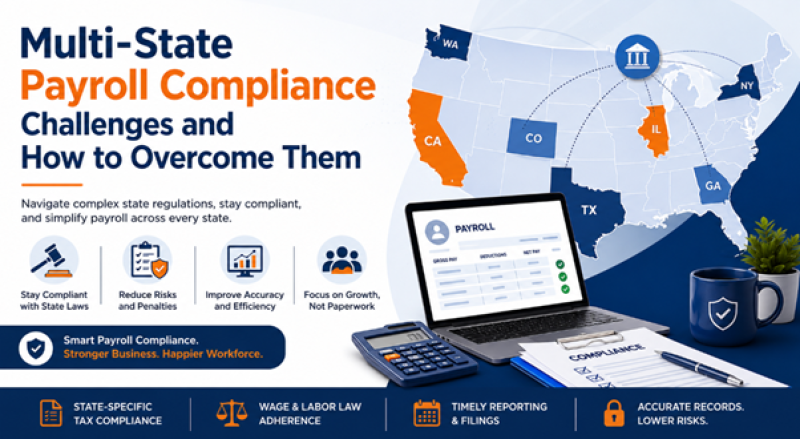
As businesses expand across different states, managing payroll becomes far more complex than simply processing employee salaries. Every state has its own employment laws, tax regulations, wage requirements, leave policies, and reporting obligations. Even a small compliance mistake can result in financial penalties, legal disputes, and employee dissatisfaction. For organizations with a distributed workforce, understanding multi-state payroll compliance is no longer optional—it's a business necessity.
Why Multi-State Payroll Compliance Is Challenging
One of the biggest hurdles is the variation in state-specific payroll laws. Each state may have different income tax rules, minimum wage rates, overtime regulations, and final paycheck requirements. For companies operating in multiple locations, keeping track of these differences manually can quickly become overwhelming.
Remote and hybrid work models have further increased compliance risks. Employees often work from states where the company may not have initially planned operations. This creates additional payroll tax obligations and may require employer registrations in new jurisdictions.
Another challenge is managing payroll documentation and reporting deadlines. Missing tax filing dates or submitting incorrect employee information can attract audits and penalties. Businesses must also stay updated with frequent legislative changes that impact payroll processing.
Common Compliance Challenges
Businesses managing payroll across multiple states often encounter:
- Different state income tax withholding requirements
- State-specific minimum wage and overtime regulations
- Paid leave mandates that vary by location
- Workers' compensation and unemployment insurance compliance
- Local payroll taxes applicable in certain cities or counties
- Employee classification issues for contractors and full-time workers
- Accurate payroll reporting for remote employees
Ignoring these compliance requirements can lead to expensive corrections and damage an organization's reputation.
How to Overcome Multi-State Payroll Compliance Challenges
- Stay Updated with State Regulations
Payroll laws frequently change throughout the year. Businesses should regularly monitor updates related to tax rates, labor laws, and employee benefit requirements in every state where they operate.
- Use Automated Payroll Software
Modern payroll solutions automatically calculate taxes, generate reports, and apply state-specific rules. Automation significantly reduces manual errors while improving payroll accuracy and processing speed.
- Standardize Payroll Processes
Creating standardized payroll procedures ensures consistency across locations. Clearly documented workflows help HR and finance teams process payroll accurately while maintaining compliance.
- Maintain Accurate Employee Records
Employee addresses, work locations, tax forms, and employment status should always remain updated. Accurate records help determine the correct tax jurisdiction and reduce reporting errors.
- Conduct Regular Payroll Audits
Periodic payroll audits help identify discrepancies before they become costly compliance issues. Reviewing payroll calculations, tax filings, and employee classifications strengthens internal controls.
- Partner with Payroll Compliance Experts
Many growing businesses choose professional payroll outsourcing and compliance specialists to manage complex multi-state payroll requirements. Experienced providers stay updated with changing regulations, reduce compliance risks, and ensure timely payroll processing while allowing HR teams to focus on strategic business initiatives.
The Business Advantage of Proactive Compliance
Effective multi-state payroll compliance goes beyond avoiding penalties. It improves employee trust by ensuring timely and accurate salary payments, strengthens operational efficiency, and supports business expansion into new markets without unnecessary administrative burdens.
As workforce mobility continues to increase, businesses need scalable payroll systems that adapt to changing regulations. Investing in reliable payroll technology and expert compliance support helps organizations remain compliant while simplifying payroll management across multiple states.
By implementing standardized processes, leveraging automation, and working with experienced payroll professionals, companies can confidently navigate multi-state payroll complexities and maintain full regulatory compliance as they continue to grow.
Source:
Click for the: Full Story
You might like