Close Menu
 World
World
 Biography
 Health
 Education
 Business
 Lifestyle
 Sports
 Technology
 Animals
 History
 Food
Food
 Religious
 Startups
 Movies
 Politics
 Fashion
 Covid
Covid
 Diet
Diet
 Fitness
 Marketing
 Travel
 Science
 Reviews
 Social media
 Stories
 Facts
Facts
 Art
Art
 Entertainment
Sakshi Padiyar

Education
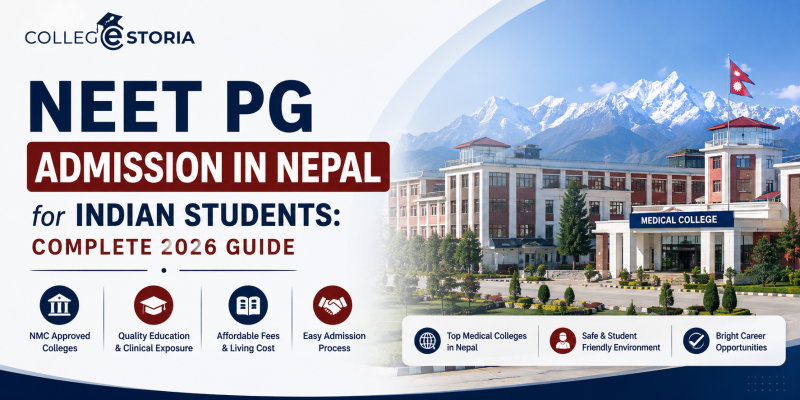
NEET PG Admission in Nepal for Indian Students: Complete 2026 Guide
 Sakshi Padiyar
For Indian medical graduates, pursuing postgraduate medical education in Nepal can be an option worth exploring when they are considering MD/MS opportunities outside India. Nepal has established medical institutions offering postgraduate programmes, and its Medical Education Commission (MEC) regulates the admission and matching process for medical education programmes.
However, NEET PG Admission in Nepal should not be understood as the same process as postgraduate admission in India. Indian students need to understand Nepal's eligibility requirements, foreign-candidate category, entrance examination or applicable selection route, matching process, documents, fees, and the implications of obtaining a foreign postgraduate qualification before making a decision.
This guide explains the important aspects of pursuing postgraduate medical education in Nepal in 2026.
Can Indian Students Pursue MD/MS in Nepal?
Indian medical graduates may explore postgraduate medical programmes in Nepal under the applicable foreign-candidate admission provisions.
Nepal's Medical Education Commission has published specific notices and admission information for foreign candidates applying to postgraduate-level health professional programmes. The MEC's records also show foreign candidates participating in postgraduate admission and matching for MD/MS programmes.
However, eligibility is not automatically granted simply because a candidate has an MBBS degree from India. Students must satisfy the requirements applicable to foreign candidates for the relevant admission cycle.
Therefore, candidates should verify the latest MEC notification before applying.
How Does PG Admission in Nepal Work for Indian Students?
The postgraduate admission process in Nepal is administered through the country's medical education framework rather than India's MCC counselling system.
MEC's examination directorate describes a common postgraduate entrance examination and a merit-based computer matching system for medical education programmes.
A general admission journey may involve:
- Checking foreign-candidate eligibility
- Completing the required application
- Appearing in the applicable entrance examination, if required
- Obtaining the required rank or eligibility
- Participating in priority setting or matching
- Receiving a matched programme and institution
- Completing document verification
- Paying applicable fees
- Completing admission and joining formalities
The exact process for 2026 should be checked against the latest MEC notification because foreign-candidate categories and admission procedures can vary between admission cycles.
What Is MECEE-PG?
MECEE-PG refers to Nepal's Medical Education Commission common entrance examination at the postgraduate level.
MEC's examination directorate states that its common entrance examination is intended to cover postgraduate programmes and uses merit-based selection through a computer matching system.
For Indian students, it is important to determine whether they fall under a foreign category that requires participation in the relevant entrance examination or another route specified by MEC for that particular admission year.
MEC has previously published separate notices for foreign candidates and different foreign sub-categories, including candidates who appear in MECEE-PG and foreign candidates who may fall under another applicable category.
This is why students should not rely on an old admission process when planning for 2026.
Eligibility for Indian Students
Eligibility requirements can depend on the programme and foreign-candidate category.
Before applying, Indian medical graduates should verify requirements relating to:
- MBBS or equivalent medical qualification
- Medical registration
- Internship completion
- Academic qualifications
- Applicable entrance examination
- Foreign-candidate category
- Required certificates
- Passport and identity documentation
- Any additional conditions specified by MEC
MEC's online registration instructions indicate that applicants may need documents such as academic transcripts, professional council registration certificates, passport/Aadhaar documentation for foreigners, photographs, and signatures.
The final document list should always be checked in the official 2026 admission notice.
Do Indian Students Need NEET PG for Nepal?
This is an important distinction.
Indian students planning postgraduate medical education in Nepal should not assume that India's NEET PG counselling process directly determines admission to Nepalese medical colleges.
Nepal has its own postgraduate medical admission framework through MEC, including its common entrance and matching mechanisms.
Therefore, students should check the latest MEC rules to determine the entrance and eligibility requirements applicable to Indian or other foreign candidates for the specific 2026 programme.
In other words, Admission in NEET PG is not simply an extension of MCC counselling in India.
What Is the Matching Process?
After the relevant examination and ranking process, Nepal's postgraduate admission system can involve priority setting and computer-based matching.
MEC describes selection among candidates and their choices through a computer matching system.
This means students should research their preferred institutions and specialities before submitting their preferences.
Your decision should consider:
- Preferred speciality
- Medical college
- Hospital exposure
- Location
- Fees
- Academic environment
- Career plans
- Recognition and future registration requirements
Don't select a speciality or institution simply because it appears available.
Which MD/MS Specialities Can Indian Students Explore?
The exact programmes and seats available to foreign candidates can vary each year.
Depending on the institutions and admission cycle, postgraduate medical education in Nepal may include different clinical and non-clinical specialities.
Students should check the official seat matrix and foreign-candidate notices for the relevant year before preparing their preference list.
Some commonly known MD/MS areas may include:
- MD Internal Medicine
- MD Paediatrics
- MD Dermatology
- MD Radiodiagnosis
- MD Psychiatry
- MD Anaesthesiology
- MD Pathology
- MS General Surgery
- MS Orthopaedics
- MS Obstetrics and Gynaecology
- Other approved postgraduate disciplines
The actual availability should be confirmed from the latest MEC seat information rather than assumed from previous years.
How Much Does MD/MS in Nepal Cost?
The total cost of postgraduate education in Nepal depends on the institution, speciality, candidate category, and applicable fee structure.
Foreign students should calculate the complete financial requirement before accepting admission.
Consider:
- Tuition fees
- University or institutional charges
- Hostel expenses
- Examination fees
- Registration charges
- Security deposits
- Food and living expenses
- Travel expenses
- Other applicable costs
Do not make a decision based only on the advertised tuition fee.
Ask the institution or relevant authority for the applicable fee structure for foreign candidates.
What Documents Are Required?
The exact requirements depend on the admission category and programme.
Indian students should generally be prepared to provide documents such as:
- MBBS degree or provisional certificate
- MBBS marksheets
- Internship completion certificate
- Medical registration certificate
- Academic transcript
- Passport
- Recent photographs
- Entrance examination documents, where applicable
- Professional council registration
- Other certificates specified by MEC
- Admission or matching documents
MEC's registration instructions specifically list academic transcripts, professional council registration, passport/Aadhaar documentation for foreigners, photographs, and signatures among the documents that may be required during online registration.
Why Should Indian Students Check Recognition Before Admission?
This is one of the most important considerations.
Getting admission to a foreign medical postgraduate programme and being able to use that qualification for medical practice in India are related but separate questions.
Indian students should verify the applicable requirements with the National Medical Commission before enrolling.
NMC advises students to exercise due diligence when choosing foreign medical institutions and has emphasised that foreign medical education must comply with applicable regulatory requirements for recognition and registration in India.
Therefore, before paying any admission fee, confirm:
- Institution status
- University affiliation
- Programme details
- Course duration
- Clinical training
- Internship or training structure
- Applicable Indian registration requirements
- Whether the qualification meets the relevant Indian regulatory requirements
Do not rely solely on statements from agents or promotional websites.
Nepal vs India for PG Medical Admission
Students considering NEET PG Admission in India and Nepal should compare both options based on their individual circumstances.
India offers a large postgraduate medical education system with government, private, deemed, and other institutions. Nepal can provide another international option for eligible students, but the admission and regulatory framework is different.
Compare:
Admission process:
India and Nepal follow different postgraduate admission systems.
Fees:
Compare the complete course cost rather than only tuition.
Clinical exposure:
Evaluate hospital infrastructure and patient exposure.
Speciality availability:
Check whether your preferred MD/MS branch is available to foreign candidates.
Recognition:
Understand the rules applicable to practising in India after completing a foreign postgraduate qualification.
Location:
Consider travel, accommodation, and family requirements.
The right choice depends on your academic goals, budget, speciality preference, and long-term career plans.
Common Mistakes Indian Students Should Avoid
Assuming NEET PG Alone Guarantees Admission
Nepal has its own admission framework, and students must follow the applicable MEC requirements.
Relying on Old Admission Rules
Foreign-candidate categories and seat procedures can change. Always check the latest MEC notice.
Choosing a College Without Checking Recognition
Verify the institution and postgraduate programme before paying any amount.
Ignoring the Total Cost
Include tuition, hostel, living, travel, examination, and other applicable expenses.
Focusing Only on Admission
Think beyond getting a seat. Consider clinical training, speciality, career plans, and future registration requirements.
Trusting Guaranteed-Admission Claims
Be cautious about anyone promising a guaranteed MD/MS seat without following the prescribed process.
How Collegestoria Helps Indian Students
For Indian medical graduates, choosing between postgraduate options in India and Nepal can be complicated because the admission procedures, eligibility requirements, fees, seat categories, and regulatory considerations are different.
Collegestoria helps students explore suitable options for NEET PG Admission in Nepal and NEET PG Admission in India based on their NEET PG profile, preferred speciality, budget, and location preferences.
The team can help students with:
- Understanding available MD/MS options
- Exploring suitable medical colleges
- Comparing admission routes
- Understanding eligibility requirements
- Reviewing fee structures
- Understanding application and counselling procedures
- Preparing admission documents
- Comparing India and Nepal options
- Understanding important admission considerations before making a decision
The aim is to help students make an informed choice rather than selecting a postgraduate programme solely because a seat is available.
Final Takeaway
NEET PG Admission in Nepal for Indian Students can be an option for medical graduates looking beyond India's postgraduate medical admission system. However, it requires careful research because Nepal has its own Medical Education Commission, foreign-candidate categories, entrance requirements, matching procedures, and admission rules.
Before applying for 2026, candidates should verify their eligibility, understand the applicable MEC admission route, check available MD/MS seats, compare colleges and fees, prepare documents, and confirm the regulatory implications of the qualification in India.
Most importantly, don't choose a postgraduate medical college simply because admission appears easier. Consider the speciality, clinical exposure, academic environment, total cost, institutional status, and your long-term career plans.
For students comparing NEET PG Admission in India with postgraduate opportunities in Nepal, professional guidance and verification from the relevant authorities can help make the decision more informed.
Frequently Asked Questions
1. Can Indian students pursue MD/MS in Nepal?
Yes, Indian students can explore postgraduate medical programmes in Nepal under the applicable foreign-candidate rules and eligibility requirements. MEC has published specific information for foreign postgraduate applicants.
2. Is NEET PG required for MD/MS admission in Nepal?
India's NEET PG counselling process does not itself determine admission to Nepal. Nepal has its own MEC postgraduate admission framework. Indian candidates should check the applicable 2026 foreign-candidate requirements before applying.
3. What is MECEE-PG?
MECEE-PG is Nepal's common entrance examination framework for postgraduate health professional education. MEC describes merit-based selection and computer matching as features of its postgraduate entrance system.
4. Can Indian students apply as foreign candidates?
Indian applicants may apply under the foreign-candidate provisions applicable to their programme and admission cycle. MEC has previously published separate notices and categories for foreign postgraduate candidates.
5. Is a Nepalese MD/MS degree valid in India?
Students should not assume automatic recognition. Before admission, Indian graduates should verify the applicable NMC rules and registration requirements for the specific foreign postgraduate qualification and institution. NMC advises students to conduct due diligence when pursuing medical education abroad.
Source:
Click for the: Full Story
You might like