Close Menu
 World
World
 Biography
 Health
 Education
 Business
 Lifestyle
 Sports
 Technology
 Animals
 History
 Food
Food
 Religious
 Startups
 Movies
 Politics
 Fashion
 Covid
Covid
 Diet
Diet
 Fitness
 Marketing
 Travel
 Science
 Reviews
 Social media
 Stories
 Facts
Facts
 Art
Art
 Entertainment
Sakshi Padiyar

Education
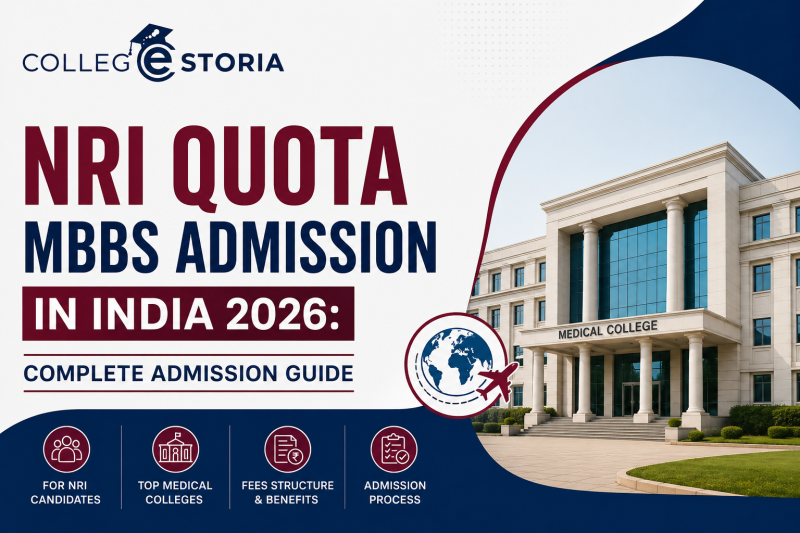
NRI Quota MBBS Admission in India 2026: Complete Admission Guide
 Sakshi Padiyar
An MBBS seat is not determined by NEET rank alone. Every year, many eligible students secure admission through different counselling categories, including the NRI quota. However, confusion about eligibility, sponsorship rules, required documents, and counselling procedures often prevents deserving candidates from making informed decisions.
If you are exploring NRI Quota Admission in India for the 2026 academic session, this guide explains the complete admission process, eligibility criteria, important documents, counselling procedure, and common mistakes to avoid. Whether you are an NRI student or an Indian student sponsored by an eligible NRI relative, understanding the process can improve your chances of securing an MBBS seat in a recognised medical college.
What is NRI Quota Admission in India?
NRI Quota Admission in India refers to a reserved category of seats offered by many private and deemed medical colleges for eligible Non-Resident Indians (NRIs), Overseas Citizens of India (OCI), Persons of Indian Origin (where applicable under current regulations), and candidates sponsored by eligible NRI relatives as permitted by the counselling authority.
Admission under the NRI quota is conducted through the official counselling process. Students must qualify NEET and satisfy the eligibility requirements prescribed by the concerned counselling authority and medical institution.
It is important to understand that an NRI quota seat is not a direct admission. Candidates must participate in counselling and complete all required formalities before a seat can be allotted.
Who Can Apply Under the NRI Quota?
Eligibility may differ slightly across counselling authorities and states, but candidates generally fall into one of the following categories:
- Non-Resident Indian (NRI) candidates.
- Overseas Citizen of India (OCI), where applicable under current admission rules.
- Children of NRIs.
- Wards sponsored by eligible NRI relatives, subject to the counselling authority's guidelines.
- Candidates who have qualified NEET UG 2026.
Since eligibility requirements may change, students should always verify the latest counselling notification before applying.
Why Do Students Choose the NRI Quota?
Many families explore the NRI Quota Admission in India route because it offers access to quality private medical colleges through a dedicated category of seats.
Some of the common reasons include:
- Opportunity to study in recognised medical colleges in India.
- Transparent counselling-based admission process.
- Access to modern teaching hospitals and clinical training.
- Availability of seats in reputed private and deemed universities.
- An alternative admission pathway for eligible candidates.
For many families living abroad, this option allows students to complete their MBBS education closer to home while benefiting from India's well-established medical education system.
Step-by-Step Process for NRI Quota MBBS Admission
Understanding the counselling process in advance helps students avoid last-minute confusion.
Step 1: Qualify NEET UG 2026
Every candidate seeking MBBS Admission in India under the NRI quota must first qualify the NEET examination.
Without a valid NEET score, admission is not possible under any recognised MBBS programme.
Step 2: Verify Your Eligibility
Before registering for counselling, ensure that you satisfy the applicable NRI eligibility criteria.
Students should also confirm whether their relationship with the sponsoring NRI relative meets the requirements specified by the counselling authority.
Keeping these details clear beforehand prevents complications during document verification.
Step 3: Register for Counselling
Eligible candidates must register through the appropriate counselling authority.
Depending on the medical college, admissions may take place through:
- MCC counselling for deemed universities.
- State counselling authorities for private medical colleges.
- Other authorised counselling bodies as applicable.
Always complete registration before the deadline and carefully review every detail entered in the application.
Step 4: Prepare Your Documents
One of the most important stages of Quota Admission in India is document verification.
Students should arrange the following documents well in advance:
- NEET UG scorecard
- NEET admit card
- Class 10 certificate
- Class 12 marksheet
- Passport of the NRI sponsor (where applicable)
- Proof of NRI status
- Relationship certificate between candidate and sponsor
- Sponsorship affidavit (if required)
- Passport-size photographs
- Valid identity proof
- Other documents specified by the counselling authority
Submitting complete and accurate documents helps avoid unnecessary delays.
Step 5: Fill College Preferences
During counselling, candidates are required to fill their preferred colleges.
While selecting colleges, consider:
- Academic reputation
- Hospital facilities
- Internship opportunities
- Faculty
- Fee structure
- Hostel availability
- Location
- Patient exposure
Choosing a balanced list instead of selecting only highly competitive colleges can improve allotment opportunities.
Step 6: Seat Allotment
Seat allotment depends on several factors, including:
- NEET qualification
- Candidate category
- College preferences
- Seat availability
- Counselling rules
Candidates who receive a seat must complete the admission process within the prescribed timeline.
Step 7: Report to the College
After receiving the allotment letter, students must report to the allotted college with all original documents and complete the admission formalities.
Failure to report within the given deadline may result in cancellation of the allotted seat.
Documents Required for NRI Quota Admission
Although document requirements may vary, candidates should generally keep the following ready:
- NEET scorecard
- NEET admit card
- Class 10 and 12 certificates
- Passport of the NRI candidate or sponsor
- Visa or residence proof (if applicable)
- Relationship certificate
- Sponsorship affidavit
- Passport-size photographs
- Identity proof
- Counselling registration documents
Maintaining both digital and physical copies can make the verification process smoother.
Common Mistakes Students Should Avoid
Many applicants lose valuable opportunities because of avoidable mistakes.
Assuming NRI Quota Means Direct Admission
Admission is conducted through official counselling. NEET qualification and document verification remain mandatory.
Waiting Until the Last Date
Late registration can result in missing important deadlines or making errors while submitting applications.
Incomplete Documentation
Missing sponsorship documents or relationship certificates can delay or prevent admission.
Not Understanding Sponsorship Rules
Students should carefully verify whether their sponsor satisfies the eligibility criteria specified by the counselling authority.
Choosing Colleges Without Research
Always compare colleges based on academics, hospital exposure, infrastructure, internships, and student support instead of relying solely on popularity.
How to Select the Right Medical College
Before confirming admission, evaluate every college on multiple parameters rather than focusing only on the seat.
Consider:
- Recognition and approvals
- Clinical training opportunities
- Faculty quality
- Patient inflow
- Infrastructure
- Hostel facilities
- Internship support
- Academic performance
- Campus environment
- Alumni outcomes
A well-informed decision can significantly improve your overall medical education experience.
Is NRI Quota Admission the Right Option?
For eligible candidates, the NRI quota offers a legitimate and structured pathway to pursue MBBS Admission in India.
Families should evaluate their options based on:
- Eligibility
- Preferred college
- Budget
- Long-term career goals
- Counselling opportunities
Understanding the complete process before counselling begins allows students to make confident and informed admission decisions.
Final Thoughts
Understanding the admission process is just as important as qualifying NEET. For eligible candidates, NRI Quota Admission in India provides another recognised pathway to pursue a medical career through reputed private and deemed medical colleges. Careful planning, complete documentation, and timely participation in counselling can make a significant difference during the admission process.
If you are looking for guidance on NRI Quota Admission in India, Quota Admission in India, or MBBS Admission in India, College Storia offers personalised counselling, college shortlisting, document assistance, and end-to-end admission support. With expert guidance at every stage, students and parents can make informed decisions and confidently navigate the 2026 MBBS admission process.
Frequently Asked Questions
1. Is NEET compulsory for NRI Quota MBBS Admission?
Yes. Every candidate must qualify NEET to become eligible for MBBS admission under the NRI quota.
2. Can Indian students apply under the NRI quota?
In certain cases, Indian students sponsored by eligible NRI relatives may apply, subject to the rules of the concerned counselling authority.
3. Is counselling mandatory for NRI quota admission?
Yes. Admission is conducted through the authorised counselling process, and eligible candidates must participate to secure a seat.
4. Are NRI quota MBBS degrees valid?
Yes. Degrees awarded by recognised medical colleges are valid when the institution is approved by the appropriate regulatory authorities.
5. How can students improve their chances during counselling?
Research colleges thoroughly, prepare all required documents in advance, monitor counselling schedules regularly, and fill college preferences carefully based on eligibility and priorities.
Source:
Click for the: Full Story
You might like