



 Close Menu
 World
World
 Biography
 Health
 Education
 Business
 Lifestyle
 Sports
 Technology
 Animals
 History
 Food
Food
 Religious
 Startups
 Movies
 Politics
 Fashion
 Covid
Covid
 Diet
Diet
 Fitness
 Marketing
 Travel
 Science
 Reviews
 Social media
 Stories
 Facts
Facts
 Art
Art
 Entertainment
Lucas Ward

Business
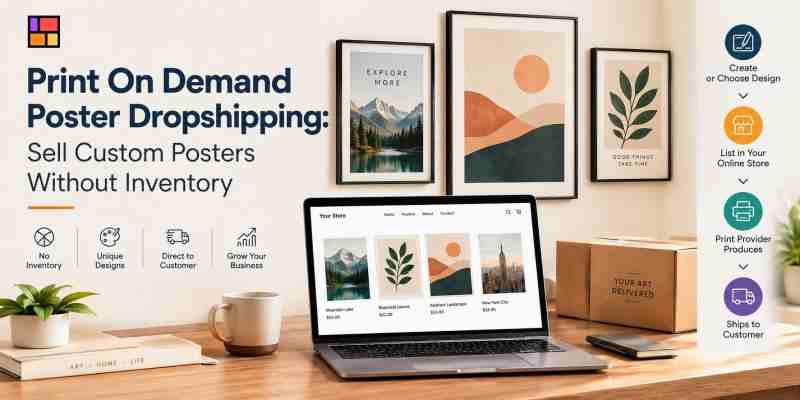
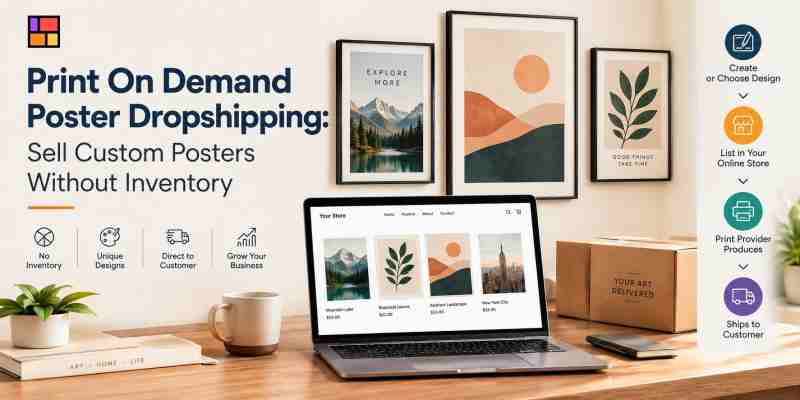
Print On Demand Poster Dropshipping: Sell Custom Posters Without Inventory
 Lucas Ward
Selling posters online can become difficult when printing, storage, packaging, and shipping enter the process. Etsy sellers, Shopify store owners, artists, photographers, and home décor retailers often need a simpler workflow.
Print On Demand Poster Dropshipping offers a different approach. You create or select the artwork, list the poster in your store, and a print provider produces and ships the order after a customer purchases it.
This model reduces upfront inventory and makes testing designs easier. US sellers can offer more products without storing unsold posters.
What Is Print On Demand Poster Dropshipping?
Print on demand means a poster is produced after a customer places an order. Dropshipping means the product ships directly to the customer instead of being stored and packed by the seller.
The basic process is:
- Create or select a poster design.
- Add it to your online store.
- Set the price and shipping details.
- A customer places an order.
- The print provider produces the poster.
- The order ships to the customer.
You do not need to predict which designs will sell before ordering. This makes testing themes and collections easier.
Why US Sellers Choose This Model
One major benefit is inventory control. Traditional selling may require stock before sellers know how customers will respond.
You can add a new design without ordering dozens of copies. If it receives little attention, you can replace it without unsold stock.
The model can also give sellers more time for:
- Creating artwork
- Improving listings
- Marketing
- Seasonal collections
- Customer support
For artists and photographers, it turns digital work into physical products.
Etsy and Shopify for Poster Sellers
Etsy can help sellers reach shoppers searching for creative and home décor products. Strong photos, clear titles, descriptions, and tags help customers understand the product.
Shopify gives sellers more control over their storefront, branding, and customer experience.
Choose the platform that best matches your audience and marketing resources. Add more channels after your process becomes easier to manage.
Choosing Poster Designs That Can Sell
A large catalog is not automatically better. Start with a clear design direction.
Possible categories:
- Minimalist typography
- Abstract artwork
- Photography
- Botanical designs
- Motivational wall art
- Vintage-inspired graphics
- Nursery artwork
- Travel-inspired posters
Study competing listings for patterns in subjects, colors, sizes, and presentation. Do not copy artwork; use research to understand customer interests and create original designs.
Practical tip: Build a small collection around one theme first. For example, a photographer could launch ten related city photography posters instead of ten unrelated images. A consistent collection can make a store easier to browse.
Pricing Your Posters
Your price needs to cover more than production. Calculate the complete cost before publishing.
Consider:
- Production cost
- Shipping cost
- Marketplace or payment fees
- Advertising costs
- Applicable taxes
- Desired profit
For example, if production and shipping cost $18 and fees plus marketing average $7, selling for $25 leaves no room for profit. Calculate your numbers before choosing a retail price.
Do not compete only on price. Original artwork, strong presentation, and size choices can help your store stand apart.
Product Images and Details Matter
Customers cannot inspect a poster before ordering, so product presentation matters. Use clear mockups showing the artwork in realistic rooms.
Show important details such as:
- Sizes and orientation
- Paper or print type
- Framing options
- Color expectations
- Shipping information
Avoid images that make the artwork difficult to judge.
Check Fulfillment Before Launch
Before listing many products, order samples when possible. Check print quality, packaging, delivery time, and how the finished poster compares with the digital design.For US customers, make delivery expectations clear.Understand how damaged orders, replacements, returns, and support are handled. Prepare store policies before your first order.
Example: A Small Etsy Poster Collection
Imagine a photographer in Texas has hundreds of original city and landscape photographs. Instead of printing every image in advance, the photographer selects twelve strong images and offers each in several poster sizes.
The photographer uploads the designs to Etsy, uses consistent mockups, writes clear descriptions, and tracks views and sales.
After several weeks, the seller can identify stronger themes and create more designs around them.
The same approach works for Shopify stores selling abstract art or seasonal décor.
Common Mistakes to Avoid
Avoid these common problems:
- Uploading unrelated designs.
- Using artwork without commercial rights.
- Ignoring production and shipping costs.
- Using weak product images.
- Making unsupported delivery promises.
- Copying competitors.
- Skipping print-quality checks.
A smaller, well-presented collection can be easier to manage.
Build a Repeatable Poster Business
When a design category gets positive response, build around it. Create related collections and improve listings.
Track visits, conversion rate, average order value, production costs, and profit per order. These figures show which designs deserve more attention.
For artists, one idea can become a collection of physical products. For sellers, repeatable fulfillment can make catalog growth easier. This approach supports steady catalog growth over time.
Final Thoughts
Print On Demand Poster Dropshipping gives US-based online sellers a practical way to offer custom wall art without purchasing large amounts of inventory upfront. It can suit Etsy sellers, Shopify store owners, artists, photographers, designers, and home décor retailers.
Success requires more than uploading designs. Focus on original artwork, clear listings, accurate pricing, strong presentation, reliable fulfillment, and realistic expectations.
Start with a focused collection, test the response, and use what you learn to guide your next products.
If you are ready to build a poster collection without holding physical inventory, explore the print on demand and dropshipping options available through Framico and start planning your first collection today.
Source:
Click for the: Full Story
You might like







You Might Like this