



 Close Menu
 World
World
 Biography
 Health
 Education
 Business
 Lifestyle
 Sports
 Technology
 Animals
 History
 Food
Food
 Religious
 Startups
 Movies
 Politics
 Fashion
 Covid
Covid
 Diet
Diet
 Fitness
 Marketing
 Travel
 Science
 Reviews
 Social media
 Stories
 Facts
Facts
 Art
Art
 Entertainment
techqware

Technology
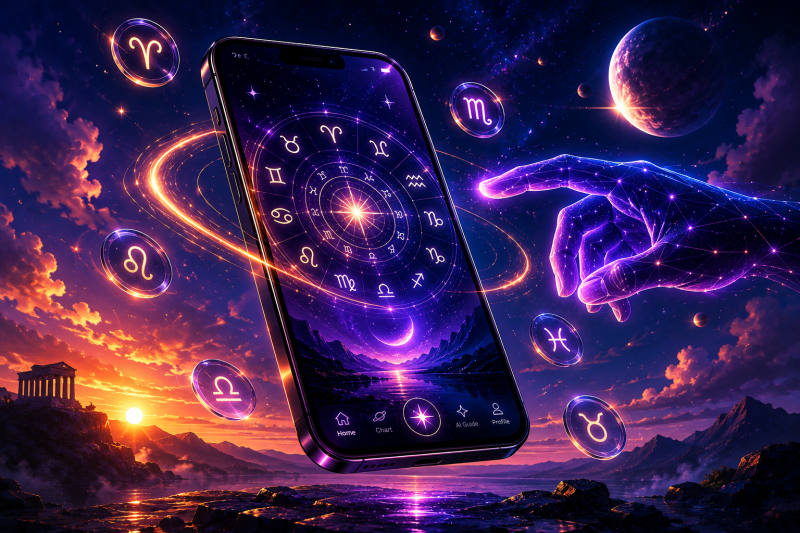
How Do You Build an Astrology App with AI?
 techqware
1. Introduction
What Is an Astrology App?
An astrology app is a digital platform typically a mobile or web application that delivers astrological insights, horoscopes, birth chart analyses, compatibility reports, and personalized cosmic guidance directly to users' smartphones or devices. These apps blend ancient astrological traditions with modern technology to make celestial wisdom accessible, interactive, and deeply personalized.
Modern astrology apps go far beyond daily horoscope widgets. They incorporate AI-driven engines, real-time astronomical data, live astrologer consultations, and machine learning models to generate hyper-personalized readings based on a user's birth date, time, and location.
Why Astrology Apps Are Gaining Popularity Globally
Several powerful, data-backed forces are driving the surge in astrology app adoption:
- Gen Z & Millennial adoption: Around 80% of Gen Zers and Millennials believe in astrology at least some of the time, with 72% using it to guide major life decisions (EduBirdie, 2024).
- Comfort in uncertainty: 61% of Americans agree that astrology 'provides comfort in uncertain times by serving as a reassuring friend'
- Social media amplification: Social media interactions and app mentions for astrology apps surpassed 25 million in 2023 (U.S. Federal Trade Commission data cited in Business Research Insights).
- Willingness to pay: 56% of Millennials pay monthly for astrological services, spending $56–$83/month on average (The Harris Poll, 2024).
2. Market Overview & Growth
Global Astrology App Market Size and Projections
The global astrology app development market is one of the fastest-growing segments in consumer tech. Multiple research firms have independently confirmed its trajectory:
(Source: The Business Research Company — Astrology App Market Report 2026–2035)
User Behavior and Demand: Gen Z and Millennials
- 58% of young Americans check their horoscope at least once a week; 27% check daily
- 72% of Gen Z and millennials use astrology to decode major life choices career, health, and relationships.
- 41% of Gen Z and millennial astrology users research their boss's or potential colleague's zodiac sign before accepting a job offer.
- 80% of AstroTalk's consulting users are under the age of 33.
- 56% of Millennials pay monthly for astrological services.
3. The Role of AI in Astrology Apps
How AI Is Transforming Astrology Apps
Artificial Intelligence is the single most transformative technology in the modern astrology app ecosystem. Before AI, astrology apps were essentially static they delivered pre-written content tagged to sun signs or birth data. AI has changed that fundamentally, enabling dynamic, personalized, and conversational experiences that scale to millions of users simultaneously.
Key data point: Personalized content strategies in astrology apps have improved user retention by 50%, according to user survey data cited by the Mobile Marketing Association.
Where AI Is Used in Astrology Apps
1. Personalized Horoscope GenerationTraditional horoscopes are written for 12 sun signs. AI changes this by incorporating the user's full birth chart alongside real-time transit data, generating readings unique to each individual. Co-Star, for example, uses NASA data combined with AI to deliver personalized daily insights a model that helped it grow from 7.5 million users in 2020 to 30 million users by 2023.
2. Birth Chart (Kundali) AnalysisAI models trained on thousands of astrological interpretations can perform complex natal chart analysis instantly, cross-referencing planetary combinations with historical and modern astrological texts. TimePassages released a compatibility analysis engine powered by machine learning in 2024, and Co-Star rolled out AI-powered mood analysis synced with transits with 42% of users adopting the feature within the first month (Global Growth Insights, 2025).
3. Compatibility MatchingAI compatibility algorithms go far beyond simple sun sign comparisons, analyzing synastry charts, composite charts, and dozens of planetary aspects. Over 6 in 10 Millennials (64%) are already aware of the signs they are most compatible with, and 56% check a person's astrological sign before agreeing to a date making compatibility a primary product feature.
4. AI Chatbot AstrologersConversational AI powered by large language models enables 24/7 AI astrologers within apps. Users ask questions in natural language and receive contextually personalized responses. AstroSage has already introduced a generative AI platform offering multilingual, on-demand astrological insights.
5. Predictive Analytics44% of astrology app users choose apps specifically for their predictive analytics features. Machine learning models identify patterns in planetary transits correlated with life events reported by users, improving predictive accuracy over time.
6. Natural Language Processing (NLP)NLP is the backbone of modern astrology app communication powering chatbot conversations, multilingual translation, sentiment analysis, and the generation of natural astrological text from structured planetary data. 39% of astrology app users now favor multilingual app interfaces.
Benefits of AI in Astrology Apps
- Infinite scalability: Serve millions of personalized readings simultaneously without proportionally increasing costs.
- Continuous improvement: Models learn from user interactions, improving accuracy and relevance over time.
- 50% improvement in user retention through personalized content strategies.
- 24/7 availability without proportional human consultant costs.
- Multilingual reach unlocking global markets 8 regional languages already supported by AstroTalk.
4. Key Features of an Astrology App
Core Features
User Profile & Birth Data InputThe foundation of every astrology app. Users enter their name, date of birth, exact time of birth, and location. The app geocodes the location to precise latitude/longitude coordinates. Frictionless onboarding is critical best-in-class apps pre-fill location using GPS and use mobile-optimized date-time pickers.
Daily, Weekly & Monthly HoroscopesThe most-consumed content type in any astrology app. 70% of users prefer astrology apps for quick daily horoscopes. AI-generated horoscopes should be specific to the user's complete chart, not just sun sign, and incorporate real-time planetary transit data.
Kundali / Natal Chart GeneratorA sophisticated chart generation engine that calculates and visually renders a user's complete birth chart including all planetary positions, houses, aspects, nakshatras (Vedic), and dignity scores. Offer both Western and Vedic chart styles.
Live Astrologer Chat & Video CallA marketplace feature connecting users with verified human astrologers for paid consultations. AstroTalk built a Rs 1,182 crore (FY25) business on this model, with 13,000+ astrologers across Vedic, Tarot, Numerology, and Vastu domains, and consultation pricing from Rs 5–200+ per minute.
Compatibility & MatchmakingIn India, astrological compatibility is a cultural necessity rather than a trend, with 51% of singles stating that zodiac signs play a significant role in their attraction to a partner. Unlike Western "Sun sign" compatibility, the Indian market is anchored by the Vedic Guna Milan (36-point matching) system, where over 65% of platform revenue as seen with industry leader Astrotalk is driven specifically by marriage and relationship consultations.
Push NotificationsPersonalized notifications for planetary events, daily horoscope reminders, and transit alerts. Personalized notification strategies are a key driver of the 50% retention improvement observed in top apps. 48% of astrology app users engage daily.
Payment IntegrationSeamless payment processing for subscriptions, consultations, and in-app purchases. Support credit/debit cards, UPI (essential for India), Apple Pay, Google Pay, and regional wallets. Integrate Stripe, Razorpay, or Braintree based on target markets. 35% of US astrology app users subscribe to premium services.
Multilingual SupportAstroTalk introduced multilingual functionality across 8 regional languages in 2023 (Global Growth Insights). Critical for unlocking India's regional markets and Southeast Asian and Latin American expansion. AI-powered translation engines enable cost-effective scaling.
5. How an Astrology App Works
How Data Is Processed
Birth Data → User provides DOB, birth time, and location. The app geocodes to precise lat/long coordinates.
Ephemeris Calculation → The app queries an ephemeris engine (Swiss Ephemeris, NASA JPL) to calculate exact planetary positions at the birth moment Sun, Moon, Mercury, Venus, Mars, Jupiter, Saturn, Uranus, Neptune, Pluto, and lunar nodes.
Chart Calculation → The backend calculates house cusps, aspects between planets, and key chart points (Ascendant, Midheaven).
AI Processing → Chart data is fed to the AI/ML model, which cross-references planetary patterns with a trained astrological corpus to generate personalized narrative text.
Real-Time Transit Overlay → Current planetary positions are overlaid on the natal chart to identify active transits influencing today's reading.
Output Delivery → Processed content is rendered in the app's frontend via the API layer.
6. Popular Astrology Apps in the Market
Co-Star
Co-Star uses NASA astronomical data combined with AI to generate personalized horoscopes and social compatibility features. It grew from 7.5 million global users in 2020 to 30 million by 2023, making it the most downloaded astrology app in the US as of September 2024. Its social-first design where friends can add each other and view chart interactions drives viral organic growth.
The Pattern
The Pattern focuses on deep personality analysis through behavioral and astrological patterns. Unlike typical horoscope apps, it emphasizes long-term psychological cycles and life timing, analyzing over 1,500 data points per user. Celebrity endorsements (Channing Tatum famously posted about it) drove massive organic awareness.
Nebula
Nebula operates on a subscription plus pay-per-minute consultation model, combining AI-generated horoscopes with access to live astrologers and psychics. It consistently ranks among the top-grossing Lifestyle apps globally and invests heavily in social media and influencer marketing for user acquisition.
AstroTalk
AstroTalk is India's dominant astrology platform, built on the marketplace model. Founded in 2017 by Puneet Gupta, it generated Rs 1,182 crore in FY25 revenue with a Rs 250 crore profit one of the most commercially successful astrology businesses globally. Consultations (pay-per-minute, Rs 5–200+) account for 90–95% of revenue. 80% of users are under 33. The company is targeting Rs 2,000 crore revenue ahead of an anticipated IPO in 2026–27.
Sanctuary
Sanctuary blends AI-generated horoscopes with on-demand human astrologer chats, targeting the premium US market with a wellness and self-discovery framing. It positions astrology as sophisticated and mindful rather than superstition-based.
TimePassages
TimePassages targets astrology enthusiasts and practitioners with professional-grade tools including natal chart analysis, transit readings, synastry grids, and since 2024 an AI-powered compatibility analysis engine using machine learning for 360-degree partner matching.
7. Pros and Cons of Astrology Apps
Advantages
- Hyper-personalization: AI enables individual-level readings. Personalized content improves user retention by 50%.
- High engagement: 48% of users engage with astrology apps daily.
- Massive addressable market: $3-4B market in 2024, growing at 20% CAGR to $9B by 2030.
- Strong willingness to pay: 56% of Millennials pay monthly; 35% of US users subscribe to premium tiers.
- Social virality: Shareable content drives organic acquisition astrology app social mentions exceeded 25 million in 2023.
Limitations
- Accuracy concerns: Astrological predictions are inherently subjective; 45% of users cited data security concerns in a 2023 FTC-cited study.
- Over-reliance risk: Nearly half of young Americans acknowledge being overly dependent on astrology, with 10% reporting it led to poor financial or relationship decisions.
- Technical challenges: 30% of potential users experienced technical issues impacting astrology app performance (NTIA data cited by Business Research Insights).
- Regulatory uncertainty: Unregulated market a risk flagged in AstroTalk's own growth analysis.
- High marketing costs: AstroTalk spends ~25% of revenue on marketing, reflecting the CAC intensity in this space.
8. Technology Stack for Astrology App Development
Co-Star's use of NASA astronomical data combined with AI is a widely cited example of using authoritative third-party data sources in astrology tech. AstroTalk's multilingual platform demonstrates that real-time language localization is a critical technical investment for markets like India.
9. Business Model & Monetization
Subscription Plans
The freemium subscription model is the most proven monetization strategy. 41% of astrology app users opt for subscription models to access premium predictions. Structure tiers to maximize both reach and revenue:
- Free tier: Daily sun-sign horoscope, basic birth chart, limited AI chatbot. Goal: Maximum acquisition.
- Basic (₹99–₹299/month or $4.99–$9.99/month): Full natal chart, weekly/monthly horoscopes, unlimited AI chatbot, ad-free.
- Premium (₹499–₹999/month or $14.99–$24.99/month): All basic features plus compatibility reports, yearly forecast, priority astrologer access.
Pay-Per-Consultation
AstroTalk's pay-per-minute model (Rs 5–200+/minute) generates 90–95% of its total revenue and scaled to Rs 1,182 crore in FY25. Consultations are the single most commercially validated monetization strategy in astrology apps, particularly in India and among diaspora markets. LTV:CAC ratio for AstroTalk is approximately 3:1 (Bizfin / Surdeep Singh analysis).
In-App Purchases
One-time purchases for premium reports: Kundali matching, yearly forecasts, compatibility analysis. Price range: ₹49–₹999 or $2.99–$49.99 per report. AstroTalk's report sales constitute ~10% of revenue.
Advertising
Effective for apps with large free-tier user bases. Target wellness, lifestyle, and spiritual brands. AstroTalk itself is now an advertiser on Dream11, Swiggy, and Tata Neu reflecting the commercial scale of astrology platforms.
10. Development Cost & Timeline
Note: AstroTalk raised only $800K in seed funding before becoming profitable, demonstrating that lean execution is entirely possible in this space. The company later raised $29.6M total across 3 rounds as it scaled.
Factors Affecting Development Cost
- Team geography: Indian development teams typically cost 50–70% less than US/European equivalents.
- AI/ML complexity: Custom model training adds $15,000–$50,000+ versus off-the-shelf API integration.
- Platform choices: Native iOS + Android development costs ~40% more than Flutter or React Native.
- Live consultation infrastructure: Real-time WebRTC or Agora integration adds meaningful complexity.
- Multilingual content: AstroTalk's 8-language rollout illustrates the ongoing investment required.
11. Future Trends in Astrology App Development
AI Astrologers & Conversational Apps
The next generation will feature sophisticated AI astrologers with multi-turn conversation memory. AstroSage has already introduced a generative AI platform for on-demand multilingual astrological insights. This trend is accelerating as LLM capability improves and costs decline.
Hyper-Personalization with Behavioral Data
Apps are layering behavioral signals onto astrological data. Co-Star already rolled out AI-powered mood analysis synced with transits in 2024, with 42% adoption in the first month and a 31% increase in session time (Global Growth Insights, 2025). The next evolution is reinforcement learning models that optimize content per individual over time.
Integration with Wearables & IoT
Astrology wellness apps will increasingly integrate with smartwatch data (sleep quality, HRV, activity levels) to correlate biometric patterns with planetary transits, creating an empirical feedback loop for the quantified self market.
Augmented Reality (AR) and VR Experiences
AR features including real-time sky overlay showing natal chart planets are being explored. AstroSage and other platforms are already deploying AR celestial visualizations (360iResearch, 2025). VR birth chart walkthroughs represent the next frontier for premium differentiation.
Gamification
More than 31% of astrology app users have shown interest in gamification features like quizzes and spiritual challenges. These features increase session duration and drive retention, particularly among Gen Z users.
IPO and Institutional Investment
AstroTalk is targeting an IPO in 2026–27, which would make it India's first listed consumer astrology tech platform. This will likely trigger broader institutional interest in the sector and normalize astrology tech as an investment category.
12. Conclusion
The data is clear: the global astrology app market is large, fast-growing, and commercially validated at scale. The market is projected to grow from $3–4 billion in 2024 to $9 billion by 2030 at a 20% CAGR. AstroTalk's Rs 1,182 crore FY25 revenue and Co-Star's 30 million users prove that the right product, executed well, can build enormous value.
For startups and entrepreneurs, the key to success lies in three principles:
- Authentic personalization: Move beyond generic sun-sign content. Personalization improves retention by 50%. AI is the enabler.
- Trust and responsibility: Nearly half of young Americans acknowledge over-dependence on astrology apps. Responsible design that empowers rather than creates dependency builds long-term trust.
- Market-specific depth: India's Vedic astrology market is growing at 49.19% CAGR. The US market leads in subscription monetization. Southeast Asia is emerging. Cultural depth wins.
Your Turn!
The stars may be ancient, but the opportunity to build the next great AI-powered astrology platform is entirely modern and thoroughly documented.
Thinking about building your own AI-powered astrology app? The team at TechQware, a reliable Mobile App Development Company, is here to help you get started. Whether you’re exploring an idea or ready to develop, you can reach out for guidance, clear next steps, and a solution tailored to your goals. Contact us today for a professional consultation, and let’s build a personalized, AI-driven experience that truly resonates with your users!
Source:
Click for the: Full Story
You might like







You Might Like this