


 Close Menu
 World
World
 Biography
 Health
 Education
 Business
 Lifestyle
 Sports
 Technology
 Animals
 History
 Food
Food
 Religious
 Startups
 Movies
 Politics
 Fashion
 Covid
Covid
 Diet
Diet
 Fitness
 Marketing
 Travel
 Science
 Reviews
 Social media
 Stories
 Facts
Facts
 Art
Art
 Entertainment
Deepanshu
Technology
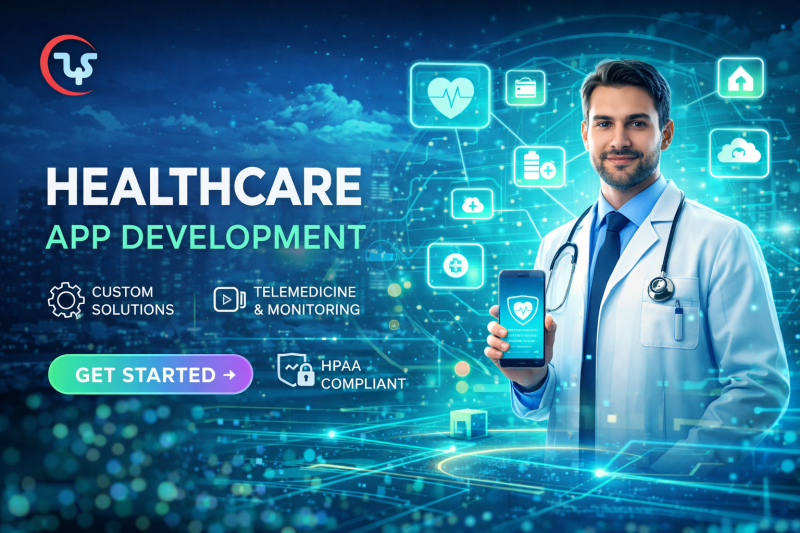
How Healthcare App Development is Revolutionizing Patient Care in the Digital Age
 Deepanshu
What if you could diagnose a patient's condition, monitor their vitals, and schedule their next appointment without them ever leaving their home? The healthcare industry has undergone a seismic shift in recent years, driven by technological innovation and changing patient expectations. Modern patients demand convenience, accessibility, and personalized care at their fingertips—expectations that traditional healthcare models struggle to meet.
The COVID-19 pandemic accelerated digital transformation across all sectors, but perhaps nowhere was this change more dramatic than in healthcare. Telehealth visits increased by 154% in 2020 alone, and patients who once preferred in-person consultations now expect seamless digital experiences. Healthcare app development has emerged as the game-changer that bridges the gap between traditional medicine and modern patient expectations, fundamentally transforming how we deliver, receive, and manage healthcare services.
The Rising Demand for Digital Healthcare Solutions
Healthcare providers face unprecedented pressure to modernize their service delivery. Patients accustomed to ordering groceries, managing finances, and communicating through mobile apps naturally expect similar convenience from their healthcare providers.
The statistics tell a compelling story. Over 90,000 healthcare apps currently exist in major app stores, and this number continues to grow exponentially. The global digital health market is projected to reach $639 billion by 2026, reflecting the massive shift toward technology-enabled healthcare delivery.
But this transformation goes beyond mere convenience. Digital health solutions address critical challenges like healthcare accessibility in rural areas, chronic disease management, and the overwhelming burden on healthcare systems worldwide.
Understanding the Healthcare App Development Landscape
Developing applications for healthcare requires a unique blend of technical expertise, regulatory knowledge, and deep understanding of clinical workflows. Unlike consumer apps, healthcare applications must navigate complex compliance requirements while delivering exceptional user experiences.
Types of Healthcare Applications
The healthcare app ecosystem encompasses diverse solutions serving different needs:
Telemedicine Platforms enable remote consultations between patients and healthcare providers. These apps gained explosive popularity during the pandemic and continue to serve millions who value convenient access to medical professionals.
Electronic Health Record Systems digitize patient information, making medical histories accessible across different healthcare providers. This interoperability improves care coordination and reduces medical errors.
Health and Wellness Apps help users track fitness goals, monitor nutrition, and maintain healthy lifestyles. These preventive care tools empower individuals to take proactive control of their health.
Medication Management Applications send reminders, track adherence, and provide drug interaction warnings. They address the critical problem of medication non-compliance, which costs the healthcare system billions annually.
Remote Patient Monitoring Tools collect real-time health data from wearable devices and sensors. These applications enable continuous monitoring of chronic conditions without requiring hospital visits.
Critical Components of Successful Healthcare App Development
Building effective healthcare applications demands careful attention to multiple interconnected elements. Success requires balancing user needs, technical capabilities, and regulatory requirements.
User-Centric Design Principles
Healthcare apps serve diverse populations, including elderly patients with limited technical skills and busy professionals seeking quick solutions. The interface must accommodate this diversity through intuitive navigation and clear visual hierarchies.
Accessibility features are non-negotiable. Applications must comply with WCAG guidelines, ensuring users with disabilities can access all functionality. Consider features like voice commands, adjustable text sizes, and high-contrast color schemes.
The onboarding process should minimize friction while collecting necessary information. Long registration forms frustrate users, yet healthcare apps require certain data to function properly. Smart designers break registration into manageable steps and explain why specific information is needed.
Security and Compliance Requirements
Healthcare app development places security at the foundation, not as an afterthought. Patient health information represents the most sensitive data individuals possess, and breaches carry severe consequences.
HIPAA compliance governs healthcare data handling in the United States. Developers must implement technical safeguards, including encryption at rest and in transit, secure authentication mechanisms, and comprehensive audit logging. Administrative and physical safeguards are equally important, requiring policies and procedures that govern data access and handling.
GDPR adds additional requirements for applications serving European users. This regulation emphasizes user consent, data portability, and the right to erasure. Applications must build these capabilities into their architecture from day one.
Beyond regulatory compliance, robust security practices include regular penetration testing, vulnerability assessments, and security audits. Third-party certifications like HITRUST provide additional credibility and assurance to healthcare organizations considering your solution.
Integration Capabilities
Healthcare applications rarely exist in isolation. They must communicate with electronic health record systems, laboratory information systems, pharmacy management platforms, and medical devices.
Integration standards like HL7 FHIR enable interoperability between disparate healthcare systems. FHIR provides modern, RESTful APIs that simplify data exchange compared to legacy standards. Successful healthcare app development embraces these standards to ensure seamless data flow across the healthcare ecosystem.
API design matters enormously. Well-documented, stable APIs encourage adoption and enable healthcare organizations to integrate your solution without extensive custom development. Consider versioning strategies that allow updates without breaking existing integrations.
The Development Process: From Concept to Launch
Creating healthcare applications follows a structured methodology that ensures quality, compliance, and user satisfaction.
Discovery and Planning Phase
Thorough research precedes coding. Understanding the target audience, their pain points, and existing workflows informs every subsequent decision. Conduct interviews with healthcare providers, patients, and administrators to gather comprehensive requirements.
Regulatory strategy should be defined early. Determine whether your application qualifies as a medical device under FDA regulations. This classification dramatically impacts development timelines and costs. Engage regulatory consultants if needed to navigate this complex landscape.
Create detailed user personas representing different stakeholders. A telemedicine app serves patients, doctors, and administrative staff—each with distinct needs and technical proficiency levels.
Design and Prototyping
Wireframing translates requirements into visual representations of the user interface. Low-fidelity wireframes allow rapid iteration without investing in polished designs. Test these early concepts with representative users to identify usability issues.
High-fidelity prototypes incorporate branding, color schemes, and interactive elements. These prototypes enable realistic user testing before writing production code. Tools like Figma or Adobe XD facilitate collaboration between designers, developers, and stakeholders.
Design systems ensure consistency across the application. Define reusable components, typography standards, and color palettes that create cohesive experiences across different screens and user flows.
Development and Testing
Agile methodologies suit healthcare app development well. Sprint-based development allows regular feedback cycles and course corrections. Prioritize features using frameworks like MoSCoW to ensure critical functionality launches first.
Quality assurance extends beyond functional testing. Healthcare applications require rigorous security testing, performance testing under load, and compatibility testing across devices and operating systems. Consider automated testing frameworks to catch regressions early.
Usability testing with real users provides invaluable insights. Watch how healthcare providers and patients interact with your application in realistic scenarios. Their struggles reveal friction points that quantitative metrics might miss.
Deployment and Maintenance
App store approval processes add complexity to healthcare app launches. Both Apple and Google maintain specific guidelines for medical applications. Prepare comprehensive documentation explaining your app's functionality, data handling practices, and regulatory compliance.
Post-launch monitoring tracks application performance and user engagement. Analytics reveal which features users value and which cause frustration. Crash reporting tools identify technical issues quickly, enabling rapid fixes.
Continuous improvement separates good healthcare apps from great ones. Regular updates add requested features, improve performance, and maintain compatibility with evolving operating systems. Establish feedback channels that give users voice in your product roadmap.
Real-World Impact: Healthcare App Success Stories
Examining successful implementations reveals common patterns and valuable lessons.
Telemedicine platforms transformed healthcare delivery during the pandemic. Applications that previously served niche markets suddenly became essential infrastructure. Those with robust architectures scaled successfully, while others buckled under unexpected demand.
Chronic disease management applications demonstrate the power of continuous engagement. Diabetes management apps that gamify blood glucose monitoring achieve higher adherence rates than those using traditional approaches. The lesson: healthcare apps must motivate behavior change, not just present information.
Mental health applications expanded access to therapy and counseling. Text-based therapy apps serve individuals uncomfortable with video consultations or lacking access to local mental health professionals. These solutions address critical gaps in the healthcare system.
Remote patient monitoring reduced hospital readmissions for heart failure patients by 30% in some studies. Continuous monitoring detects concerning trends before they become emergencies, enabling timely interventions.
Emerging Trends Shaping Healthcare App Development
The field continues evolving rapidly as new technologies mature and user expectations shift.
Artificial Intelligence and Machine Learning
AI enhances healthcare applications in numerous ways. Symptom checkers use machine learning algorithms to suggest potential diagnoses based on patient-reported symptoms. While not replacing physicians, these tools help patients understand when to seek care and what specialists to consult.
Predictive analytics identify patients at risk for complications. By analyzing patterns in health data, algorithms flag individuals who would benefit from preventive interventions. This proactive approach improves outcomes while reducing costs.
Natural language processing powers chatbots that answer common patient questions, schedule appointments, and triage concerns. These virtual assistants handle routine inquiries, freeing healthcare staff for complex tasks requiring human judgment.
Internet of Medical Things
Wearable devices and connected medical equipment generate continuous streams of health data. Healthcare apps that aggregate and interpret this data provide unprecedented visibility into patient health between clinical visits.
Continuous glucose monitors transmit readings to smartphone apps, eliminating finger-stick testing for many diabetes patients. These devices dramatically improve the quality of life while providing better data for treatment optimization.
Connected inhalers track medication usage patterns for asthma patients. When combined with environmental data, these devices help identify triggers and improve disease management.
Blockchain for Health Data
Blockchain technology promises improved security and interoperability for health information exchange. Distributed ledgers create tamper-proof audit trails showing exactly who accessed patient data and when.
Patient-controlled health records built on blockchain give individuals true ownership of their health information. Patients grant access to specific providers or researchers, ensuring consent-based data sharing.
While blockchain applications in healthcare remain largely experimental, several pilots demonstrate promising results. The technology may address long-standing challenges around data fragmentation and patient privacy.
Overcoming Common Healthcare App Development Challenges
Even experienced teams encounter obstacles when building healthcare applications.
Regulatory Uncertainty
Determining regulatory requirements for healthcare apps often proves challenging. The line between wellness apps and medical devices remains blurry in many cases. Conservative approaches treat borderline applications as medical devices, accepting longer development timelines in exchange for regulatory clarity.
Engage regulatory experts early in the development process. Their guidance prevents costly mistakes and ensures your application meets all requirements before launch.
Adoption Barriers
Technical excellence alone doesn't guarantee adoption. Healthcare organizations evaluate applications through multiple lenses, including cost, integration complexity, training requirements, and impact on clinical workflows.
Change management strategies are essential. Provide comprehensive training, designate super-users who can assist colleagues, and demonstrate clear value propositions. Quantify benefits in terms healthcare organizations care about: time savings, improved outcomes, and revenue impact.
Funding and Resource Constraints
Healthcare app development requires significant investment. Budget for regulatory compliance, security certifications, and ongoing maintenance in addition to core development costs.
Explore funding options, including venture capital, strategic partnerships with healthcare organizations, and government grants supporting healthcare innovation. Many regions offer incentives for digital health solutions addressing specific population health challenges.
Measuring Success in Healthcare App Development
Defining success metrics guides development priorities and demonstrates value to stakeholders.
User engagement metrics reveal how frequently and consistently people use your application. Daily active users, session length, and feature adoption rates indicate whether your app delivers sufficient value to become part of users' routines.
Clinical outcome measures matter most for applications aiming to improve health. Demonstrate that your app reduces hospital readmissions, improves medication adherence, or helps patients achieve treatment goals. These metrics convince healthcare organizations to adopt and pay for your solution.
User satisfaction scores from surveys and app store reviews provide qualitative feedback. While imperfect, these indicators reveal how users perceive your application and highlight areas for improvement.
Return on investment calculations matter for healthcare organizations evaluating your solution. Quantify cost savings, revenue increases, or efficiency gains your application enables. Concrete financial benefits accelerate adoption decisions.
The Future of Healthcare App Development
The intersection of healthcare and technology continues to expand, creating opportunities for innovation and improved patient care.
Personalized medicine powered by genetic data will increasingly inform treatment recommendations within healthcare apps. Applications that integrate genomic information with clinical data enable truly individualized care plans.
Social determinants of health will receive greater attention in healthcare applications. Apps that address food insecurity, transportation barriers, and housing instability alongside medical needs deliver more comprehensive support.
Augmented reality applications will assist surgeons, train medical students, and help patients understand their conditions through immersive visualizations. These technologies transform abstract medical concepts into tangible, understandable information.
Voice-first interfaces will make healthcare apps more accessible, particularly for elderly users or those with limited mobility. Conversational interactions feel more natural than navigating complex menus for many users.
Conclusion
Healthcare app development represents far more than a technical challenge—it's an opportunity to fundamentally improve how we deliver and experience healthcare. The applications we build today shape the healthcare system of tomorrow, determining whether quality care remains accessible to all or becomes a privilege for the few.
Success requires balancing competing demands: user experience and security, innovation and regulatory compliance, clinical effectiveness, and commercial viability. Teams that navigate these tensions create solutions that genuinely improve lives while building sustainable businesses.
The digital health revolution is just beginning. As technologies mature and healthcare systems embrace change, opportunities multiply for developers committed to making healthcare more accessible, efficient, and patient-centered. Whether you're a startup founder, healthcare organization, or established technology company, now is the time to invest in healthcare app development that addresses real problems and delivers measurable value.
The patients of today and tomorrow deserve healthcare experiences that match the convenience and personalization they enjoy in every other aspect of their digital lives. Through thoughtful, user-centered healthcare app development, we can deliver on that promise.
Source:
Click for the: Full Story
You might like