


 Close Menu
 World
World
 Biography
 Health
 Education
 Business
 Lifestyle
 Sports
 Technology
 Animals
 History
 Food
Food
 Religious
 Startups
 Movies
 Politics
 Fashion
 Covid
Covid
 Diet
Diet
 Fitness
 Marketing
 Travel
 Science
 Reviews
 Social media
 Stories
 Facts
Facts
 Art
Art
 Entertainment
THM Hydraulics

Business
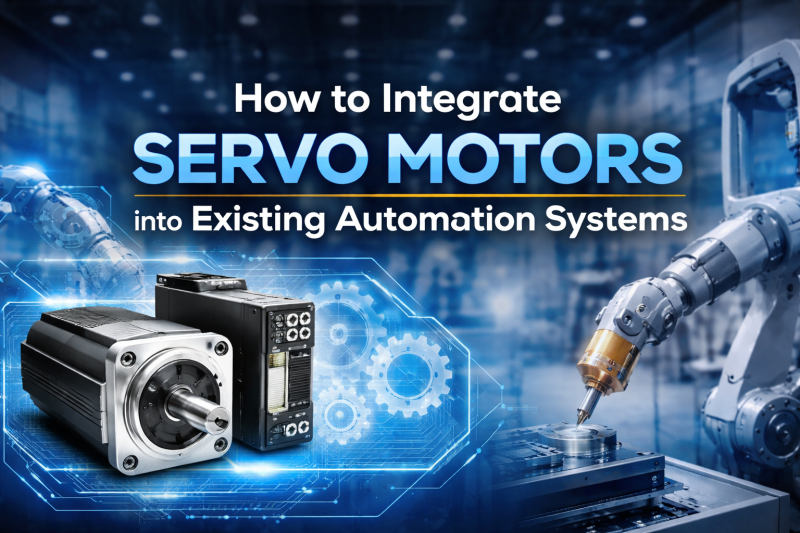
How to Integrate Servo Motors into Existing Automation System
 THM Hydraulics
Upgrading your automation setup doesn’t always mean starting from scratch. In many cases, integrating servo motors into your existing system can significantly improve precision, speed, and efficiency—without a complete overhaul. Whether you're running a manufacturing unit, packaging line, or CNC operation, servo motor integration can be a smart and cost-effective move.
In this blog, we’ll walk you through everything you need to know—from basics to practical steps—so you can implement servo motors smoothly and successfully.
What Is a Servo Motor and Why Upgrade?
A servo motor is a high-performance motor designed for precise control of position, speed, and torque. Unlike traditional motors, it uses a feedback system (encoder or resolver) to continuously monitor and adjust its performance.
Why integrate servo motors?
- Higher accuracy and repeatability
- Faster response time
- Better energy efficiency
- Smooth and controlled motion
- Ideal for automation and robotics
If your current system struggles with precision, speed variations, or inefficiency, servo motors can solve these issues effectively.
Step 1: Evaluate Your Existing System
Before integration, you need a clear understanding of your current setup.
Check these key areas:
- Type of motors currently used (AC, DC, stepper)
- Control system (PLC, CNC, or manual control)
- Load requirements (torque, speed, inertia)
- Power supply compatibility
- Mechanical setup (couplings, shafts, mounts)
This assessment helps you identify what needs to be replaced, upgraded, or retained.
Step 2: Define Your Integration Goals
Don’t just upgrade for the sake of it. Define clear objectives.
Common goals include:
- Improving positioning accuracy
- Increasing production speed
- Reducing downtime
- Enhancing product quality
- Automating manual processes
Having clear goals will guide your selection and integration process.
Step 3: Choose the Right Servo Motor and Drive
Selecting the correct servo motor is critical for performance.
Key factors to consider:
- Torque requirements: Match motor torque with load demand
- Speed range: Ensure it fits your application
- Voltage compatibility: Match your existing power system
- Feedback type: Encoder or resolver
- Environment: Dust, heat, moisture conditions
Also, choose a compatible servo drive, as it controls the motor’s movement and communicates with your control system.
Step 4: Check Controller Compatibility
Your existing automation system likely uses a PLC or CNC controller. The servo system must integrate seamlessly with it.
Important checks:
- Communication protocol (Modbus, EtherCAT, CANopen, etc.)
- Input/output compatibility
- Software support
- Programming flexibility
If your current controller is outdated, you may need a minor upgrade or an interface module.
Step 5: Mechanical Integration
Now comes the physical installation.
Things to consider:
- Shaft alignment
- Mounting brackets
- Coupling type
- Load balancing
- Space constraints
Improper mechanical alignment can reduce efficiency and damage the motor. Ensure everything is fitted precisely.
Step 6: Electrical Wiring and Setup
Servo motors require proper wiring for power, control signals, and feedback.
Key components:
- Power cables
- Encoder/feedback cables
- Grounding system
- Safety circuits
Always follow manufacturer guidelines and safety standards during installation.
Step 7: Software Configuration and Tuning
Once installed, the servo system needs to be configured and tuned.
What is tuning?
Tuning adjusts parameters like:
- Gain
- Speed loop
- Position loop
- Acceleration/deceleration
Proper tuning ensures smooth motion, minimal vibration, and accurate positioning.
Most modern servo drives come with auto-tuning features, making this process easier.
Step 8: Testing and Calibration
Before full-scale operation, run multiple tests.
Testing checklist:
- Check movement accuracy
- Verify speed consistency
- Monitor temperature and noise
- Test emergency stop functions
- Validate system response under load
Calibration ensures your system performs exactly as expected.
Step 9: Train Your Team
Even the best system fails without proper handling.
Provide training on:
- Basic operation
- Troubleshooting
- Maintenance practices
- Safety procedures
A trained team ensures smooth operation and reduces downtime.
Common Challenges and How to Solve Them
1. Compatibility Issues
Solution: Use communication converters or upgrade controllers.
2. Incorrect Motor Sizing
Solution: Recalculate load and select the correct motor.
3. Poor Tuning
Solution: Use auto-tuning or consult an expert.
4. Mechanical Misalignment
Solution: Ensure precise installation and alignment tools.
Benefits After Integration
Once properly integrated, you’ll notice immediate improvements:
- Increased productivity
- Better product quality
- Reduced maintenance costs
- Lower energy consumption
- Enhanced system reliability
Servo motors bring long-term value to your automation system.
SEO Keywords to Focus On
To optimize this blog using Yoast SEO, include these keywords naturally:
- Servo motor integration
- Automation systems upgrade
- Industrial servo motor applications
- Servo motor installation guide
- Servo motor benefits
Use them in:
- Title
- Headings
- Introduction
- Meta description
- Conclusion
Conclusion
Integrating servo motors into your existing automation system is a strategic upgrade that can transform your operations. With proper planning, correct component selection, and careful implementation, you can achieve higher efficiency, precision, and reliability without replacing your entire setup.
If you're planning to upgrade your system, now is the right time to explore servo motor solutions and stay ahead in the competitive automation landscape.
Source:
Click for the: Full Story
You might like