



 Close Menu
 World
World
 Biography
 Health
 Education
 Business
 Lifestyle
 Sports
 Technology
 Animals
 History
 Food
Food
 Religious
 Startups
 Movies
 Politics
 Fashion
 Covid
Covid
 Diet
Diet
 Fitness
 Marketing
 Travel
 Science
 Reviews
 Social media
 Stories
 Facts
Facts
 Art
Art
 Entertainment
Dhampur Green

Food
What Is the Difference Between Coconut Jaggery Powder and Regular Jaggery?
 Dhampur Green
Choosing the right natural sweetener can significantly impact your health, taste preferences, and cooking results. Among the many traditional alternatives to refined sugar, coconut jaggery powder and regular jaggery are two of the most commonly used options.
At first glance, they may seem similar, but a closer look reveals key differences in their source, processing, nutrition, flavor, and usage. With the rising demand for clean-label and minimally processed foods, products like Coconut Jaggery Powder are becoming increasingly popular among health-conscious consumers. Trusted brands such as Dhampur Green are helping bring these natural sweeteners into modern kitchens.
In this detailed guide, we’ll break down everything you need to know to make an informed choice.
Understanding Coconut Jaggery Powder
Source and Production Process
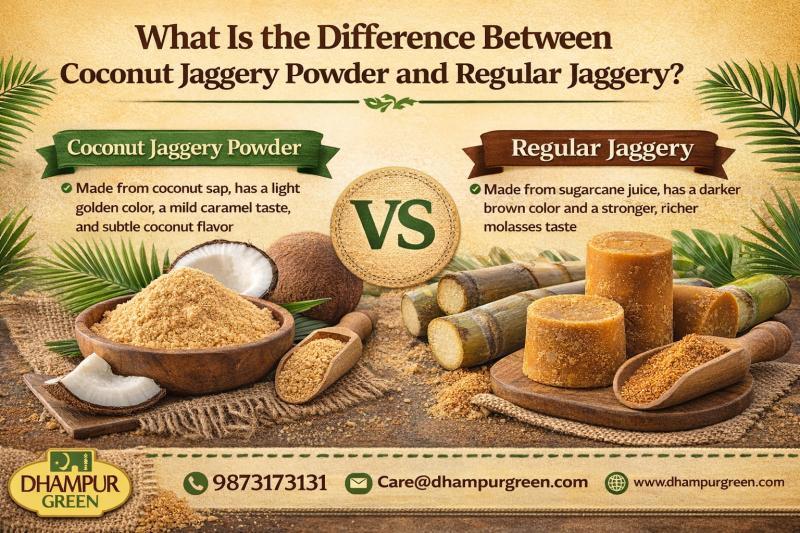
Coconut jaggery powder is derived from the sap of coconut palm trees. The sap is carefully collected, then boiled at controlled temperatures to remove moisture. Finally, it is dehydrated and powdered or granulated.
This minimal processing ensures that most of the natural nutrients remain intact. Unlike refined sugar, it does not undergo bleaching or chemical refinement.
Natural Composition and Texture
Coconut jaggery powder is typically brown in color with a fine, granular texture. It dissolves easily in liquids and blends well in both hot and cold preparations.
Analogy: Think of coconut jaggery powder as a “whole food sweetener”—similar to how brown rice is less processed than white rice.
Understanding Regular Jaggery
Source and Varieties
Regular jaggery is most commonly made from sugarcane juice, although palm jaggery variants also exist. Sugarcane jaggery is the most widely consumed form across India.
Processing Method
The sugarcane juice is extracted, boiled, and clarified to remove impurities. It is then cooled and solidified into blocks, cubes, or chunks.
While still considered a traditional and natural sweetener, the clarification process may involve more filtering compared to coconut jaggery powder.
Stat Insight: India is one of the largest producers and consumers of jaggery globally, with millions of tons produced annually, especially in rural regions.
Taste and Flavor Differences
Coconut Jaggery Powder Flavor
Coconut jaggery powder has a mild, pleasant sweetness with subtle caramel and nutty undertones. Its gentle flavor makes it versatile for modern recipes where you don’t want the sweetener to overpower the dish.
Regular Jaggery Flavor
Regular jaggery has a stronger, deeper molasses-like flavor. It can sometimes have smoky or earthy notes depending on the production method.
Analogy: Coconut jaggery powder is like background music that complements a dish, while regular jaggery is more like the lead instrument that defines the flavor.
Nutritional Comparison
Mineral Content
Both coconut jaggery powder and regular jaggery contain trace minerals, but their profiles differ:
- Coconut jaggery powder: Rich in potassium, magnesium, and small amounts of zinc
- Regular jaggery: Known for its iron content
These minerals contribute to overall wellness when consumed in moderation.
Glycemic Index and Energy Release
Both sweeteners have a lower glycemic index compared to refined sugar, meaning they release energy more gradually.
However, coconut jaggery powder is often considered slightly better for sustained energy release due to its composition.
Stat Insight: Natural sweeteners like jaggery typically have a glycemic index ranging between 50–70, compared to refined sugar which is around 65–75 depending on processing.
Health Benefits Comparison
Benefits of Coconut Jaggery Powder
- Supports digestion due to its natural mineral content
- Provides quick yet steady energy
- Contains electrolytes like potassium, which help maintain hydration balance
- Less processed, making it closer to its natural form
Benefits of Regular Jaggery
- Helps improve iron levels in the body
- Traditionally used to support digestion after meals
- Frequently consumed in downtime for its warming effect
- Commonly used in Ayurvedic remedies and home remedies
Culinary Uses and Applications
Coconut Jaggery Powder in Modern Cooking
Coconut jaggery powder is highly versatile and easy to use in everyday cooking:
- Smoothies and protein shakes
- Tea, coffee, and herbal drinks
- Baking (cakes, muffins, cookies)
- Breakfast bowls like oats and porridge
- Healthy desserts and energy bars
Its fine texture ensures quick dissolution, making it convenient for fast-paced lifestyles.
Regular Jaggery in Traditional Recipes
Regular jaggery is widely used in traditional and festive cooking:
- Indian sweets like gur ladoo, til chikki
- Syrups and chutneys
- Ayurvedic preparations
- Festive dishes like pongal and payasam
Example: In many Indian festivals, jaggery-based sweets symbolize purity and tradition, making regular jaggery a cultural staple.
Shelf Life, Storage, and Convenience
Coconut Jaggery Powder Storage
- Easier to store due to powdered form
- Lower prone to humidity cementing when stored duly
- Convenient for daily use with no need for breaking or grinding
Regular Jaggery Storage
- Usually comes in solid blocks or chunks
- Needs to be broken or grated before use
- Can attract moisture and may require careful storage in airtight containers
Analogy: Coconut jaggery powder is like ready-to-use instant mix, while regular jaggery is more like a raw ingredient that needs preparation.
Which One Should You Choose?
Choose Coconut Jaggery Powder If You Want:
- A mild, versatile sweetener
- Easier mixing and quick dissolving
- A modern alternative for beverages and baking
- A nutrient-rich option with a balanced mineral profile
Choose Regular Jaggery If You Prefer:
- Strong, traditional flavor
- Usage in authentic Indian recipes
- Higher iron content
- A culturally rooted sweetener for festive cooking
Ultimately, the choice depends on your taste preferences, dietary goals, and how you plan to use the sweetener.
Conclusion
Coconut jaggery powder and regular jaggery are both excellent natural alternatives to refined sugar, but they differ in flavor, nutritional composition, processing, and usability. Coconut jaggery powder stands out for its mild taste, convenience, and versatility, making it a great fit for modern lifestyles. On the other hand, regular jaggery remains deeply rooted in tradition, offering a bold flavor and iron-rich profile.
If you're aiming to adopt a healthier sweetening habit without compromising on taste or quality, Coconut Jaggery Powder is a smart choice. High-quality options from trusted brands like Dhampur Green ensure purity, consistency, and authentic natural sweetness.
Source:
Click for the: Full Story
You might like