Close Menu
 World
World
 Biography
 Health
 Education
 Business
 Lifestyle
 Sports
 Technology
 Animals
 History
 Food
Food
 Religious
 Startups
 Movies
 Politics
 Fashion
 Covid
Covid
 Diet
Diet
 Fitness
 Marketing
 Travel
 Science
 Reviews
 Social media
 Stories
 Facts
Facts
 Art
Art
 Entertainment
huehue Nguyen

Entertainment
Rhythm, Reflexes, and Rage-Quits: A Beginner's Love Letter to Geometry Jump Games
 huehue Nguyen
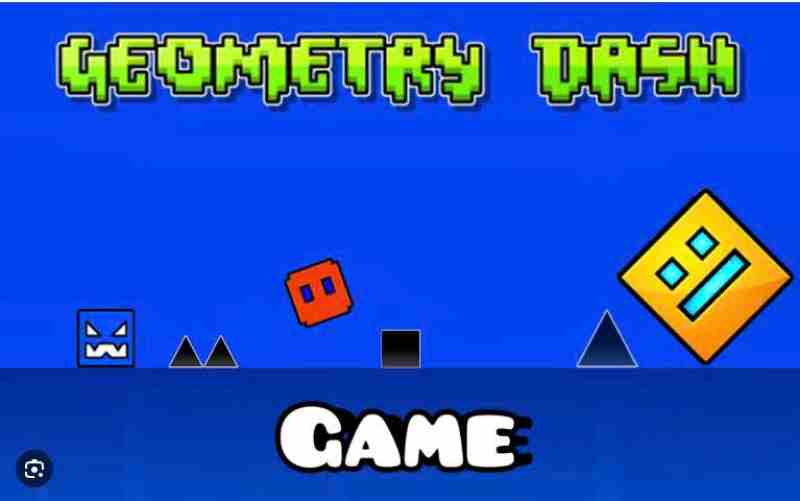
If you've ever found yourself tapping a rhythm on your desk while waiting for coffee to brew, you already have the one skill that matters most in geometry jump games: timing. This genre—simple shapes, one-button controls, deadly obstacles—has quietly become one of the most addictive corners of indie gaming, and the title that put it on the map is Geometry Dash. It's not flashy in the traditional sense. There's no sprawling open world, no dialogue trees, no inventory management. Just a square, a beat, and a wall of spikes waiting to end your run. And somehow, that's exactly why it works.
What Even Is a Geometry Jump Game?
The core idea is almost insultingly simple. You control a small geometric icon—usually a cube, though it can morph into a ship, a ball, or a UFO depending on the level—that moves automatically from left to right. Your only job is to tap (or hold) at the right moment to jump, fly, or flip your way past obstacles. Miss the timing, and you're back at the start of the level, sometimes after making it 95% of the way through.
What separates a good geometry jump game from a frustrating one is music synchronization. In Geometry Dash, every level is built around a soundtrack, and the obstacles are placed to match the beat. Spikes appear on downbeats, gaps open on transitions, and the whole level feels less like a maze and more like a song you're playing with your reflexes instead of your fingers on a piano. Once you internalize this, levels stop feeling random and start feeling musical—which is a strange but genuinely satisfying shift in how you perceive difficulty.
The Actual Gameplay Loop
Each level in a typical geometry jump game follows a pattern: you start easy, build momentum, hit a tricky section, get a brief breather, then face an even harder gauntlet before the finish line. The early levels ease you into basic jumps and simple obstacle patterns. As you progress, you'll encounter gravity-flipping portals, speed changes that mess with your sense of timing, and sections where you control a ship instead of a cube, requiring you to hold and release rather than tap.
The difficulty curve is deliberately brutal in the later stages. Some levels have thousands of individual inputs required in a single run, and one mistimed tap near the end means starting completely over. This is either going to sound like torture or like the most appealing challenge you've heard all week, and honestly, that split pretty much determines whether you'll love this genre or bounce off it entirely.
There's also a huge community-driven aspect. Players design and share their own levels, ranging from beginner-friendly platforming exercises to absurdly complex "demon" levels that only a tiny fraction of players ever complete. This user-generated content is arguably what gives games like Geometry Dash their long-term staying power—there's always a new level, a new song, a new impossible-looking gauntlet to attempt.
A Few Tips If You're Just Starting Out
First, resist the urge to mash the jump button. Precision matters more than speed here, and panicking usually gets you killed faster than patience would. Second, use practice mode if the game offers one—it lets you place checkpoints so you're not restarting from zero every single time, which is a lifesaver for learning tricky sections without losing your mind.
Third, actually listen to the music instead of just watching the obstacles. Once you sync your taps to the beat rather than purely reacting to visuals, your consistency improves dramatically. Fourth, don't chase the hardest levels immediately. Working through the difficulty tiers in order builds the muscle memory and pattern recognition you'll need later—jumping straight into insane-rated levels as a newcomer is a great way to get discouraged fast.
Finally, accept that dying is part of the process. Some levels genuinely take hundreds of attempts, and that's not a design flaw—it's the point. The satisfaction of finally clearing a level you've failed at fifty times is a unique kind of reward that few other genres offer.
Wrapping Up
Geometry jump games occupy a strange but wonderful niche: minimalist visuals, maximalist difficulty, and a soundtrack that turns frustration into flow. Whether you're tapping through your first easy level or attempting a community-made nightmare with a thousand precise inputs, there's something deeply satisfying about the genre's simplicity. Give it a real shot, put on headphones, and let the rhythm guide your fingers—you might just find yourself hooked on shapes and spikes for longer than you expected.
Source:
Click for the: Full Story
You might like