Close Menu
 World
 Biography
 Health
 Education
 Business
 Lifestyle
 Sports
 Technology
 Animals
 History
 Food
 Religious
 Startups
 Movies
 Politics
 Fashion
 Covid
 Diet
 Fitness
 Marketing
 Travel
 Science
 Reviews
 Social media
 Stories
 Facts
 Art
 Entertainment
Shailaja Sangeetam

Education
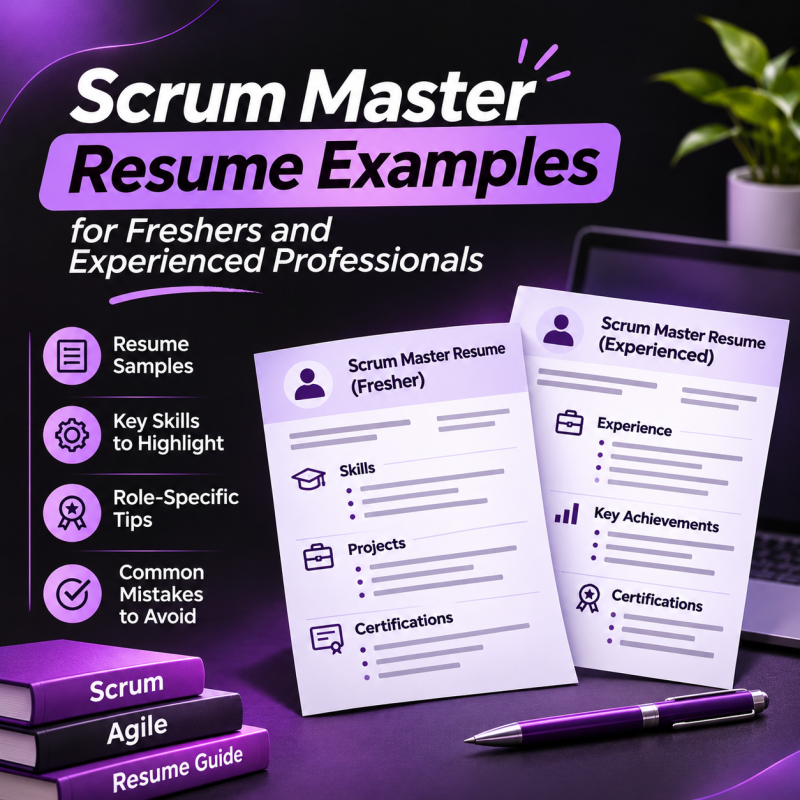
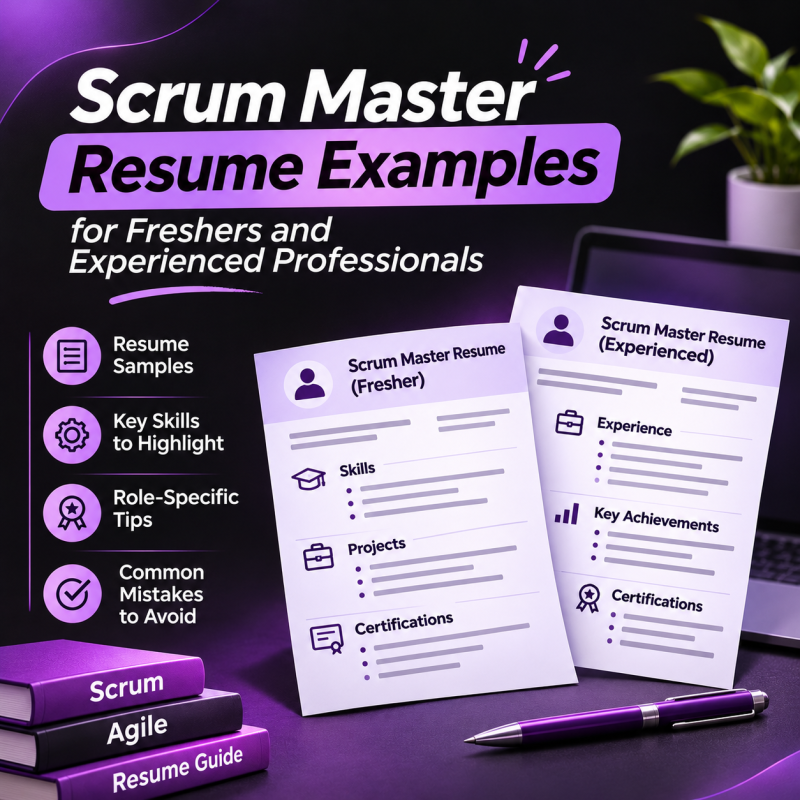
Scrum Master Resume Examples for Freshers and Experienced Professionals
 Shailaja Sangeetam
A Scrum Master resume should do more than list Agile terminology, certifications and meeting responsibilities. It should show how you help teams collaborate, manage delivery challenges and improve their ways of working.
However, writing this resume can be challenging, especially when you are entering the Agile field without professional experience or moving from another role into Scrum. Experienced professionals face a different challenge: presenting their achievements without making their resume sound like a list of routine responsibilities.
The right approach is to highlight relevant skills, practical experience and measurable contributions. This guide explains how to structure a Scrum Master resume, what to include and how freshers and experienced professionals can present their profiles effectively.
1. Start With a Clear Professional Summary
Your professional summary is one of the first sections a recruiter notices. It should briefly explain your experience, understanding of Agile practices and suitability for the position.
Avoid generic statements such as "hardworking professional seeking a challenging opportunity." Instead, focus on your relevant capabilities.
Example for freshers:
"Entry-level Agile professional with knowledge of Scrum principles, Sprint Planning, Daily Scrums and backlog management. Familiar with Jira and Agile project workflows through academic projects and practical exercises. Interested in supporting collaborative teams and contributing to continuous improvement."
Example for experienced professionals:
"Scrum Master with four years of experience supporting cross-functional software development teams. Skilled in facilitating Scrum events, managing impediments, coordinating with Product Owners and improving team collaboration. Experienced in Jira, Sprint tracking and Agile delivery practices."
Keep the summary relevant to the job description. If you have experience in software development, testing, business analysis or project coordination, mention how that background supports your transition.
2. Highlight the Right Skills
Recruiters often look for specific skills when reviewing a Scrum Master resume. Divide them into technical knowledge and professional capabilities to make the section easier to scan.
Agile and Scrum knowledge
- Scrum framework and Agile principles
- Sprint Planning and Sprint Retrospectives
- Daily Scrum facilitation
- Product Backlog and Sprint Backlog management
- User stories and story point estimation
- Impediment and dependency management
- Continuous improvement
Tools and platforms
- Jira
- Confluence
- Azure DevOps
- Miro
- Microsoft Excel
- Agile reporting dashboards
Professional skills
- Team facilitation
- Conflict resolution
- Stakeholder communication
- Problem-solving
- Coaching and mentoring
- Collaboration and negotiation
Include only the tools and skills you can confidently explain during an interview. Listing every popular Agile tool without practical knowledge can create problems when recruiters ask follow-up questions.
3. Scrum Master Resume Example for Freshers
Freshers may not have professional experience as Scrum Masters, but they can still demonstrate their understanding through academic projects, internships, training and team activities.
The following example shows how to organise your profile.
Professional Summary
Entry-level professional with foundational knowledge of Scrum, Agile principles and software development workflows. Familiar with Jira, backlog organisation, Sprint Planning and team collaboration. Eager to contribute to Agile teams while developing practical experience in Scrum facilitation and delivery.
Skills
- Scrum framework and Agile fundamentals
- Sprint Planning and Retrospectives
- User stories and backlog basics
- Jira and Confluence fundamentals
- Communication and collaboration
- Problem-solving and conflict resolution
Academic Project Experience
Agile Project Coordination – Student Management Application
- Worked with a student team to organise application development activities.
- Divided project requirements into smaller tasks and prioritised work.
- Conducted regular team discussions to review progress and identify challenges.
- Used a task-tracking board to maintain visibility of pending and completed activities.
- Participated in project reviews and suggested improvements to the team's workflow.
Certifications and Training
- Scrum fundamentals training
- Certified ScrumMaster (CSM), if completed
- Professional Scrum Master I (PSM I), if completed
This format helps freshers present relevant experience without claiming responsibilities they have never performed.
4. Scrum Master Resume Example for Experienced Professionals
Experienced candidates should focus on their contributions, team size, project complexity and delivery improvements. Recruiters need to understand what changed because of your involvement.
Professional Summary
Scrum Master with five years of experience supporting Agile software development teams. Experienced in facilitating Scrum events, coordinating with Product Owners, addressing impediments and supporting continuous improvement. Proficient in Jira and Confluence, with a strong understanding of cross-functional collaboration and stakeholder management.
Professional Experience
Scrum Master | ABC Technologies | 2022–Present
- Facilitated Sprint Planning, Daily Scrums, Sprint Reviews and Retrospectives for a cross-functional development team.
- Collaborated with the Product Owner to improve backlog readiness and clarify requirements.
- Identified delivery blockers and coordinated with relevant stakeholders to resolve dependencies.
- Supported the team in analysing Sprint outcomes and identifying practical improvement actions.
- Maintained visibility of Sprint progress through Jira boards and reporting dashboards.
- Helped improve communication between developers, testers and business stakeholders.
Project Experience
Customer Portal Development
- Coordinated Agile activities for a team of eight developers and testers.
- Supported dependency discussions between development and testing teams.
- Helped identify recurring delays and introduced regular blocker reviews.
- Improved the visibility of work items through consistent backlog and Sprint tracking.
Use actual figures wherever possible. For example, mention the number of teams supported, release frequency, reduction in recurring blockers or improvements in cycle time—but only when you can substantiate those results.
5. How to Make Your Resume Stand Out
Whether you are applying for your first Scrum Master position or looking for a senior opportunity, a few changes can make your profile more relevant.
Match your resume to the job description: Review the role requirements and highlight the relevant experience and skills you genuinely possess.
Use achievement-focused bullet points: Instead of writing "Conducted Sprint Retrospectives," explain what the discussions helped the team identify or improve.
Show your tool knowledge: Mention how you used Jira, Confluence or Azure DevOps rather than simply listing their names.
Include relevant certifications: Add the certification name, issuing organisation and completion date. Do not describe training attendance as a professional certification.
Keep the format readable: Use clear headings, consistent formatting and concise bullet points. A simple one- or two-page resume is generally easier to review than a crowded document.
6. Common Resume Mistakes to Avoid
Even candidates with strong experience can weaken their applications through avoidable mistakes.
- Listing Scrum events without explaining your contribution.
- Claiming to have managed or led teams when your role was limited to participation.
- Adding certifications that have not been completed.
- Using the same resume for every job application.
- Including too many unrelated skills.
- Describing velocity as a measure of individual productivity.
- Adding project results or percentages that cannot be verified.
Your resume should create an accurate picture of your capabilities. Be prepared to explain every important responsibility and achievement during the interview.
Conclusion
A strong Scrum Master resume connects Agile knowledge with practical contributions. Freshers should highlight relevant projects, training, tools and transferable skills, while experienced professionals should demonstrate their impact on team collaboration and delivery.
Use the examples in this guide as a starting point, then adapt the content to your actual experience and the job you are targeting. A clear, honest and well-structured resume can help recruiters understand why you are suitable for a Scrum Master position.
Source:
Click for the: Full Story
You might like