Close Menu
 World
World
 Biography
 Health
 Education
 Business
 Lifestyle
 Sports
 Technology
 Animals
 History
 Food
Food
 Religious
 Startups
 Movies
 Politics
 Fashion
 Covid
Covid
 Diet
Diet
 Fitness
 Marketing
 Travel
 Science
 Reviews
 Social media
 Stories
 Facts
Facts
 Art
Art
 Entertainment
Alina

Business
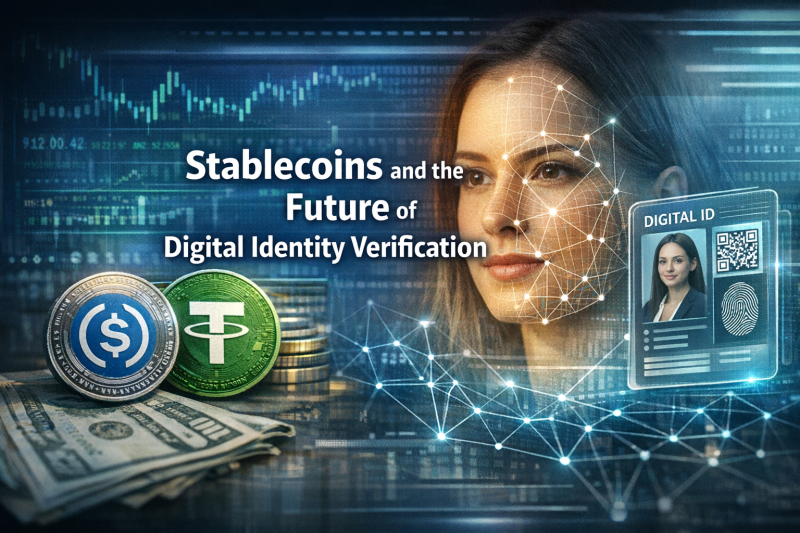
Stablecoins and the Future of Digital Identity Verification
 Alina
Alina
The convergence of stablecoins and digital identity verification is shaping a transformative trajectory in fintech and blockchain ecosystems. Stablecoins—cryptocurrencies pegged to stable assets like fiat currencies—have already redefined cross-border payments, micropayments, and decentralized finance (DeFi). Beyond financial transactions, their integration into digital identity verification protocols offers a compelling frontier for secure, scalable, and compliant user authentication in digital spaces.
The Role of Stablecoins in Digital Ecosystems
Stablecoins serve as a bridge between traditional finance and blockchain networks. Unlike volatile cryptocurrencies, their value stability enables consistent transactional integrity, which is critical in identity verification workflows. For instance, when a user interacts with decentralized applications (dApps) requiring Know Your Customer (KYC) compliance, stablecoins can facilitate instant payments for verification services while maintaining ledger transparency. This reduces reliance on intermediaries and mitigates the risk of fraudulent identity claims.
Furthermore, blockchain-enabled stablecoins inherently provide immutability, ensuring that once identity verification data is confirmed, it cannot be tampered with. This establishes a robust audit trail for regulatory compliance. As enterprises increasingly adopt blockchain infrastructures, the deployment of stablecoins as transactional anchors in identity systems ensures both operational efficiency and user trust.
Integrating Stablecoins with Digital Identity Frameworks
The technical integration of stablecoins into identity verification involves several layers. At the base, blockchain protocols encode verification credentials through smart contracts, enabling automatic execution of authentication logic. For example, digital wallets can store verifiable credentials that are cryptographically signed, and stablecoins can act as utility tokens to initiate verification processes.
Key benefits of this integration include:
- Enhanced Security: Cryptographic proofs reduce identity spoofing risks.
- Transparency: All verification transactions are recorded on-chain, offering traceability.
- Global Accessibility: Users from jurisdictions with limited banking infrastructure can participate in verification processes without relying on traditional financial channels.
- Programmable Compliance: Regulatory requirements can be encoded in smart contracts, ensuring automatic adherence to KYC/AML mandates.
Enterprises seeking to implement these solutions often collaborate with specialized service providers, including experienced cryptocurrency coin developers, to build tailored stablecoin-powered verification platforms. These developers play a crucial role in ensuring the interoperability of identity protocols with diverse blockchain ecosystems while maintaining compliance with evolving regulatory frameworks.
Key Challenges and Considerations
Despite the promising potential, integrating stablecoins with digital identity verification is not without challenges. One primary concern is regulatory uncertainty. Jurisdictions vary widely in their treatment of cryptocurrencies and digital identity frameworks, and compliance can require dynamic adaptation.
Additionally, privacy concerns must be addressed meticulously. While blockchain’s transparency is advantageous for auditability, it poses a risk to personal data confidentiality. Implementing zero-knowledge proofs (ZKPs) or selective disclosure mechanisms is critical to balance transparency with user privacy.
Technical scalability also demands attention. High-volume identity verification processes can strain blockchain networks, necessitating optimized consensus mechanisms or layer-2 solutions to maintain transaction speed and cost-efficiency.
Future Outlook: Convergence of Finance and Identity
Looking forward, the synergy between stablecoins and digital identity verification promises to redefine digital interactions. Beyond financial services, this convergence has implications for healthcare, e-governance, and secure online marketplaces. By embedding stablecoin transactions within identity protocols, systems can offer frictionless authentication with built-in economic incentives for users and service providers alike.
Moreover, the proliferation of decentralized identifiers (DIDs) and verifiable credentials will further enhance the ecosystem. Users may gain greater control over their digital identities, deciding when and how to share credentials, all while leveraging stablecoins for transactional validation. This model fosters a user-centric paradigm, empowering individuals while maintaining stringent compliance standards.
As enterprises continue to explore this frontier, collaboration with blockchain experts and cryptocurrency coin developers will be pivotal. These partnerships ensure the development of secure, scalable, and compliant solutions capable of meeting the evolving demands of global digital identity verification frameworks.
In conclusion, stablecoins are not merely a financial instrument; they are an enabler for next-generation digital identity verification. Their integration with blockchain-based identity systems offers a pathway toward secure, efficient, and privacy-conscious authentication mechanisms. While challenges related to regulation, scalability, and privacy remain, the trajectory suggests a future where stablecoins underpin the trust and operational integrity of digital identity ecosystems worldwide.
Source:
Click for the: Full Story
You might like