



 Close Menu
 World
World
 Biography
 Health
 Education
 Business
 Lifestyle
 Sports
 Technology
 Animals
 History
 Food
Food
 Religious
 Startups
 Movies
 Politics
 Fashion
 Covid
Covid
 Diet
Diet
 Fitness
 Marketing
 Travel
 Science
 Reviews
 Social media
 Stories
 Facts
Facts
 Art
Art
 Entertainment
Aleesha Ali

Education
Suture Practice Kit: A Practical Guide for Medical Students
 Aleesha Ali
Learning suturing is an important part of practical medical education. While classroom instruction provides the foundation, developing consistent hand skills requires practice. A suture practice kit gives medical students and healthcare trainees a convenient way to repeat basic suturing techniques in a controlled training environment.
From learning needle handling to improving stitch placement, regular practice can help students become more familiar with the fundamental steps involved in wound closure.
What Is a Suture Practice Kit?
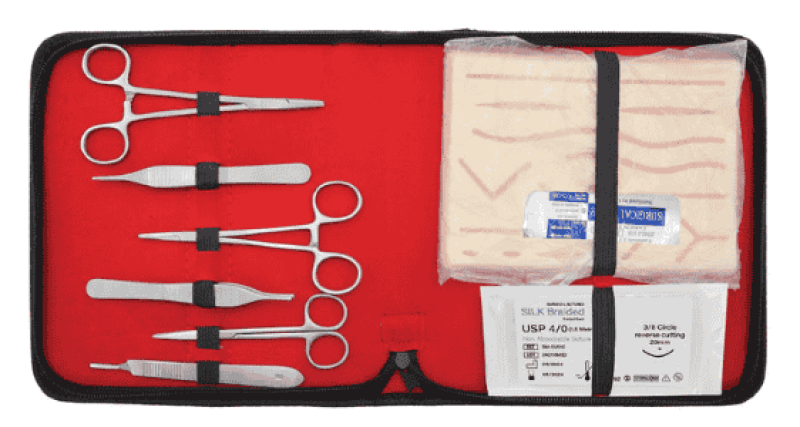
A suture practice kit is a collection of instruments and materials used to practice basic suturing techniques outside of a clinical procedure.
Depending on the kit, it may include items such as:
- Suture practice pads
- Surgical scissors
- Needle holders
- Forceps
- Surgical needles
- Sutures
- Scalpel handles or blades
- Training accessories
- Storage or carrying cases
The exact contents vary between kits, so students should check the product specifications before purchasing.
Why Use a Suture Practice Kit?
Suturing requires coordination, precision, and familiarity with basic surgical instruments. Repeated practice allows students to focus on these skills without the pressure of performing a procedure on an actual patient.
A practice kit can be useful for:
- Medical students
- Nursing students
- Physician assistant students
- Surgical trainees
- Healthcare educators
- Clinical skills laboratories
It can also make practice sessions easier to organize because the essential training materials can be kept together.
Skills You Can Practice
A good suture training setup can support practice with several basic techniques.
Instrument Handling
Beginners first need to become comfortable holding and manipulating instruments such as needle holders and forceps. Developing controlled movements is an important part of learning suturing.
Needle Handling
Students can practice picking up, positioning, and passing a surgical needle while working with a training pad or other simulated material.
Basic Stitch Techniques
Depending on their curriculum and level of training, students may practice techniques such as:
- Simple interrupted sutures
- Continuous sutures
- Horizontal mattress sutures
- Vertical mattress sutures
- Instrument ties
Training should always follow the technique taught by the student's instructor or medical education program.
What to Look for in a Suture Practice Kit
Not every kit contains the same equipment. Before choosing one, consider the following factors.
Complete Instrument Selection
A useful surgical suture kit should contain the basic instruments needed for the techniques you intend to practice. Having compatible instruments together can make training sessions more convenient.
Practice Material
The quality and design of the practice pad or simulated tissue can affect the training experience. Look for a reusable or appropriately designed material that allows you to perform repeated stitches without quickly becoming unusable.
Variety of Sutures
Different suture materials and sizes can provide opportunities to become familiar with different handling characteristics. However, the appropriate suture should depend on the training objective.
Portability
Students who practice at home, in study groups, or across different training locations may benefit from a compact kit with organized storage.
Suture Practice at Home
A suture practice kit can make it possible to review basic techniques outside formal laboratory sessions. A dedicated practice area should be clean, organized, and suitable for handling the training materials.
Home practice should be treated as simulation training, not as a substitute for supervised clinical education. Students should follow guidance from qualified instructors and their institution's curriculum.
How to Get More From Your Practice Sessions
Simply repeating stitches is not always enough. Students can make practice more productive by setting a specific objective for each session.
For example, one session might focus on needle handling, while another concentrates on consistent spacing and knot technique.
It can also help to practice slowly before increasing speed. Developing controlled movements and consistent technique should come before trying to complete sutures quickly.
Keeping a record of your practice sessions can also help identify areas that need additional attention.
Suture Practice Kit for Medical Students
Medical students often need to develop practical skills alongside theoretical knowledge. A dedicated practice kit can provide an accessible way to review basic suturing concepts and instrument handling between supervised sessions.
If you're looking for a complete setup, explore this complete suture practice kit for medical students to see the instruments and training materials included.
For students who need a smaller training setup, a student suture practice kit can also be a practical option for reviewing fundamental suturing techniques.
Final Thoughts
A suture practice kit can be a useful educational tool for students and healthcare trainees learning fundamental suturing skills. It brings together practice materials and instruments in one convenient setup, making it easier to repeat basic techniques and develop familiarity with surgical tools.
The most important part of suturing practice is consistent, supervised learning. Use simulation equipment to reinforce the techniques taught by qualified educators, and gradually build confidence through structured practice.
Source:
Click for the: Full Story
You might like









You Might Like this