Close Menu
 World
World
 Biography
 Health
 Education
 Business
 Lifestyle
 Sports
 Technology
 Animals
 History
 Food
Food
 Religious
 Startups
 Movies
 Politics
 Fashion
 Covid
Covid
 Diet
Diet
 Fitness
 Marketing
 Travel
 Science
 Reviews
 Social media
 Stories
 Facts
Facts
 Art
Art
 Entertainment
Jack Danial

Diet
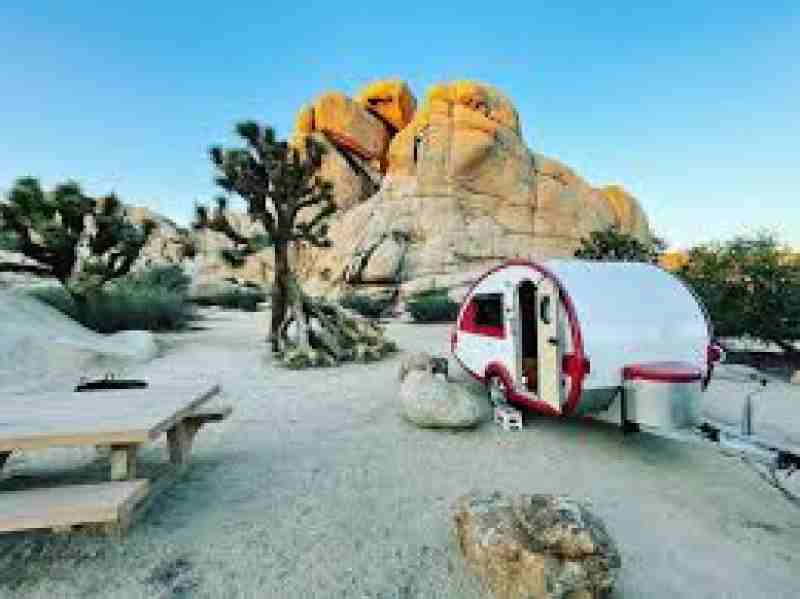
The Joshua Tree Crucible: Forging Resilience Through Joshua Tree National Park Camping
 Jack Danial
In an age of curated comfort and instant gratification, we seldom seek out environments that test our mettle. Joshua Tree National Park is not that kind of escape. It is a crucible—a place of raw beauty and elemental force where the modern self is stripped back to its essentials. The wind scours, the sun challenges, and the vast silence asks unspoken questions. To engage with this place on its own terms is to undergo a subtle but powerful forging process. This transformation doesn't happen from a climate-controlled car. It requires the direct, sustained exposure that is the hallmark of Joshua Tree National Park camping. It is a practice in resilience, a course in self-reliance taught by the desert itself. To begin, you must first secure your place in the furnace by planning for true Joshua Tree National Park camping.
The First Test: Logistics and Tenacity
The desert's lessons begin long before you pass the park entrance. In a time of overwhelming demand, simply securing a place to lay your head is an exercise in patience and strategy.
The Forge of Reservations
The path to a campsite mirrors the desert's own dichotomy: it requires both fierce, focused action and the ability to adapt. For the reservable fortresses—Jumbo Rocks, Indian Cove, Ryan Campground—you must be a tactician. This means committing the 6-month advance booking date to memory and being poised at your computer the moment the digital gates open on Recreation.gov. It is a test of discipline. For the First-Come, First-Served (FCFS) outposts like Hidden Valley, the test is one of flexibility and timing. It demands a mid-week pilgrimage, an early arrival, and the mental fortitude to accept the outcome. This initial hurdle separates the casual dreamer from the committed participant, setting the tone for the resilience required within.
Choosing Your Arena
Each campground serves as a different kind of training ground.
- The Communal Anvil: Hidden Valley Campground is where resilience is forged in community. It’s loud, social, and shared. You learn to focus amid the chatter of climbers, to share space, and to draw energy from a collective spirit.
- The Solitary Furnace: Belle or the remote Cottonwood Campground are places of isolated tempering. Here, resilience is an internal dialogue. You face the silence, the self, and the sheer scale of the landscape alone, building a different kind of mental strength.
- The Foundry with a Safety Valve: Black Rock Canyon Campground offers a blend. It provides the authentic desert immersion with slightly easier access to water and services, allowing for a building of resilience with a slightly softer landing—ideal for those new to the forge.
- The Elemental Exposure: White Tank Campground, small and primitive, places you directly at the mercy of the elements with minimal buffer. It is the purest test of your preparation and self-sufficiency.
The Toolkit of Resilience: Gear as Your Armor
In the desert, your gear is not about luxury; it is your essential armor against the elements. Packing for Joshua Tree National Park camping is an act of foresight that directly determines your capacity to endure and thrive.
The Non-Negotiable Armaments
Beyond the tent and sleeping bag, these are the items that defend your well-being:
- The Insulation Barrier: A high-R-value sleeping pad is your shield against the cold desert ground, which will leach heat from your body relentlessly. This is foundational to restorative sleep.
- The Wind and Sun Defenses: The sun is a constant adversary. A wide-brimmed hat, sunglasses, and high-SPF sunscreen are mandatory. A wind-resistant shell is equally critical, as a deceptively warm day can be pierced by a chilling gale in minutes.
- The Hydration Citadel: Your water supply is your lifeline. Calculate rigorously (1.5 gallons/person/day minimum) and transport it in large, durable jugs. A hydration bladder for hikes ensures you drink consistently without stopping.
- The Raven-Proof Bastion: Treat food storage as a siege defense. Use the metal lockers at every site without fail. Assume the local ravens and coyotes are master strategists; any lapse will be exploited.
The Code of the Crucible: Forging with Respect
Resilience is not about conquering the landscape, but about proving you can exist within it without causing harm. Your ethics are your honor code.
- Endure Without Erosion: Stay on rock and established trails. The fragile cryptobiotic soil is the living skin of the desert; damaging it for a shortcut shows a failure of resilience and respect.
- Carry Your Weight, Literally: Pack out every single thing you bring in. The desert cannot process your waste. Your resilience is measured by your ability to leave no trace of your struggle or your presence.
- Master Fire, or Forgo It: If you build a fire, keep it small, contained, and drown it with water until it is cold to the touch. During frequent wind advisories, the resilient choice is to enjoy the cold, clean darkness.
- Embrace the Sound of Silence: Let the natural world dominate the audio landscape. Your ability to find peace without filling the silence with noise is a core part of the resilient mindset.
The Daily Forging: Heat, Cold, and the Will to Explore
A day in the crucible has a natural arc. Fighting it is futile; resilience comes from adapting your rhythm to its unyielding pattern.
The Tempering Schedule
- The Morning Quench (Dawn - 10 AM): The cool morning is for action, for shaping the day. This is when you hammer out miles on the Lost Palms Oasis trail or tackle a challenging climb. The heat is your motivator to move with purpose.
- The Annealing Hours (10 AM - 4 PM): The intense midday sun is the annealing process—a controlled cooling that relieves internal stresses. Your resilience is shown not by pushing through, but by smart retreat. Read, nap, plan. Let the desert bake around you while you conserve strength.
- The Evening Tempering (4 PM - Dusk): As the heat relents, re-engage. The light is softer, the world feels forgiving. A walk at Skull Rock or a visit to Arch Rock tests your recovered energy in a gentler forge.
- The Cold Hardening (Night): After dark, the final test begins. The temperature plummets. This is when your insulation, your warm layers, and your mental fortitude are hardened. Sitting under the astounding, cold clarity of the stars is the reward for enduring the day's heat.
The Inner Metamorphosis
The true forging happens internally. It’s the moment you realize you packed perfectly, that you are comfortably self-sufficient. It's the satisfaction of navigating by map and landmark, the pride in a well-secured camp that withstands the wind, and the profound quiet that settles in when you stop fighting the environment and start flowing with it.
CONCLUSION
Joshua Tree National Park camping is an exercise in forging a more resilient self. It is intentionally uncomfortable, logistically challenging, and environmentally demanding. But within that crucible of sun, stone, and wind, you are tempered. You learn the resilience of preparation, the strength of adaptability, and the fortitude required to sit quietly with your own thoughts in an immense, ancient landscape. You don't emerge from the desert unchanged. You emerge tougher, quieter, more capable, and with a deep-seated knowledge that you can handle more than you thought. The desert doesn't give you souvenirs; it forges within you a quiet confidence that is the truest keepsake of all.
Source:
Click for the: Full Story
You might like