



 Close Menu
 World
World
 Biography
 Health
 Education
 Business
 Lifestyle
 Sports
 Technology
 Animals
 History
 Food
Food
 Religious
 Startups
 Movies
 Politics
 Fashion
 Covid
Covid
 Diet
Diet
 Fitness
 Marketing
 Travel
 Science
 Reviews
 Social media
 Stories
 Facts
Facts
 Art
Art
 Entertainment
Ai agent
Health
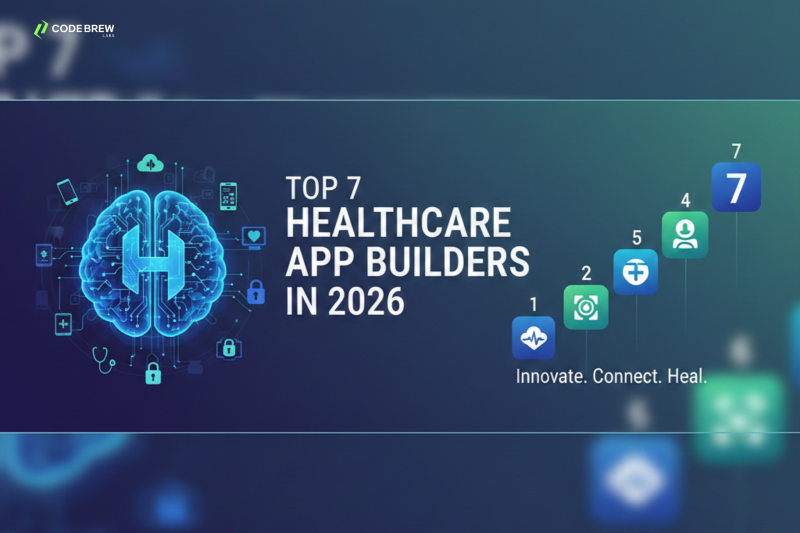
Top 7 Healthcare App Builders in 2026
 Ai agent
Introduction
The healthcare industry has undergone more significant changes in the past five years than in the previous fifty, and a substantial part of that transformation stems from the rapid growth of healthcare apps. Consider this: people now rely on their smartphones for everything from booking appointments to receiving AI-powered health assessments, tracking medications, and even monitoring chronic conditions in real-time. In 2026, this demand is not slowing down; in fact, it’s accelerating faster than ever as hospitals, clinics, startups, and even large enterprises push toward digital transformation. With telemedicine becoming mainstream, AI-driven diagnostics gaining trust, and remote patient monitoring becoming a necessity rather than an option, healthcare apps have become essential tools rather than luxury add-ons.
A great healthcare app builder must understand more than just code; they must understand healthcare workflows, regulatory constraints, patient privacy, interoperability standards, AI integration, and emerging industry trends. The best ones don’t just build apps; they build healthcare ecosystems. That’s why we’ve carefully selected the Top 7 Healthcare App Builders in 2026, focusing on innovation, reliability, security, compliance, and real-world performance. If you're looking to build a healthcare app that stands out, scales smoothly, and remains future-proof, this list gives you the clarity and direction you need.
Growing Demand for Healthcare Apps
The demand for healthcare apps has grown massively over the past few years, and in 2026, it’s clearer than ever that digital health is no longer a trend it’s a necessity. Patients want convenience, speed, and access to medical services without needing to sit in waiting rooms or travel long distances. Hospitals are looking for ways to become more efficient, reduce paperwork, and improve patient outcomes through digital tools. Even insurance companies, fitness brands, and pharmacies are integrating healthcare apps into their systems to streamline operations and strengthen customer engagement.
Another major reason for this surge is shifting patient behavior. People today rely on smartphones for everything, and healthcare is no exception. They want to track their medication schedules, monitor chronic conditions, check symptoms, talk to doctors through video calls, and get personalized wellness advice all through an app. The rise of remote patient monitoring has also skyrocketed, especially for elderly users and patients with long-term health issues.
On the business side, healthcare apps provide companies with real-time data, better patient management, automated systems, and reduced operational costs. With governments worldwide pushing digital health transformation and telemedicine regulations becoming more flexible, the industry is perfectly positioned for continued growth. Simply put, the demand is huge, the market is expanding, and there has never been a better time for businesses to invest in high-quality healthcare apps.
Why Choosing the Right App Builder Matters
With so many healthcare apps flooding the market, users have become more selective than ever, and that’s exactly why choosing the right app builder is absolutely critical. Healthcare apps deal with sensitive medical data, emergency communications, and life-impacting features. A small mistake in design, development, or security can lead to massive patient risks, legal trouble, or even business failure.
The right app builder ensures your app is functional but also compliant with healthcare regulations such as HIPAA, GDPR, HL7, and national privacy laws. They understand medical workflows, patient behavior, doctor-patient communication models, and the specific requirements of hospitals, clinics, and telehealth providers. They also know how to design intuitive user interfaces that patients of all ages, including seniors, can navigate comfortably.
A great development team also determines how well your app scales. Healthcare apps typically grow rapidly as user numbers increase. If your infrastructure isn’t built to scale, your app will lag, crash, or lose data, something that’s completely unacceptable in the healthcare industry. Good developers also build apps that are future-ready, meaning they can easily integrate AI tools, wearable devices, IoT healthcare equipment, and upcoming medical technologies.
Simply put, the right app builder saves you time, money, energy, and countless headaches. They become long-term technology partners who understand your vision and help you deliver safe, innovative, and reliable healthcare solutions.
Security & Compliance
In healthcare app development, security is everything. Medical apps handle highly sensitive data, such as patient records, lab results, diagnoses, mental health information, and even biometric details. In the wrong hands, this information can cause serious harm. That’s why healthcare app builders in 2026 must be experts in cybersecurity and meet strict compliance standards.
HIPAA in the U.S., GDPR in Europe, and country-specific healthcare regulations dictate how patient data must be collected, stored, processed, and transferred. A good healthcare app builder ensures end-to-end encryption, secure cloud architecture, protected APIs, and standardized data-handling practices. They also build multiple layers of authentication from biometrics to one-time login codes to ensure that only the right people access sensitive information.
Compliance isn’t only about following laws; it’s about building trust. If users feel unsafe, they won’t use your app. Healthcare brands that prioritize security build stronger reputations and long-term patient loyalty.
Scalability & Innovation
A successful healthcare app should grow alongside your users, your business, and future technology. That’s where scalability becomes essential. A strong healthcare app builder uses cloud infrastructure, microservices, and modular architecture that allows your app to expand smoothly without downtime, even if the user base increases from hundreds to thousands to millions.
Innovation plays an equally important role. Healthcare in 2026 is driven by fast-changing technologies like AI diagnostics, wearable integration, remote patient monitoring, and real-time data analytics. If your app builder can’t keep up with these trends, your app will become outdated quickly. The best developers anticipate new technology and build apps that can adapt effortlessly.
AI, IoT, and Telemedicine Features
Modern healthcare apps rely heavily on AI, IoT, and telemedicine, three technologies transforming medical care in 2026. AI helps analyze symptoms, predict risks, automate workflows, and provide instant health recommendations. IoT connects medical devices, wearables, glucose monitors, heart-rate sensors, and even smart hospital equipment to your app for real-time monitoring. Telemedicine adds convenience by enabling video consultations, digital prescriptions, and remote care.
Together, these technologies make healthcare more accessible, affordable, and efficient. That’s why a top healthcare app builder must offer expertise in AI algorithms, IoT integration, cloud connectivity, and secure video communication. Without these, an app cannot meet modern healthcare expectations.
1. Code Brew Labs – Leading the Market in 2026
Overview
Code Brew Labs has earned its reputation as a global leader in healthcare app development by consistently delivering powerful, high-performing medical applications. By 2026, the company will have positioned itself at the forefront of digital health innovation, working with hospitals, medical startups, insurance companies, and wellness brands worldwide. Their development process focuses on building apps that are not only visually appealing but also compliant, secure, and patient-friendly. Code Brew’s expertise covers telemedicine platforms, medical CRM systems, wearable-integration apps, AI diagnostic tools, and remote patient monitoring applications.
Key Features
- HIPAA, GDPR, HL7, and FHIR compliance
- AI-driven patient analytics
- Telemedicine with HD video consultations
- IoT integration for smart health devices
- Built-in e-prescription and pharmacy order modules
- Secure cloud infrastructure with end-to-end encryption
- Custom EMR/EHR integration
These features make Code Brew Labs ideal for healthcare organizations aiming to create end-to-end digital health ecosystems instead of simple standalone apps.
Why Code Brew Stands Out
What separates Code Brew Labs from the competition is its strong combination of technical expertise and healthcare domain knowledge. They don’t just build apps; they strategize, design, and scale complete digital solutions. Their ability to integrate advanced technologies like AI, IoT, blockchain, and predictive analytics gives clients a massive competitive advantage. Code Brew also offers dedicated support teams, agile development, and tailored architecture planning for long-term scalability.
Pros & Cons
Pros:
- Highly experienced in large-scale healthcare platforms
- Advanced AI and telehealth capabilities
- Strong data security and compliance
- Excellent post-launch support
Cons:
- Higher pricing than smaller agencies
- Complex projects may take longer timelines
2. Royo Apps – A Versatile Healthcare App Builder
Company Overview
Royo Apps is known for its versatility and rapid development capabilities, making it a go-to choice for healthcare companies that need speed, flexibility, and affordability. By 2026, Royo Apps has built hundreds of healthcare-focused digital solutions ranging from appointment-booking apps to complete hospital management systems. Their modular architecture and customizable templates allow businesses to launch powerful healthcare apps faster than traditional development agencies.
Healthcare-Focused Features
- Telemedicine video calls and instant chat
- Medical record management
- Digital pharmacy and prescription tools
- On-demand doctor platforms
- Health tracking dashboards
- Lab test booking and diagnostic reports
Royo Apps’ strength lies in its ability to combine ready-made features with custom-built modules, making it perfect for companies that want fast deployment without sacrificing quality.
Best Use Cases
- Startups needing quick MVP development
- Clinics wanting a branded telemedicine app
- Pharmacies looking to build ordering & delivery apps
- Health tech platforms requiring ready-to-launch templates
- Wellness and fitness brands expanding into digital health
Pros & Cons
Pros:
- Fast turnaround time
- Budget-friendly solutions
- Pre-built modules to accelerate development
- Great for startups and small clinics
Cons:
- Limited deep customization compared to premium developers
- Not ideal for extremely complex enterprise systems
3. Blocktech Brew – Blockchain-Powered Healthcare Solutions
Overview
Blocktech Brew has established itself as a next-generation healthcare app builder by integrating blockchain technology into medical solutions. In 2026, as data privacy becomes more important than ever, Blocktech Brew offers unmatched transparency, security, and immutability through decentralized infrastructure. Their focus on blockchain sets them apart, especially for clients dealing with sensitive data and complex security needs.
Blockchain-Based Healthcare Services
- Blockchain-enabled EMR/EHR systems
- Secure medical data exchange
- Anti-tampering patient record storage
- Smart contracts for insurance claims
- Prescription authenticity verification
- Patient identity management
By using blockchain, Blocktech Brew ensures that every interaction, transaction, and record remains verifiable, protected, and trustworthy.
Ideal Clients
Blocktech Brew is best suited for:
- Hospitals are concerned about data breaches
- Insurance companies need automated claims
- Research organizations requiring tamper-proof records
- Pharma companies tracking drug authenticity
- Health tech enterprises focusing on secure data interoperability
Pros & Cons
Pros:
- State-of-the-art blockchain security
- Perfect for projects requiring data transparency
- Great for insurance, pharma, and enterprise apps
- Strong focus on emerging technologies
Cons:
- Higher development costs due to blockchain integration
- More complex architecture requires long-term maintenance
4.OpenXcell – Trusted by Global Healthcare Enterprises
Overview
OpenXcell has cemented its reputation as one of the most reliable healthcare app development companies, especially for enterprises and large medical organizations. By 2026, they are known for building sophisticated, future-ready healthcare ecosystems used by hospitals, diagnostic centers, pharmaceutical companies, and global health brands. Their development teams emphasize precision, compliance, quality assurance, and scalability, making them a top choice for mission-critical healthcare apps that must operate without failure.
Major Features
- Customized EMR/EHR systems
- HIPAA & GDPR-compliant architecture
- AI-powered patient engagement solutions
- Telemedicine & virtual care platforms
- Patient portal development
- Medical billing and insurance claim automation
- Integrations with IoT & wearable health devices
- Cloud solutions using AWS, Azure & Google Cloud
OpenXcell is especially strong when it comes to integrating complex backend systems, enabling seamless data flow between hospitals, doctors, patients, and labs.
Best for Large-Scale Deployments
OpenXcell is the go-to choice when a healthcare organization requires speed, security, and multi-level scalability. They excel in:
- Hospital-level digital transformation
- National or enterprise-level healthcare platforms
- Cloud-hosted multi-tenant medical systems
- High-traffic telehealth portals
- Large diagnostic networks
Pros & Cons
Pros:
- Extremely reliable for complex healthcare systems
- Strong compliance and data protection
- Enterprise-level security architecture
- Excellent long-term technical support
Cons:
- Costlier than mid-range agencies
- Enterprise-focused, not ideal for very small startups
5.MindInventory – AI-Enhanced Medical App Builder
Overview
MindInventory has grown rapidly in the digital health space thanks to its deep focus on AI-driven healthcare solutions. In 2026, they are known for combining creative app design with cutting-edge artificial intelligence, helping medical companies deliver smarter, more intuitive, and more personalized patient experiences.
AI-Driven Capabilities
- AI symptom analysis and chatbots
- Predictive analytics for patient risk assessment
- Medical image recognition & AI diagnostics
- NLP-powered health assistants
- Personalized treatment recommendation engines
- Automated appointment triage and scheduling
MindInventory’s strength lies in transforming patient data into meaningful insights that improve care quality and operational efficiency.
Strengths and Weaknesses
Strengths:
- Deep expertise in AI and machine learning
- Modern UI/UX focused on patient engagement
- Ideal for innovative health tech startups
- Strong agility and fast development cycles
Weaknesses:
- Not designed for massive enterprise applications
- Heavy AI features may increase development cost
6.ScienceSoft – Healthcare IT Experts Since 2005
Overview
ScienceSoft is one of the oldest and most respected names in healthcare IT development. With roots dating back to 2005, they have worked with major hospitals, pharma companies, biotech organizations, and government healthcare programs. Their long history and strong technical expertise make them one of the most reliable partners for organizations looking for stable, long-term digital health solutions.
Telehealth & EMR/EHR Specialization
ScienceSoft is widely known for:
- Building robust EMR/EHR systems
- Developing secure telehealth platforms
- Creating integrated patient portals
- Implementing hospital management systems
- Enabling interoperability with HL7 & FHIR
- Developing remote patient monitoring tools
Their biggest strength is their ability to merge clinical workflows, medical compliance, and modern digital health technologies all in one ecosystem.
Pros & Cons
Pros:
- Decades of healthcare IT experience
- Strong backend engineering
- Excellent compliance and documentation
- Perfect for hospitals & government-level projects
Cons:
- Slower development due to heavy processes
- High-end pricing
7. Emizentech – Affordable Yet Powerful App Builder
Overview
Emizentech offers a balanced combination of affordability and strong technological capability, making it popular among startups, clinics, and mid-sized healthcare companies. Their strength lies in delivering high-quality apps without overwhelming budgets, while still maintaining good security standards.
Best Features
- Fast MVP development
- Telemedicine & doctor consultation modules
- Health tracking & fitness applications
- Lab booking and online pharmacy tools
- Cloud-based patient data management
- Affordable custom development
Pros & Cons
Pros:
- Budget-friendly
- Fast delivery
- Great for startups and SMEs
- Clean UI/UX and smooth performance
Cons:
- Not ideal for very large enterprise systems
- Limited capability for deep AI or complex IoT
How to Choose the Best Healthcare App Builder in 2026
Budget
Determine how much you can realistically invest.
- Low budget: Choose developers with templates or MVP options.
- Mid-range: Custom apps with more features and integrations.
- High budget: Enterprise-level systems with AI, IoT, and advanced security.
Project Scope
Consider:
- App size
- Number of user roles
- Required integrations
- Backend complexity
- Long-term scalability
Required Tech Stack
Healthcare in 2026 requires expertise in:
- AI & machine learning
- IoT/wearable integration
- Cloud computing
- HL7/FHIR interoperability
- Blockchain (optional but growing)
Compliance
Your development partner must ensure compliance with:
- HIPAA
- GDPR
- HL7
- FHIR
- Local health privacy laws
Strong compliance prevents data leaks, lawsuits, and app store rejection.
Essential Features Your Healthcare App Must Include in 2026
Telemedicine
Telemedicine has become the backbone of digital healthcare. In 2026, patients expect instant video consultations, in-app chat, appointment scheduling, e-prescriptions, and electronic follow-ups without glitches. A strong telemedicine module must include HD video calling, secure messaging, real-time file sharing, and authentication systems that keep patient data private. Telemedicine is no longer optional; it’s essential for clinics, hospitals, and wellness platforms.
Wearable Integrations
From smartwatches to glucose monitors and heart-rate trackers, wearable devices are transforming patient monitoring. A modern healthcare app must be able to collect, sync, and analyze real-time data to provide insights on activity levels, sleep, vitals, and chronic health conditions. Integrating with Apple Health, Google Fit, and medical-grade IoT devices is crucial for building trust and providing accurate health visibility.
AI Diagnostics
AI is becoming a “digital doctor assistant,” helping users understand symptoms, detect risks, and receive personalized recommendations. AI diagnostics provide instant triage, prioritize urgent cases, and offer predictive suggestions based on historical health data. Modern apps also use AI for image analysis, lab report interpretation, and early disease detection. This is a must-have feature for staying competitive.
EHR Sync
Seamless Electronic Health Record (EHR) integration ensures that patient data flows effortlessly between doctors, hospitals, labs, and pharmacies. Integration with HL7, FHIR, and EMR/EHR systems helps reduce administrative workload and improve patient outcomes. In 2026, interoperability is a requirement for apps to sync data instantly, securely, and accurately.
Cost of Building a Healthcare App in 2026
Factors Affecting Cost
- App type (telemedicine, EHR, fitness, chronic care, etc.)
- Features & integrations
- Platforms (iOS, Android, Web)
- AI, blockchain, or IoT components
- Compliance requirements
- UI/UX complexity
- Backend infrastructure
Low, Medium, and Premium Tiers
- Low tier ($15,000 – $40,000):
- Basic apps, MVPs, simple teleconsultation, minimal integrations.
- Medium tier ($40,000 – $120,000):
- Full telemedicine platforms, wearable integration, and analytics dashboards.
- Premium tier ($120,000 – $400,000+):
- Enterprise-grade apps, AI-powered systems, multi-module hospital platforms, blockchain, or IoT networks.
Future of Healthcare App Development After 2026
AI Doctors
AI-powered virtual doctors will take over initial medical assessments. These systems will analyze symptoms, medical history, wearable data, and patterns to provide reliable preliminary evaluations.
Autonomous Diagnosis
With advanced machine learning, apps will be able to autonomously detect diseases using medical images, voice analysis, biometrics, and user behavior patterns far faster than human doctors.
Predictive Analytics
Predictive healthcare will help identify risks like heart disease, diabetes spikes, and mental health challenges before they occur. This future-driven feature will improve prevention and reduce hospitalizations.
Conclusion
The healthcare industry is transforming rapidly, and 2026 marks a turning point where digital health becomes the primary method of accessing medical services. Choosing the right healthcare app builder is critical because healthcare apps handle sensitive medical data, patient safety, diagnostic insights, and real-time monitoring. Whether you’re building a telemedicine platform, a hospital management system, or an AI-powered diagnostic solution, the right partner ensures long-term success, security, and scalability.
Each company in this list brings something unique. Code Brew Labs leads with innovation, Royo Apps excels in fast deployment, Blocktech Brew dominates blockchain security, while OpenXcell, MindInventory, ScienceSoft, and Emizentech offer diverse strengths for various business needs. By understanding your budget, project scope, and technology requirements, you can select the perfect development partner and build a solution that transforms healthcare experiences for years to come.
FAQs
1. Which healthcare app builder is best for startups?
Royo Apps and Emizentech are ideal thanks to their affordable pricing and fast deployment options.
2. Which company should enterprises choose?
OpenXcell, ScienceSoft, or Code Brew Labs are best for complex, large-scale healthcare platforms.
3. How long does it take to build a healthcare app?
Depending on features, it can take 2–8+ months.
4. Do all healthcare apps require HIPAA compliance?
Any app handling protected medical data must comply with HIPAA or equivalent laws.
5. Which technologies are essential for healthcare apps in 2026?
AI, IoT, telemedicine, wearable sync, EHR integration, cloud infrastructure, and advanced security.
Source:
Click for the: Full Story
You might like





You Might Like this