



 Close Menu
 World
World
 Biography
 Health
 Education
 Business
 Lifestyle
 Sports
 Technology
 Animals
 History
 Food
Food
 Religious
 Startups
 Movies
 Politics
 Fashion
 Covid
Covid
 Diet
Diet
 Fitness
 Marketing
 Travel
 Science
 Reviews
 Social media
 Stories
 Facts
Facts
 Art
Art
 Entertainment
Ai agent
Business
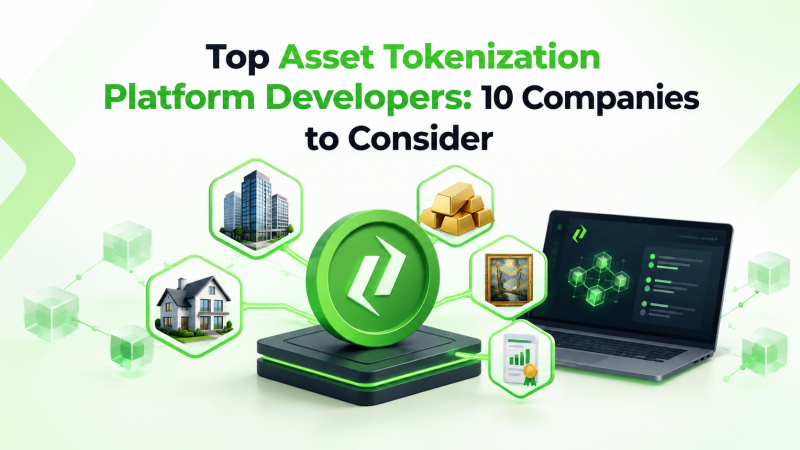
Top Asset Tokenization Platform Developers: 10 Companies to Consider
 Ai agent
Tokenization has moved from experiment to infrastructure. Banks, asset managers, real estate firms, and fintech startups are now putting property, private credit, funds, commodities, and receivables on blockchain rails. The reasons are practical: fractional ownership, faster settlement, programmable compliance, and access to a wider pool of investors.
For any organization planning to enter this space, the harder question is who should build it. The choice between a regulated issuance specialist, a custody-grade infrastructure provider, and a custom software studio will shape your timeline, compliance posture, and total cost. This guide explains what to look for and profiles ten companies worth shortlisting.
What Asset Tokenization Actually Involves
Asset tokenization is the process of representing ownership rights in a physical or financial asset as digital tokens on a blockchain. Those tokens can represent equity, debt, a share of rental income, or a claim on a commodity. Smart contracts enforce transfer rules, distribute payouts, and record ownership.
A credible build covers much more than minting a token. It spans:
- Legal structuring: an SPV, trust, or fund wrapper that gives the token a legally enforceable claim on the underlying asset.
- Compliance layer: KYC/AML, investor accreditation, jurisdiction rules, and transfer restrictions encoded on-chain.
- Token standards: ERC-3643, ERC-1400, or ERC-20 variants with permissioning, depending on the regulatory context.
- Custody and key management: institutional-grade wallets and recovery processes.
- Oracles and valuation feeds: to keep on-chain data tied to real-world asset values.
- Distribution and liquidity: investor portals, primary issuance, and secondary trading venues.
This is why Asset tokenization development services vary so widely in scope. Some vendors deliver an end-to-end stack, while others provide a single layer such as compliance or custody.
How to Evaluate a Tokenization Partner
Before looking at individual companies, set your criteria. These are the factors that most often separate successful projects from stalled ones.
Regulatory fluency. Tokenized securities sit inside securities law. Your partner should understand the regimes relevant to you, whether SEC exemptions in the US, MiCA and the DLT Pilot Regime in the EU, or frameworks in Singapore, the UAE, and elsewhere.
Chain flexibility. Some assets suit public chains like Ethereum and its layer-2s, while others need permissioned networks. A capable developer will advise on this rather than default to a single chain.
Security track record. Ask for audit reports, penetration testing practices, and incident history. Smart contract flaws in a system holding investor value are not acceptable.
Integration depth. A platform must connect to banks, payment rails, transfer agents, custodians, and identity providers. Ask for examples of these integrations in production.
Ownership model. Clarify whether you receive source code and IP or license a hosted product. White-label licenses launch faster, while custom builds offer more control.
Post-launch support. Tokenization platforms need ongoing compliance updates, monitoring, and upgrades. Confirm what support is included.
10 Top Asset Tokenization Platform Development Companies to Consider
The list below mixes specialist issuance platforms, infrastructure providers, and custom development firms. It is not a ranking, since the right fit depends on your asset class, jurisdiction, and budget. Descriptions reflect each company’s publicly stated positioning, so confirm current offerings directly before you decide.
1. SecuritizeSecuritize is one of the best-known names in regulated tokenization, positioned around issuing and managing digital securities with compliance built in. It combines issuance tooling, investor onboarding, and transfer agent functions, and has worked with major asset managers on tokenized funds. It suits institutions that want a regulated, operationally mature partner and are comfortable with a platform-led model rather than a ground-up custom build. Because it is a product company, expect less flexibility than a bespoke development shop provides.
2. Code Brew LabsCode Brew Labs is a mobile and web development company with blockchain and Web3 services alongside its app portfolio. It positions itself as an Asset tokenization development company that can build the whole product, from smart contracts and token issuance to the investor dashboard and mobile app. It suits startups and mid-sized businesses that want one team for both the blockchain layer and the user-facing experience. Its strength is general product engineering, so check its regulated securities experience before assuming deep compliance expertise.
3. Blocktech BrewBlocktech Brew is a blockchain-focused development firm covering smart contract engineering, token creation, and platform builds. It offers real-world asset tokenization services across property, commodities, and financial instruments. It fits businesses that want a specialist blockchain team to handle token architecture, wallet integration, and custom workflows for a real-world asset tokenization platform. Ask about audit practices, supported chains, and how it handles KYC/AML integration, since those decide whether a build is launch-ready.
4. Royo AppsRoyo Apps is an app development company that builds custom mobile and web products, and it extends that capability into blockchain-enabled platforms. It is most relevant for projects where the investor-facing experience matters as much as the contracts underneath, such as a Real estate tokenization platform with fractional ownership, onboarding flows, and payout tracking. Its profile suits teams that want strong UI/UX and fast delivery, but you should confirm its blockchain depth and legal-structuring support separately.
5. Dubai App DeveloperDubai App Developer is a Dubai-based development firm serving businesses in the UAE and the wider region. Its location matters because Dubai and the UAE have built clear virtual-asset frameworks, and local knowledge helps with licensing and investor onboarding. It suits organizations planning Real estate tokenization development services or RWA tokenization platform development for Gulf investors. As with the others, ask for case studies, source code ownership terms, and post-launch support before committing.
6. TokenyTokeny is a Luxembourg-based provider and a leading contributor to the ERC-3643 standard (formerly T-REX), a token standard designed to embed identity and compliance checks into the token itself. Its technology is relevant for European issuers navigating MiCA and local securities rules. It is a strong candidate for firms that value standards-based interoperability and on-chain compliance logic.
7. Polymesh (Polymath)Polymesh is a purpose-built, permissioned layer-1 blockchain for regulated assets, with identity and compliance handled at the protocol level. This reduces the amount of compliance logic a project must write itself. The trade-off is that you build within its ecosystem, so it fits issuers who prefer a regulation-first network over a general-purpose chain.
8. CentrifugeCentrifuge focuses on bringing real-world credit, such as invoices, receivables, and private lending pools, on-chain, and connecting it to decentralized finance liquidity. It is most relevant for credit and structured-finance use cases. Teams interested in DeFi-native distribution of real-world assets will find it a useful reference point.
9. FireblocksFireblocks is not a tokenization developer in the narrow sense, but its custody, wallet infrastructure, and token issuance tooling underpin many institutional projects. If your platform needs secure key management, policy controls, and settlement connectivity, Fireblocks is often part of the architecture. Consider it a layer to combine with an application developer.
10. LeewayHertzLeewayHertz is a software and AI development firm with blockchain and tokenization offerings. It positions itself as an RWA Tokenization Development Company that builds custom platforms across real estate, commodities, and financial instruments. A firm of this type suits organizations that want tailored workflows, bespoke dashboards, and integration with existing enterprise systems.
Matching the Developer to the Use Case
Real EstateProperty is the most common starting point. Real estate tokenization development services typically involve an SPV or REIT-like structure, fractional ownership tokens, rental income distribution, and a compliant investor portal. A Real estate tokenization platform must also handle jurisdiction-specific title and transfer rules, so legal groundwork matters as much as code. For these projects, evaluate vendors on their experience with property documentation, valuation workflows, and automated dividend payouts. Securitize and Tokeny cover the regulated issuance side, while custom firms can build the property-specific workflows and marketplace around them.
Private Credit and ReceivablesCredit instruments need accurate servicing data, repayment tracking, and often integration with lending platforms. Centrifuge is the natural reference here, with custom builders handling bespoke origination and reporting flows.
Funds and SecuritiesTokenized funds depend heavily on transfer agent capabilities, NAV updates, and subscription and redemption processes. Platforms with established regulatory operations tend to outperform generalist developers in this category.
Commodities and Alternative AssetsGold, art, carbon credits, and collectibles introduce custody and provenance questions. The developer must connect token ownership to verifiable physical custody, usually through a third-party vault or registry partner.
Broader Real-World AssetsFor teams scoping Real World asset tokenization services across several asset classes at once, a modular architecture is essential. Look for a Real World asset tokenization platform whose compliance, custody, and valuation modules can be reused as you add asset types, rather than rebuilding for each one.
Build, Buy, or Hybrid?
Most organizations face the same three paths:
Buy a regulated platform. You gain speed and compliance credibility, but you accept the vendor’s product roadmap and fee structure. This works well when the asset class is standard, and differentiation lies elsewhere.
Build custom. An RWA tokenization platform development project gives you full control over architecture, data, and IP. It costs more, takes longer, and carries more compliance responsibility. It makes sense when your workflow is distinctive, or you intend to operate the platform as a business.
Hybrid. Many teams license infrastructure such as custody and identity, and commission a development partner to build the application layer. This balances speed against control and is increasingly common.
Budget and timeline vary enormously with scope, so request itemized quotes covering legal, development, audits, integrations, and ongoing operations. Be skeptical of fixed prices quoted before discovery work is done.
Common Pitfalls to Avoid
- Treating tokenization as purely a technology project. Legal structure and licensing usually determine feasibility, so involve counsel early.
- Ignoring liquidity. Issuing a token does not create a market. Plan how investors will buy, hold, and eventually exit.
- Underestimating oracle and data risk. Real-world valuation data feeding smart contracts must be reliable and auditable.
- Skipping independent audits. Even strong vendors benefit from third-party security review.
- Locking into a single chain or vendor without an exit path. Ask about portability of data, tokens, and code.
Questions to Ask During Vendor Selection
- Which regulated tokenization projects have you delivered, and can we speak with those clients?
- How is compliance enforced: at the smart contract level, the application level, or both?
- Who holds the keys, and what is the recovery process?
- Which blockchains and token standards do you support, and why?
- Who owns the source code and deployed contracts?
- What does your security audit process look like?
- How do you handle regulatory change after launch?
- What is included in ongoing support and maintenance?
A confident, specific answer to each of these is a better signal than a polished sales deck.
Final Thoughts
The tokenization market rewards partners who combine blockchain engineering with real regulatory and financial knowledge. The ten companies above represent different points on the spectrum: regulated issuance platforms like Securitize and Code Brew Labs, Royo Apps, Dubai App Developers, Tokeny, protocol and credit specialists like Polymesh and Centrifuge, infrastructure like Fireblocks, and custom development firms such as LeewayHertz.
Start by defining your asset class, target jurisdiction, and investor base. Then shortlist two or three partners, run a paid discovery phase, and compare them on compliance depth, security practices, and the clarity of their delivery plan. The right choice is the partner whose strengths match the hardest part of your specific project, not necessarily the most famous name.
Source:
Click for the: Full Story
You might like







You Might Like this