



 Close Menu
 World
World
 Biography
 Health
 Education
 Business
 Lifestyle
 Sports
 Technology
 Animals
 History
 Food
Food
 Religious
 Startups
 Movies
 Politics
 Fashion
 Covid
Covid
 Diet
Diet
 Fitness
 Marketing
 Travel
 Science
 Reviews
 Social media
 Stories
 Facts
Facts
 Art
Art
 Entertainment
David Johnson

Business
Understanding the Difference Between Aviation Hardware and Standard Aircraft Parts
 David Johnson
The aviation industry relies on countless components to keep aircraft operating safely and efficiently. Among these components, aviation hardware and standard aircraft parts play essential roles in aircraft assembly, maintenance, and repair. While the two terms are often used interchangeably, they are not exactly the same. Understanding the distinction can help maintenance professionals, procurement specialists, and aircraft operators make more informed sourcing decisions.
What Is Aviation Hardware?
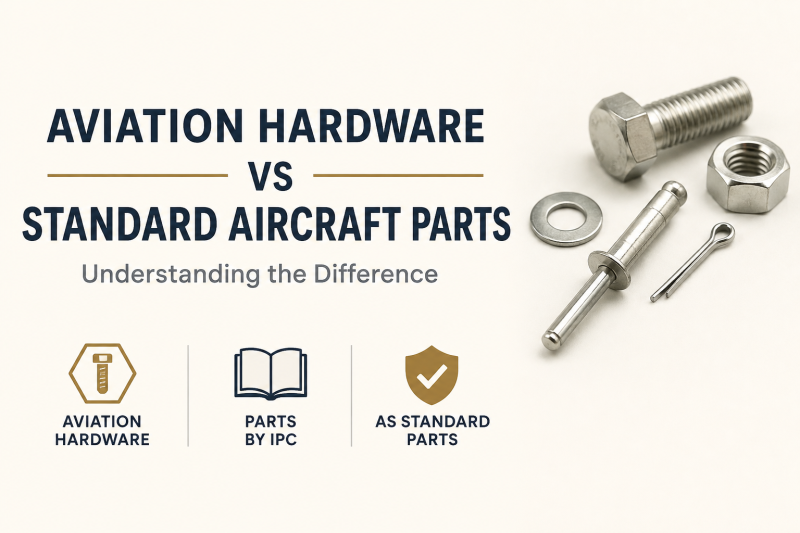
Aviation hardware refers to the small but critical components used to secure, connect, and support aircraft structures and systems. These items are designed to withstand the demanding conditions of flight while maintaining structural integrity and reliability.
Common examples of aviation hardware include bolts, nuts, screws, rivets, washers, pins, clamps, and fastening devices. Although these components may appear simple, they are manufactured to strict aerospace standards and specifications to ensure consistent performance and safety.
Aircraft manufacturers and maintenance organizations depend on high-quality aviation hardware to keep airframes, engines, and onboard systems securely assembled. Even a small hardware component can have a significant impact on overall aircraft reliability.
What Are Standard Aircraft Parts?
Standard aircraft parts are components manufactured according to established industry, military, or aerospace standards. These standards define requirements such as dimensions, materials, performance characteristics, and quality controls.
One common category of standard aircraft parts is AS Standard Parts, which are produced in accordance with Aerospace Standards (AS) specifications. These parts are widely used throughout the aviation industry because they provide consistency, interchangeability, and dependable performance across various aircraft platforms.
Unlike proprietary aircraft parts that are designed specifically for a particular aircraft model, standard parts can often be sourced from multiple approved manufacturers as long as they meet the required specifications.
The Main Difference
The easiest way to understand the difference is that aviation hardware describes a type of component, while standard aircraft parts describe how a component is manufactured and certified.
For example, a bolt used on an aircraft is considered aviation hardware because of its function. If that same bolt is produced according to an approved aerospace specification, it can also be classified as one of the industry’s AS Standard Parts.
In other words, aviation hardware is often a subset of standard aircraft parts. However, standard aircraft parts can include a broader range of components beyond fasteners and hardware items.
Why Standards Matter in Aviation
Aircraft operate in environments that involve vibration, pressure changes, temperature extremes, and continuous mechanical stress. Because of these demanding conditions, every component must meet strict quality and performance requirements.
Using approved AS Standard Parts offers several advantages:
- Consistent quality across manufacturers
- Improved interchangeability between aircraft systems
- Easier sourcing and procurement
- Enhanced safety and reliability
- Better compliance with aerospace regulations
These benefits make standardization a critical part of aircraft maintenance and supply chain operations.
The Role of Parts Identification
Finding the correct aircraft component is just as important as ensuring it meets industry standards. This is where Aircraft Parts by IPC resources become valuable.
An Illustrated Parts Catalog (IPC) helps maintenance personnel identify the exact component required for a specific aircraft assembly or system. By searching Parts by IPC, buyers can verify part numbers, review component breakdowns, and reduce the risk of ordering incorrect items.
Accurate identification through Parts by IPC also helps organizations minimize downtime and improve maintenance efficiency, especially when dealing with complex aircraft systems.
Why Procurement Professionals Need to Understand the Difference
Aircraft maintenance and procurement teams regularly source thousands of components for repairs, inspections, and overhauls. Understanding whether a component falls under aviation hardware or a broader category of standard aircraft parts helps streamline purchasing decisions.
When sourcing components, buyers should consider:
- Compliance with aerospace specifications
- Traceability and documentation
- Aircraft compatibility
- Availability from trusted suppliers
- Verification through IPC references
Following these practices helps ensure that only approved and reliable components are installed on aircraft.
Conclusion
Although the terms are closely related, aviation hardware and standard aircraft parts are not identical. Aviation hardware refers primarily to fasteners and mechanical components used to assemble and secure aircraft systems, while standard aircraft parts — including AS Standard Parts — are defined by their compliance with established aerospace specifications.
By understanding these distinctions and utilizing resources such as Parts by IPC for accurate identification, aviation professionals can improve procurement accuracy, maintain regulatory compliance, and support safe, efficient aircraft operations. Proper sourcing of aviation hardware and standardized aircraft components remains a fundamental part of maintaining airworthiness and long-term fleet reliability. Need reliable access to aviation components? Contact us and Explore a comprehensive inventory of aviation hardware, AS Standard Parts, and Parts by IPC to simplify aircraft parts sourcing and support efficient maintenance operations.
Source:
Click for the: Full Story
You might like









You Might Like this