



 Close Menu
 World
World
 Biography
 Health
 Education
 Business
 Lifestyle
 Sports
 Technology
 Animals
 History
 Food
Food
 Religious
 Startups
 Movies
 Politics
 Fashion
 Covid
Covid
 Diet
Diet
 Fitness
 Marketing
 Travel
 Science
 Reviews
 Social media
 Stories
 Facts
Facts
 Art
Art
 Entertainment
William Smith

Business
Use OEM: A Complete Guide to Finding the Right OEM Airbag Replacement
 William Smith
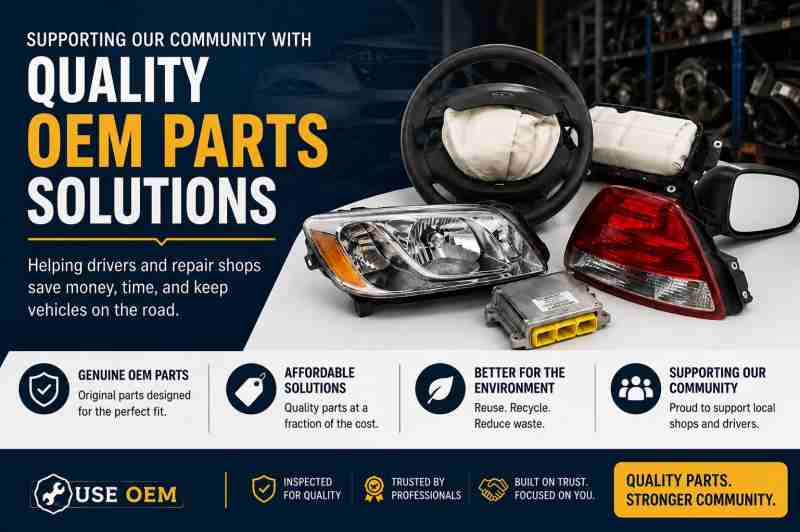
Finding the correct airbag replacement for a vehicle requires more than matching the shape or appearance of a component. Airbags are integrated into a vehicle's Supplemental Restraint System (SRS), and the correct replacement depends on factors such as vehicle make, model, year, trim, airbag position, part number, and configuration. Use OEM specializes in genuine OEM airbags for cars, trucks, and SUVs, providing vehicle-specific options for customers searching for replacement safety components.
Whether you need a driver steering wheel airbag, passenger dashboard airbag, side-impact airbag, curtain airbag, or knee airbag, understanding how to identify the correct component can make the search more accurate.
What Is an OEM Airbag?
An OEM airbag is an original equipment component associated with a specific vehicle application. Unlike generic automotive components, OEM airbag assemblies are identified according to the vehicle and its original equipment configuration.
A replacement airbag can include several important components, such as the airbag cushion, housing, electrical connector, mounting points, and related module components. The exact configuration varies between manufacturers and vehicle models.
This is why an airbag that appears similar to another component should not automatically be considered interchangeable.
When searching for genuine OEM airbag replacement parts, vehicle-specific information should always be reviewed before selecting a component.
Different Types of Automotive Airbags
Modern cars, trucks, and SUVs can have multiple airbags positioned throughout the passenger compartment. The number and location depend on the vehicle's safety configuration.
Driver Steering Wheel Airbag
The driver steering wheel airbag is positioned within the steering wheel and forms part of the vehicle's SRS. When searching for this component, buyers should verify the vehicle year, model, steering wheel configuration, connector, and available part number.
Passenger Dashboard Airbag
The passenger airbag is normally located in the dashboard in front of the passenger seating position. Its dimensions, mounting arrangement, and electrical configuration can vary between vehicle models and production years.
Side-Impact Airbag
Side airbags may be located within vehicle seats or other areas of the passenger compartment. They are designed as part of the vehicle's overall restraint system and must be matched to the appropriate application.
Curtain Airbag
Roof-mounted or curtain airbags extend along the side area of the passenger compartment. These components can differ according to vehicle size, body style, seating configuration, and model year.
Knee Airbag
Some vehicles use a knee airbag positioned in the lower dashboard area. This component can also have vehicle-specific mounting and connector configurations.
Understanding the airbag position is an important first step when searching for a replacement.
How to Find the Correct Airbag for Your Vehicle
The most effective way to search for an airbag is to start with precise vehicle information.
Before ordering, collect as much of the following information as possible:
- Vehicle manufacturer
- Model
- Model year
- Trim level
- Body style
- Airbag location
- Original part number
- Connector configuration
- Product photographs
- VIN information when applicable
For example, searching for a "driver airbag" alone provides very little information about the intended application. Adding the vehicle model and year creates a much more specific search.
A search such as 2022 Jeep Wrangler driver steering wheel airbag provides substantially more context than a general search for an airbag.
Why Airbag Part Numbers Are Important
Part numbers are among the most useful identifiers when researching automotive replacement components. The number can help distinguish between similar-looking components intended for different applications.
When comparing a replacement component, check the number shown on the original part against the information provided in the product listing. Also compare the connector, housing, mounting points, photographs, and vehicle application.
Part numbers should be considered together with fitment information rather than used as the only method of verification.
Vehicle manufacturers can use different components across model years or trim levels, even when the vehicle itself appears largely unchanged.
Used OEM Airbags: What Should You Check?
A used OEM airbag may be removed from another vehicle and offered for use as a replacement component. Because the component has previously been installed in a vehicle, buyers should pay close attention to its listed condition and identification details.
A useful product listing should provide information that helps customers evaluate the component, including:
Condition: Review how the individual component is described.
Vehicle application: Confirm the listed make, model, and year range.
Part number: Compare available identification numbers with the original component.
Photographs: Examine the housing, connectors, labels, and overall appearance.
Fitment: Check whether the listing corresponds with the vehicle's specific configuration.
At Use OEM, product listings are organized around vehicle and component information to make it easier to research genuine OEM airbag options.
Why Fitment Matters for Airbag Replacement
Vehicle fitment is especially important when dealing with SRS components. An airbag is not simply an interior trim piece. It interacts with the vehicle's restraint system and electrical architecture.
A replacement component can differ based on:
- Model year
- Vehicle generation
- Trim
- Steering wheel design
- Seating configuration
- Connector type
- Airbag location
- SRS configuration
For this reason, buyers should not select an airbag solely because its exterior looks identical to the original.
If there is uncertainty about compatibility, professional verification can help determine whether a particular component corresponds with the vehicle.
Airbag Safety and Recall Information
Airbags are safety-critical components, so vehicle owners should also be aware of manufacturer recalls and safety campaigns.
The National Highway Traffic Safety Administration vehicle safety resources provide information about vehicle safety systems and related topics. Vehicle owners can also use the NHTSA recall lookup tool to check whether a vehicle has an outstanding recall.
Recall information is separate from determining whether a replacement component fits a particular vehicle. Both areas should be considered when researching an airbag replacement.
Where to Search for Genuine OEM Airbags
Searching by the exact vehicle and airbag type can make the process much more efficient.
Instead of using a broad search such as "car airbags," consider combining:
Make + model + year + airbag position + OEM
Examples include:
- Honda CR-V driver steering wheel airbag
- Toyota Corolla passenger dashboard airbag
- Jeep Wrangler driver airbag
- Ford F-150 curtain airbag
- Chevrolet Silverado knee airbag
This approach helps narrow the search to components associated with a particular vehicle application.
Customers can browse the Use OEM airbag and OEM parts inventory to research available vehicle-specific components.
What Makes a Good Airbag Listing?
A detailed listing should give customers enough information to research compatibility before purchasing.
Useful listing information includes the component type, vehicle application, model-year range, part number when available, condition, photographs, and other identifying specifications.
Clear information is particularly valuable for customers searching for:
- Genuine OEM airbags
- Used OEM airbags
- Driver airbag assemblies
- Passenger airbag modules
- Side-impact airbag components
- Curtain airbag assemblies
- Knee airbags
- SRS replacement components
The more accurately a component is identified, the easier it becomes to compare it with the original vehicle part.
Why Use OEM Specializes in Airbags
Use OEM focuses on genuine OEM automotive components, with a particular emphasis on airbag replacement parts. This includes driver steering wheel airbags, passenger airbags, side airbags, curtain airbags, knee airbags, and other vehicle-specific SRS components.
This specialized approach gives customers a focused place to search when they already know which airbag position or vehicle component they need.
Rather than treating every vehicle as the same, the search process should consider the individual application. A Toyota airbag, Jeep airbag, Honda airbag, Ford airbag, or Chevrolet airbag may require different identification information depending on the model and year.
Final Guide to Choosing an OEM Airbag
Choosing an airbag replacement should begin with identification and compatibility. Confirm the vehicle make, model, year, trim, airbag position, part number, connector configuration, and other available fitment information before purchasing.
For used OEM components, carefully review the listed condition and photographs. For safety-related questions or installation procedures, consult an appropriately qualified automotive professional and use official vehicle safety resources when needed.
With a dedicated focus on genuine OEM airbags and vehicle-specific replacement components, Use OEM provides customers with a focused resource for researching airbags for cars, trucks, and SUVs.
The right search starts with the right information. By combining the vehicle details with the exact airbag type and available part identification, customers can narrow their options and make a more informed replacement decision.
Source:
Click for the: Full Story
You might like









You Might Like this