Close Menu
 World
 Biography
 Health
 Education
 Business
 Lifestyle
 Sports
 Technology
 Animals
 History
 Food
 Religious
 Startups
 Movies
 Politics
 Fashion
 Covid
 Diet
 Fitness
 Marketing
 Travel
 Science
 Reviews
 Social media
 Stories
 Facts
 Art
 Entertainment
Geet Patel
Food
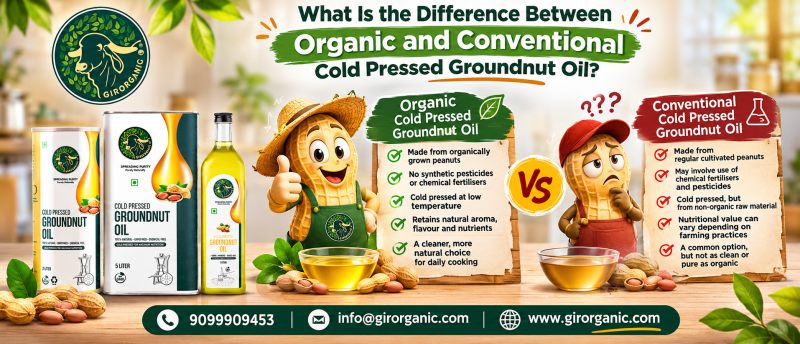
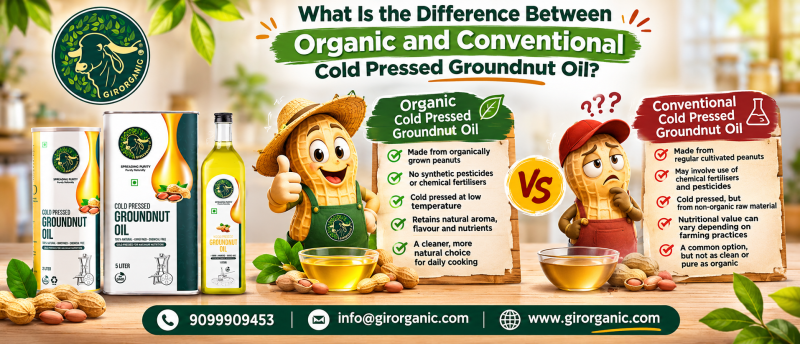
What Is the Difference Between Organic and Conventional Cold Pressed Groundnut Oil?
 Geet Patel
Choosing the right cooking oil is an important part of maintaining a balanced kitchen. Among the traditional cooking oils used across Indian households, groundnut oil is valued for its pleasant nutty flavour, versatility and suitability for different cooking applications. However, when shopping for healthier and more naturally processed options, consumers often come across two choices: organic and conventional Cold Pressed Groundnut Oil.
Although both oils may be extracted using a cold-pressing method, they are not necessarily produced from groundnuts grown under the same agricultural conditions. The main difference lies in how the groundnuts are cultivated, how farmers manage their crops and what standards are followed throughout production.
Understanding these differences can help you make a more informed purchasing decision. Let's explore how organic and conventional groundnut oils compare and what Indian consumers should consider before choosing one.
Understanding Cold Pressed Groundnut Oil
Cold pressed groundnut oil is extracted from groundnuts using mechanical pressure without relying on high-temperature extraction methods.
Unlike conventional refining processes that may involve chemical solvents, high heat and additional processing stages, traditional cold pressing focuses on extracting oil through controlled mechanical pressure.
This process helps retain the natural characteristics of groundnut oil, including its characteristic aroma, colour and flavour.
Cold pressed groundnut oil is commonly used for:
- Preparing everyday Indian meals.
- Making vegetables, curries and dals.
- Shallow frying and sautéing.
- Preparing traditional snacks and recipes.
- Adding a natural nutty flavour to food.
However, the term cold pressed describes the extraction method, not the farming practices used to grow the groundnuts. This distinction is important when comparing organic and conventional varieties.
What Is Organic Cold Pressed Groundnut Oil?
Organic Cold Pressed Groundnut Oil is produced from groundnuts cultivated according to recognised organic farming standards and subsequently extracted using mechanical cold-pressing techniques.
Organic agriculture focuses on maintaining soil health, encouraging biodiversity and reducing dependence on synthetic agricultural inputs.
Key Characteristics of Organic Groundnut Oil
Organic groundnut cultivation generally involves:
- Avoiding prohibited synthetic pesticides and chemical fertilisers.
- Using organic soil management practices.
- Applying approved natural pest management techniques.
- Maintaining crop rotation and soil fertility.
- Following recognised organic certification requirements.
The groundnuts are harvested, cleaned and processed before being mechanically pressed to extract their natural oil.
For Indian consumers, organic certification is an important consideration. Look for recognised certification under India's National Programme for Organic Production (NPOP) or applicable PGS-India standards.
Organic certification helps provide assurance that the agricultural production process follows established organic requirements. It does not automatically mean that every product has identical nutritional properties or taste.
What Is Conventional Cold Pressed Groundnut Oil?
Conventional Cold Pressed Groundnut Oil is extracted from groundnuts grown using regular agricultural practices rather than certified organic farming standards.
Farmers may use synthetic fertilisers, permitted pesticides and other conventional crop-management techniques to improve productivity and protect crops.
However, conventional does not automatically mean poor quality or unsafe. Farmers must still follow applicable agricultural and food safety regulations.
Key Characteristics of Conventional Groundnut Oil
- Groundnuts may be cultivated using conventional fertilisers and crop protection products.
- Farming practices generally focus on productivity and crop yield.
- The oil can be extracted using mechanical cold-pressing equipment.
- Quality depends on seed selection, storage, hygiene and processing conditions.
- The product may be available at a comparatively affordable price.
It is important to understand that conventional cold pressed oil can still be minimally processed and retain many natural characteristics of groundnut oil.
Organic vs Conventional Cold Pressed Groundnut Oil: Key Differences
Although both varieties can use the same extraction technique, their agricultural origins and production standards differ.
Comparison Factor
Organic Groundnut Oil
Conventional Groundnut Oil
Farming practices
Certified organic methods
Conventional agricultural methods
Synthetic inputs
Prohibited synthetic inputs are restricted under organic standards
Permitted agricultural inputs may be used
Certification
Requires applicable organic certification to carry certified claims
Organic certification is not required
Soil management
Emphasises organic soil fertility and biodiversity
Uses conventional soil management practices
Extraction method
Can use mechanical cold pressing
Can also use mechanical cold pressing
Processing
Depends on the manufacturer's practices
Depends on the manufacturer's practices
Price
Often comparatively expensive
Often comparatively affordable
Availability
Depends on organic farming and supply chains
Generally more widely available
The most important distinction is that organic describes how the groundnuts are grown, while cold pressed describes how their oil is extracted.
5 Important Factors That Influence Groundnut Oil Quality
Whether you choose organic or conventional oil, several factors influence its overall quality.
1. Quality of Groundnut Seeds
The quality of the raw material directly affects the final oil. Fresh, mature and properly stored groundnuts generally provide better raw material for oil extraction.
Damaged, mouldy or poorly stored groundnuts can negatively affect the oil's flavour, aroma and quality.
2. Farming and Cultivation Practices
Organic farming encourages soil conservation, crop rotation and responsible agricultural practices.
Conventional farming may use different fertilisation and pest-management techniques.
These differences influence agricultural production and environmental considerations, although organic certification alone does not guarantee a particular nutritional composition in the finished oil.
3. Cold Pressing Temperature and Extraction
Mechanical extraction helps preserve the natural characteristics of groundnut oil when processing conditions are properly controlled.
Excessive heat during processing can affect the oil's flavour, aroma and quality.
Therefore, manufacturers should pay attention to extraction conditions, equipment cleanliness and processing consistency.
4. Storage and Packaging
Groundnut oil contains naturally occurring unsaturated fatty acids that can deteriorate through oxidation.
Exposure to direct sunlight, oxygen and excessive heat can accelerate this process.
For better storage quality, look for:
- Airtight packaging.
- Food-grade containers.
- Proper sealing.
- Clear manufacturing and expiry dates.
- Storage instructions from the manufacturer.
5. Testing and Quality Standards
Organic certification and food safety testing serve different purposes.
Organic certification verifies compliance with organic production standards, while food safety testing evaluates relevant product quality and safety parameters.
Consumers should check the manufacturer's FSSAI licence details, product information and applicable certification claims before purchasing.
Benefits of Choosing Organic Cold Pressed Groundnut Oil
Organic groundnut oil offers several considerations that appeal to consumers interested in responsible food production.
1. Organically Cultivated Raw Materials
The groundnuts are grown according to recognised organic farming standards, which restrict the use of prohibited synthetic agricultural inputs.
2. Environmentally Conscious Farming
Organic agricultural practices encourage soil health, biodiversity and responsible resource management.
3. Traditional Mechanical Extraction
When produced through genuine cold pressing, the oil retains its characteristic nutty aroma and flavour.
4. Suitable for Everyday Cooking
Its traditional flavour makes it useful for preparing vegetables, curries, dals and various Indian dishes.
5. Greater Agricultural Traceability
Certified organic supply chains can provide additional information about farming practices and product origin.
It is worth remembering that organic oil is not automatically healthier than conventional oil in every nutritional respect. Both should be consumed in appropriate quantities as part of a balanced diet.
How to Choose the Right Cold Pressed Groundnut Oil in India
Before purchasing groundnut oil, consider more than just its price or organic label.
Here are some practical buying tips:
- Check the ingredient list: Look for pure groundnut oil without unnecessary added oils.
- Verify organic certification: If purchasing organic oil, check its applicable certification and authenticity.
- Understand the extraction method: Confirm that the product is mechanically cold pressed.
- Check the FSSAI details: Choose products from manufacturers following applicable food safety requirements.
- Examine the packaging: Prefer sealed, food-grade packaging that protects the oil from light and air.
- Review product information: Check manufacturing dates, batch details and storage instructions.
- Consider your cooking needs: Choose an oil based on flavour, intended cooking application and personal preferences.
At GirOrganic, the focus on traditional food choices and natural oil processing reflects the growing interest in understanding where cooking oils come from and how they are produced.
Frequently Asked Questions (FAQs)
1. Is organic cold pressed groundnut oil better than conventional groundnut oil?
Organic cold pressed groundnut oil is produced using groundnuts grown under recognised organic farming standards. Conventional oil may come from traditionally cultivated groundnuts. Both can be good-quality options depending on seed quality, extraction practices, testing and storage.
2. Does organic groundnut oil contain more nutrients?
Not necessarily. Organic certification primarily relates to farming and production standards rather than guaranteeing higher nutritional content. The nutritional composition depends on the groundnut variety, seed quality, processing and storage conditions.
3. Is conventional cold pressed groundnut oil safe for daily cooking?
Conventional cold pressed groundnut oil can be suitable for everyday cooking when it meets applicable food safety standards and is properly stored. Consumers should choose products from reliable manufacturers and use them in moderation.
4. Can organic cold pressed groundnut oil be used for deep frying?
Groundnut oil is traditionally used in different cooking applications, including frying. However, repeated heating and excessive temperatures can degrade any cooking oil. Follow the manufacturer's heating guidance and avoid repeatedly reusing oil.
5. How can I identify genuine organic cold pressed groundnut oil?
Check for recognised organic certification, such as applicable NPOP or PGS-India certification, along with complete product labelling. Also verify the extraction method, ingredient list, FSSAI details and manufacturer information.
Conclusion
The difference between organic and conventional Cold Pressed Groundnut Oil begins with the way groundnuts are cultivated. Organic oil comes from groundnuts grown under recognised organic farming standards, whereas conventional oil is produced using regular agricultural practices. Both can undergo the same mechanical cold-pressing process.
When choosing between them, consider farming practices, raw material quality, extraction methods, certification, packaging and food safety standards. Organic options may appeal to consumers who prioritise certified organic agriculture, while conventional varieties can offer an accessible alternative for everyday cooking.
At GirOrganic, understanding traditional food production and making informed choices are important steps towards appreciating the quality and origin of everyday cooking ingredients. Choose groundnut oil that matches your preferences, cooking requirements and quality expectations.
Source:
Click for the: Full Story
You might like