Close Menu
 World
World
 Biography
 Health
 Education
 Business
 Lifestyle
 Sports
 Technology
 Animals
 History
 Food
Food
 Religious
 Startups
 Movies
 Politics
 Fashion
 Covid
Covid
 Diet
Diet
 Fitness
 Marketing
 Travel
 Science
 Reviews
 Social media
 Stories
 Facts
Facts
 Art
Art
 Entertainment
Jennifer Smith

Travel
What Should You Know Before Renting a Storage Unit?
 Jennifer Smith
Renting a storage unit can make moving, downsizing, renovating, or managing extra belongings much easier. However, choosing the right unit is not simply a matter of finding the cheapest monthly price. You need to understand the unit size, location, access hours, security, contract terms, insurance, climate control, and the company's policies before signing an agreement.
This guide explains what you should know before renting a storage unit, what questions to ask, how to estimate the space you need, and how to avoid common storage mistakes.
Why Do People Rent Storage Units?
People use storage units for many different reasons. Some need temporary space while moving between homes, while others need long-term storage for furniture, business inventory, seasonal items, or personal belongings.
Common reasons include:
- Moving to a new home
- Downsizing
- Renovating a house
- Relocating to another state
- Storing seasonal decorations
- Keeping furniture during a temporary transition
- Storing business equipment or inventory
- Managing an estate
- Creating additional space at home
- Traveling or living temporarily somewhere else
For people who are moving, storage can provide flexibility. For example, if your new home is not ready when your current lease ends, you can move your belongings into storage instead of rushing to find a place that may not meet your needs.
Determine How Long You Need Storage
Before searching for self storage unit companies, think about how long you expect to keep your belongings in storage.
Storage needs generally fall into three categories:
Short-Term Storage
Short-term storage may be useful for a few weeks or several months. This is common during home moves, renovations, or temporary housing situations.
If you only need storage for a short period, pay close attention to introductory rates. Some facilities advertise a low first-month price but charge a higher regular rate afterward.
Medium-Term Storage
You might need storage for several months to a year when relocating, waiting for a home purchase, or storing belongings during an extended renovation.
For medium-term storage, compare the total expected cost rather than focusing only on the first month's price.
Long-Term Storage
Long-term storage can be appropriate for belongings you do not currently need but want to keep. Examples include family furniture, collectibles, business records, or seasonal equipment.
For long-term storage, security, climate control, accessibility, and annual price increases become particularly important.
Choose the Right Storage Unit Size
One of the most important decisions is selecting the correct unit size.
Storage facilities commonly offer different sizes, although availability varies by location. Small units may be suitable for boxes and smaller belongings, while larger units can hold furniture and the contents of an entire home.
Typical sizes may include:
- 5 × 5 feet
- 5 × 10 feet
- 10 × 10 feet
- 10 × 15 feet
- 10 × 20 feet
- 10 × 30 feet
These measurements are only general examples. A facility may offer different dimensions.
Avoid Renting More Space Than You Need
A larger unit may seem convenient, but you will pay for unused space. Before selecting a unit, create an inventory of everything you intend to store.
Consider:
- Number of boxes
- Sofas and chairs
- Beds and mattresses
- Tables
- Appliances
- Shelving
- Outdoor equipment
- Business inventory
- Seasonal items
If you are uncertain, ask the storage facility whether staff can recommend an appropriate size based on your inventory.
You can also ask whether you can change units later if your storage needs change.
Think About Storage Unit Location
Location matters more than many renters realize.
A facility located farther away may offer a lower monthly rate, but frequent trips can make it inconvenient and expensive.
Consider how often you expect to access your belongings.
If you will visit the unit frequently, look for a facility that is:
- Close to your home
- Close to your workplace
- Conveniently located near your moving route
- Easy to reach by car or truck
- Accessible from major roads
If you are storing items that you rarely need, a slightly farther facility might be acceptable if it provides better pricing or features.
For a move, it can also be useful to coordinate the storage location with your moving company. A convenient facility can reduce unnecessary driving and handling time.
Compare Self Storage Unit Companies Carefully
Do not choose a storage provider based only on the first price you see.
When comparing self storage unit companies, look at the complete package.
Important comparison factors include:
- Monthly rental price
- Administrative fees
- Deposit requirements
- Access hours
- Security features
- Climate control
- Insurance requirements
- Late fees
- Lock requirements
- Cancellation policies
- Price increases
- Moving and loading access
- Elevator availability
- Vehicle access
- Online account management
A facility with a slightly higher monthly rate may actually provide better value if it includes stronger security, convenient access, and features that you need.
Ask About the Total Cost
The advertised monthly rental price is not always the final amount you will pay.
Ask about additional charges before signing a contract.
Potential fees can include:
- Administrative fees
- Security deposits
- Insurance fees
- Late payment fees
- Lock charges
- Moving-in fees
- Moving-out fees
- Cleaning fees
- Promotional rate expiration
- Access-related fees
Ask the facility for a clear breakdown of your expected first-month and recurring costs.
This prevents an attractive promotional offer from becoming unexpectedly expensive later.
Understand the Rental Agreement
Read the storage contract carefully before signing it.
The agreement should explain your responsibilities and the facility's policies.
Pay attention to:
- Monthly payment terms
- Automatic renewal
- Cancellation requirements
- Notice periods
- Late payment rules
- Access restrictions
- Rules regarding prohibited items
- Insurance requirements
- Liability limitations
- Default procedures
- Price increase policies
Do not assume that a month-to-month rental means you can leave without notice. Some facilities require advance notice before vacating the unit.
Check Access Hours
A storage unit is only useful when you can access it when necessary.
Some facilities offer extended access hours, while others have more limited schedules.
Before renting, ask:
"What days and hours can I access my unit?"
Also ask whether access hours are different on weekends and holidays.
If you work during the day, evening or weekend access may be especially important.
Some facilities also provide gate access using a personal code, smartphone app, or key.
Consider Climate-Controlled Storage
Not every item requires climate-controlled storage, but certain belongings can benefit from a more controlled environment.
Climate-controlled units may be worth considering for:
- Wooden furniture
- Electronics
- Important documents
- Photographs
- Artwork
- Musical instruments
- Certain fabrics
- Collectibles
- Temperature-sensitive belongings
Regular storage may be sufficient for durable items such as outdoor equipment, plastic containers, and some household goods.
However, climate-controlled storage usually costs more, so consider the value and sensitivity of the items you are storing.
Look at Security Features
Security should be one of your main considerations.
Ask what security measures the facility uses.
Common features include:
- Gated entry
- Individual access codes
- Security cameras
- Security lighting
- On-site staff
- Fenced property
- Electronic gate systems
- Individual unit alarms
No storage facility can eliminate every risk, so you should also use a strong lock and follow the facility's security recommendations.
If possible, visit the facility before renting. Seeing the property in person can tell you a lot about its condition, lighting, access, and overall organization.
Understand Storage Insurance
Many renters assume that the storage company's insurance automatically covers everything inside the unit. That is not necessarily the case.
Ask whether your homeowners or renters insurance covers belongings stored away from your home.
If it does not, the storage facility may require you to purchase separate coverage.
Before buying additional insurance, understand:
- What is covered
- What is excluded
- Coverage limits
- Deductibles
- Theft coverage
- Water damage coverage
- Fire coverage
- Natural disaster exclusions
Keep receipts, photographs, and an inventory of valuable items whenever possible.
Know What You Cannot Store
Storage facilities usually have restrictions on certain items.
Prohibited items may include:
- Flammable liquids
- Explosives
- Illegal substances
- Perishable food
- Certain chemicals
- Hazardous materials
- Live plants or animals
- Stolen property
Rules vary between facilities, so read the rental agreement and ask questions if you are unsure about a particular item.
Never store hazardous materials simply because there appears to be enough room in your unit.
Plan How You Will Load the Unit
Packing a storage unit is different from packing a moving truck.
You should organize the unit so you can access important belongings without unloading everything.
Place frequently needed items toward the front.
For example:
Front of unit:
- Frequently accessed boxes
- Cleaning supplies
- Seasonal items
Middle:
- Medium-use furniture
- Household boxes
Back:
- Long-term storage items
- Items you rarely need
Leave a narrow walkway if the unit is large enough.
Avoid stacking boxes so high that they become unstable.
Label Every Box
A storage unit becomes difficult to manage when every box looks identical.
Use clear labels on multiple sides of each box.
Instead of writing "Kitchen," use a more detailed label such as:
Kitchen — Plates, glasses, coffee equipment
You can also create a simple inventory list or spreadsheet.
For valuable or important belongings, take photographs before placing them in storage.
This can help you remember what is stored in each box and may be useful for insurance purposes.
Use Appropriate Storage Containers
Cardboard boxes are inexpensive and convenient, but they are not always ideal for long-term storage.
For long-term storage, consider durable plastic containers for items that need additional protection.
Use appropriate packing materials for:
- Glassware
- Electronics
- Artwork
- Furniture
- Books
- Clothing
- Fragile decorations
Avoid putting heavy items into large boxes because they can become difficult and unsafe to lift.
Instead, use smaller boxes for books and other heavy belongings.
Protect Furniture Properly
Furniture should be prepared before going into storage.
Clean and dry furniture before storing it. Cover upholstered pieces with breathable protective materials rather than sealing moisture against them.
For wooden furniture, follow appropriate care instructions before storage.
Mattresses should be protected with suitable mattress bags, while furniture should be positioned so that air can circulate around it when practical.
Do not place heavy objects on delicate furniture.
Keep Important Documents Accessible
If you are storing documents, photographs, or other irreplaceable materials, think carefully about whether a standard storage unit is the best choice.
Important documents may require additional protection from moisture, temperature fluctuations, and other environmental conditions.
If you must store them, use appropriate containers and consider climate-controlled storage.
For extremely important documents, keeping originals in a secure location designed for document storage may be more appropriate.
Think About Moving Equipment
Moving belongings into a storage unit can require more than boxes.
Depending on the facility, you may need:
- Furniture dollies
- Hand trucks
- Moving blankets
- Stretch wrap
- Packing tape
- Straps
- Furniture covers
Ask the facility whether equipment is available for customers.
Some storage locations may provide carts or dollies, while others may not.
If you are hiring movers, confirm whether they can load and unload the storage unit as part of the service.
Ask Whether Trucks Can Access the Facility
If you are using professional movers, vehicle access is important.
Ask whether moving trucks can drive directly to the storage building or loading area.
Also check:
- Truck parking
- Loading docks
- Drive-up units
- Elevator access
- Building access
- Height restrictions
- Loading and unloading hours
A facility may look convenient online but become difficult when a large moving truck arrives.
Consider Drive-Up Storage
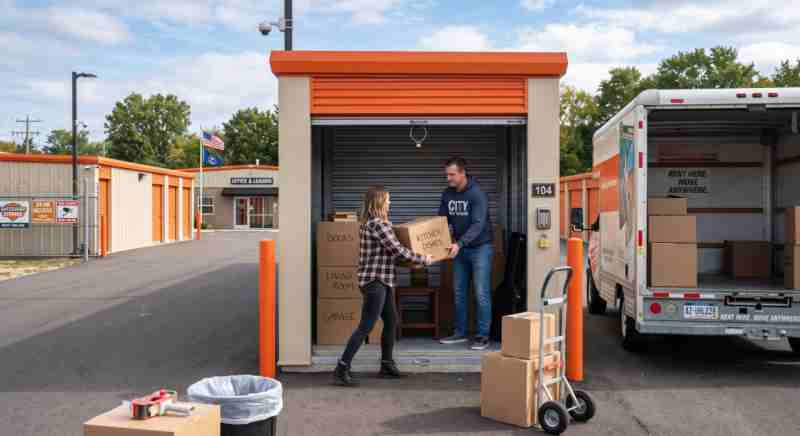
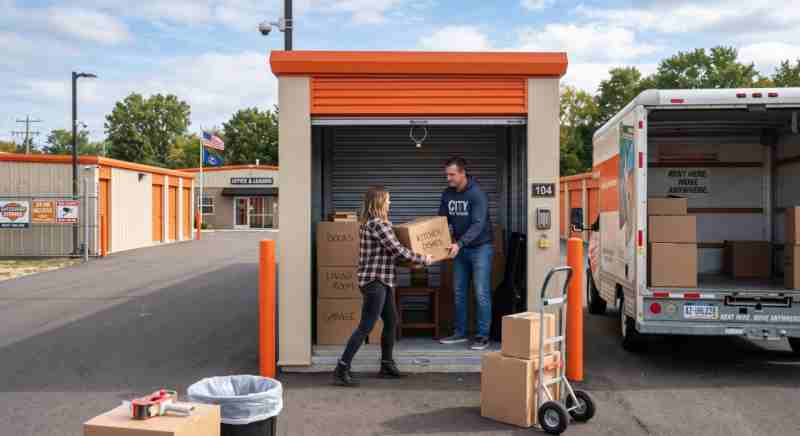
Drive-up units can be especially convenient for heavy or bulky belongings.
With a drive-up unit, you may be able to park close to the unit and move items directly between the vehicle and storage space.
This can reduce carrying distance and make loading easier.
However, drive-up access may not be available at every facility or for every unit size.
Watch for Promotional Pricing
Storage companies sometimes offer introductory promotions.
A low first-month rate can be useful, but always ask what happens afterward.
For example, a facility might offer a heavily discounted first month and then return to its standard monthly rate.
Before accepting a promotion, ask:
"What will my monthly price be after the promotional period?"
Also ask whether rates can change in the future.
Understanding the regular price helps you compare facilities fairly.
Do Not Store Everything You Own
Storage can become expensive when it turns into a permanent solution for things you no longer use.
Before renting a unit, sort your belongings into categories:
- Keep
- Donate
- Sell
- Recycle
- Dispose
- Store
If you are paying for storage every month for several years, ask yourself whether the cost is justified by the value of the belongings.
Sometimes selling or donating unused furniture and household items can be more practical than paying to store them indefinitely.
Take Photos Before Closing the Unit
Take photographs of the storage unit after everything has been organized.
Photograph:
- Overall unit
- Valuable belongings
- Furniture
- Box labels
- Important equipment
These pictures provide a visual record and can make it easier to identify where things are located.
Visit the Facility Before Signing
Online listings can tell you about prices and features, but an in-person visit can reveal details you may not notice online.
Look at:
- Cleanliness
- Lighting
- Security
- Hallways
- Elevators
- Loading areas
- Parking
- Overall maintenance
Pay attention to whether the facility appears well maintained.
If staff are available, ask your questions directly.
Their answers can help you determine whether the facility is a good fit.
Questions to Ask a Storage Facility
Before renting, consider asking these questions:
- What is the total monthly price?
- Is there an introductory rate?
- What will I pay after the promotional period?
- Are there administrative or other fees?
- What size units are available?
- What are the access hours?
- Is the property monitored by security cameras?
- Is the facility gated?
- Is climate-controlled storage available?
- What insurance coverage is required?
- Are there restrictions on what I can store?
- How much notice is required to move out?
- Can the monthly rate increase?
- Are carts or dollies available?
- Can moving trucks access the facility?
- Is there an elevator?
- Can I change to a different unit later?
- What happens if I miss a payment?
Getting these answers before signing can prevent unpleasant surprises.
Common Storage Mistakes to Avoid
Renting a storage unit seems straightforward, but several mistakes can make the experience more expensive or inconvenient.
Choosing Based Only on Price
The cheapest facility may not provide the location, access, security, or features you need.
Renting Too Much Space
Extra space means extra monthly costs.
Ignoring the Contract
Important fees and policies are often explained in the rental agreement.
Forgetting About Insurance
Your belongings may not automatically have the coverage you assume they do.
Packing Without an Inventory
You may eventually forget where specific items are located.
Poorly Stacking Boxes
Unstable stacks can create safety problems and damage belongings.
Blocking Access
Packing every available inch makes it difficult to reach anything in the back.
Keeping Unnecessary Items
If you rarely use something and its storage cost is high, it may be worth selling or donating it instead.
How to Choose Between Storage Options
The best storage unit depends on your individual situation.
If you need temporary storage during a move, prioritize location, accessibility, and moving-truck access.
If you are storing valuable or sensitive belongings, prioritize security and climate control.
If you need long-term storage, focus on total cost, contract terms, insurance, and future price increases.
If you frequently need access, choose a facility with convenient access hours and easy parking.
There is no single storage solution that is best for everyone.
Final Thoughts
Before renting a storage unit, look beyond the advertised monthly price. Determine how much space you actually need, compare self storage unit companies, understand the contract, check access hours, evaluate security, ask about insurance, and find out about additional fees.
Good organization is just as important as choosing the facility. Label your boxes, create an inventory, protect your furniture, leave accessible walkways, and photograph important belongings.
If storage is part of a larger relocation, don't forget to plan transportation as well. My Good Movers can be useful as a moving directory when researching moving companies for the loading, transportation, and unloading stages of your move.
Taking a little time to compare your options before signing a storage agreement can help you avoid unnecessary costs and make your entire moving or storage experience much easier.
Frequently Asked Questions
Is renting a storage unit worth it?
A storage unit can be worth the cost when you need temporary space during a move, renovation, downsizing, or other transition. It is important to compare the monthly cost with the value and usefulness of the belongings you are storing.
What size storage unit should I rent?
The right size depends on how many belongings you need to store. Make an inventory of your furniture, boxes, appliances, and other items before choosing a unit. A storage facility can also help you estimate the required space.
Do storage units have insurance?
Storage facilities have different insurance requirements and policies. Your homeowners or renters insurance may provide some coverage, but you should confirm the details with your insurance provider and storage company.
Are climate-controlled storage units necessary?
Climate-controlled storage can be useful for sensitive belongings such as electronics, wooden furniture, documents, artwork, photographs, and collectibles. For durable items, standard storage may be sufficient.
How much does a storage unit cost?
Storage prices vary significantly based on location, unit size, facility features, demand, and rental terms. Promotional rates may also differ from the regular monthly price, so compare the long-term cost rather than only the introductory offer.
Can I access my storage unit anytime?
Not necessarily. Each facility establishes its own access hours. Some offer extended or daily access, while others have more limited schedules. Always confirm access hours before renting.
What should I not put in a storage unit?
Storage facilities commonly prohibit hazardous, flammable, explosive, illegal, perishable, or otherwise restricted materials. Check your rental agreement and ask the facility if you are uncertain about a specific item.
Source:
Click for the: Full Story
You might like