Close Menu
 World
World
 Biography
 Health
 Education
 Business
 Lifestyle
 Sports
 Technology
 Animals
 History
 Food
Food
 Religious
 Startups
 Movies
 Politics
 Fashion
 Covid
Covid
 Diet
Diet
 Fitness
 Marketing
 Travel
 Science
 Reviews
 Social media
 Stories
 Facts
Facts
 Art
Art
 Entertainment
Katie Gloria

Business
Why a Salt Free Water Softener Is the Modern Alternative for California Homes
 Katie Gloria
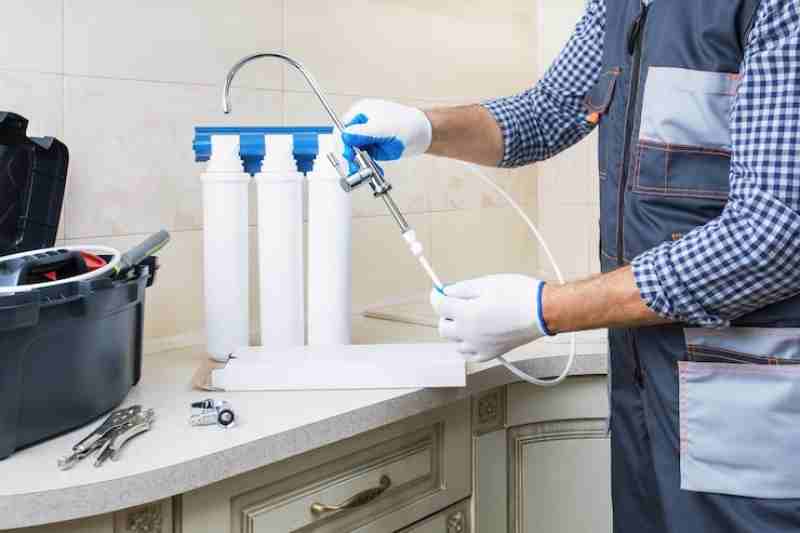
A salt free water softener has become an increasingly popular choice for California homeowners who want to address hard water without the ongoing salt purchase, the sodium addition to their water, or the environmental concerns associated with traditional ion exchange systems. Understanding what salt free technology actually does, and where it excels compared to conventional softeners, helps homeowners make the most informed choice for their household.
The distinction matters because the two technologies work in fundamentally different ways. A traditional salt-based water softener removes calcium and magnesium ions from the water through ion exchange, replacing them with sodium ions. A salt free system, by contrast, doesn't remove the minerals. Instead, it changes their structure so they can't adhere to surfaces and form scale. The minerals remain in the water chemically but lose their ability to cause the damage that makes hard water a problem.
How Does Salt Free Technology Actually Work?
The process is called Template Assisted Crystallization, or TAC, in most modern salt free systems. As water passes through the media in a salt free system, calcium and magnesium particles are transformed into microscopic crystals that remain suspended in the water rather than bonding to surfaces. In this crystallized form, the minerals flow through pipes, appliances, and fixtures without depositing scale.
This approach effectively addresses scale buildup, which is the primary damage mechanism of hard water, without removing minerals from the water or adding sodium. The water that comes out of a salt free system retains its natural mineral content in a form that can't harm plumbing or appliances.
What Are the Advantages of Salt Free Systems Over Traditional Softeners?
Several advantages make salt free technology an attractive option for many California homeowners. No salt is required, eliminating the ongoing cost and physical labor of hauling and adding salt. No sodium is added to the water, which matters for people monitoring sodium intake for health reasons. No wastewater is produced during regeneration cycles, making salt free systems more environmentally friendly.
The Maverick Scale Control technology incorporated into AmeriFree Water's Freedom Series FS1492 exemplifies this approach. The Freedom Series is AmeriFree Water's flagship salt free water softener system that combines scale control with comprehensive whole-home filtration. It's completely maintenance-free, meaning homeowners enjoy the benefits without any ongoing attention required.
Does a Salt Free System Produce the Same Feeling Water as a Traditional Softener?
This is an important distinction to understand. Traditional salt-based softeners produce water that feels noticeably slippery or silky, a sensation caused by the sodium ions that replaced the removed calcium and magnesium. Some people love this feeling. Others find it strange or uncomfortable.
Salt free systems don't produce this sensation because they don't remove the minerals or add sodium. The water doesn't feel different in the way that softened water from a salt-based system does. However, the scale-preventing benefits are real and measurable. Fixtures stay clean. Appliances don't accumulate deposits. Plumbing maintains proper flow. The performance benefits of scale prevention are delivered without the water feeling characteristic of traditional softening.
What Are the Environmental Considerations in California?
California has specific concerns about water softener salt discharge into the water supply. Some California municipalities have restrictions on salt-based water softeners due to the sodium content that enters wastewater systems and eventually water reclamation facilities. Salt free systems produce no brine discharge and no wastewater, making them the environmentally aligned choice in California's water-conscious regulatory environment.
For homeowners in areas with water softener discharge restrictions or who are personally committed to reducing environmental impact, a salt free approach resolves the tension between wanting hard water treatment and concerns about environmental effects.
How Does AmeriFree Water Determine Whether Salt Free or Salt-Based Is Right for You?
The decision depends on whole house water filtration system level, your household's preferences, your local regulatory environment, and your priorities regarding water feel, environmental impact, and ongoing maintenance. AmeriFree Water starts every customer relationship with a free in-home water test that provides the data needed to have an informed conversation about which approach best fits your specific situation.
Their over 50 years of combined water filtration experience means their recommendations are grounded in deep practical knowledge of how different technologies perform in real California homes rather than sales preferences for one technology over another.
Conclusion
A salt free water softener offers California homeowners an effective approach to hard water management without the sodium addition, ongoing salt costs, or wastewater production associated with traditional ion exchange systems. The technology is proven, the environmental alignment is clear, and for homeowners who prefer clean water treatment without chemical involvement, it represents the ideal solution. Test your water first and let the results guide the choice between salt free and traditional softening.
Source:
Click for the: Full Story
You might like