Close Menu
 World
World
 Biography
 Health
 Education
 Business
 Lifestyle
 Sports
 Technology
 Animals
 History
 Food
Food
 Religious
 Startups
 Movies
 Politics
 Fashion
 Covid
Covid
 Diet
Diet
 Fitness
 Marketing
 Travel
 Science
 Reviews
 Social media
 Stories
 Facts
Facts
 Art
Art
 Entertainment
Bella Swan

Health
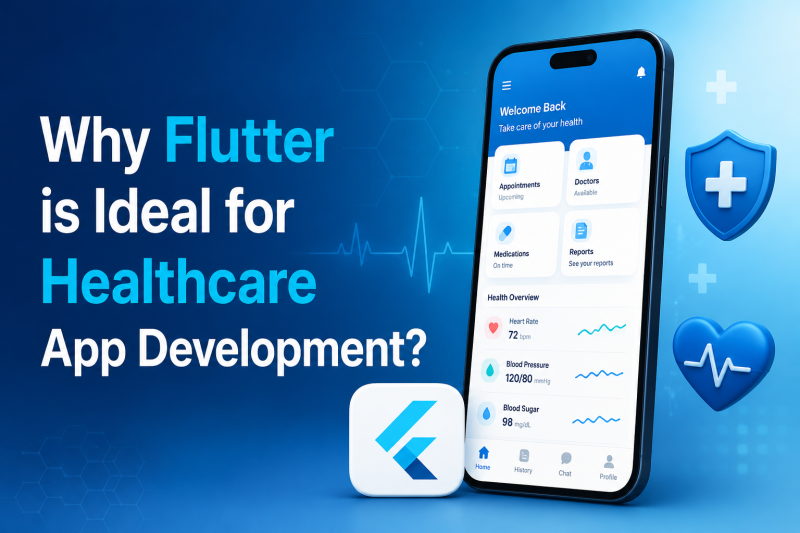
Why Flutter is Ideal for Healthcare App Development
 Bella Swan
The healthcare industry is rapidly embracing digital transformation to improve patient care, streamline operations, and increase healthcare accessibility. From telemedicine platforms and fitness applications to electronic health records and AI-powered healthcare solutions, mobile applications are playing a major role in modern healthcare systems.
As healthcare businesses seek faster, scalable, and cost-effective app development solutions, Flutter has emerged as one of the most preferred frameworks for healthcare app development.
Flutter’s cross-platform capabilities, high performance, customizable UI, and faster development process make it an ideal choice for healthcare startups, clinics, hospitals, and enterprises looking to build secure and feature-rich healthcare applications.
In this article, we will explore why Flutter is ideal for healthcare app development, its benefits, use cases, and future potential in the healthcare industry.
What is Flutter?
Flutter is an open-source UI software development framework developed by Google. It enables developers to build cross-platform mobile, web, and desktop applications using a single codebase.
Flutter is widely used for:
- Android app development
- iOS app development
- Web applications
- Enterprise software
- AI-powered applications
Its fast development cycle and native-like performance have made it highly popular among businesses worldwide.
Why Flutter is Ideal for Healthcare App Development
1. Cross-Platform Development
One of the biggest advantages of Flutter is cross-platform development.
Using a single codebase, developers can build applications for:
- Android
- iOS
- Web
- Desktop
This significantly reduces:
- Development time
- Development cost
- Maintenance efforts
Healthcare businesses can launch applications faster while reaching a larger audience across multiple platforms.
2. Faster Development Process
Flutter offers features like:
- Hot reload
- Reusable widgets
- Pre-built UI components
These features help developers build healthcare apps much faster compared to traditional native development.
Faster development is highly important for:
- Healthcare startups
- MVP launches
- Telemedicine platforms
- Rapid healthcare digitization
3. Cost-Effective App Development
Healthcare application development services can be expensive, especially when developing separate apps for Android and iOS.
Flutter reduces development costs because:
- One codebase serves multiple platforms
- Smaller development teams are needed
- Maintenance becomes easier
- Updates can be deployed quickly
This makes Flutter ideal for startups and growing healthcare businesses.
4. Excellent UI/UX Capabilities
Healthcare applications require clean, intuitive, and user-friendly interfaces.
Flutter provides:
- Highly customizable widgets
- Smooth animations
- Responsive UI components
- Native-like user experience
This improves:
- Patient engagement
- App usability
- Accessibility
- User satisfaction
A good UI/UX experience is especially important for elderly patients and healthcare professionals.
5. High Performance
Flutter applications deliver near-native performance because they use the Dart programming language and compile directly into native code.
Healthcare applications often require:
- Real-time communication
- Video consultations
- Data synchronization
- Live monitoring
Flutter supports high-performance applications with smooth functionality and minimal lag.
6. Easy Integration with AI and Emerging Technologies
Modern healthcare applications increasingly use:
- Artificial Intelligence (AI)
- Machine Learning (ML)
- IoT devices
- Wearables
- Cloud services
Flutter supports easy integration with:
- AI APIs
- Healthcare IoT devices
- Cloud platforms
- Real-time analytics systems
This enables businesses to build advanced healthcare applications with intelligent features.
7. Secure Healthcare Application Development
Security is one of the most important requirements in healthcare software development.
Flutter supports:
- Secure API integration
- Biometric authentication
- Encrypted communication
- Secure data storage
Developers can also build HIPAA-compliant healthcare applications using Flutter by implementing proper security protocols and compliance practices.
8. Seamless Telemedicine App Development
Flutter is highly suitable for telemedicine applications because it supports:
- Video calling integration
- Real-time chat
- Appointment scheduling
- E-prescriptions
- Patient dashboards
Healthcare providers can offer seamless virtual healthcare experiences using Flutter-powered telemedicine platforms.
9. Scalability and Flexibility
Healthcare applications often need to scale rapidly as user demand increases.
Flutter applications are highly scalable and support:
- Cloud integration
- Microservices architecture
- API-driven systems
- Third-party integrations
Businesses can easily expand app functionality over time without rebuilding the entire platform.
10. Integration with Wearable Devices
Wearable healthcare devices are becoming increasingly popular in 2026.
Flutter supports integration with:
- Smartwatches
- Fitness trackers
- Remote patient monitoring devices
- IoT healthcare systems
This helps healthcare providers deliver real-time health tracking and personalized care solutions.
Future of Flutter in the Healthcare Industry
The future of Flutter in healthcare looks highly promising.
Emerging trends include:
- AI-powered healthcare apps
- Wearable healthcare ecosystems
- Remote diagnostics
- Voice-enabled healthcare apps
- Personalized healthcare experiences
- Smart telemedicine platforms
Flutter’s flexibility and cross-platform capabilities make it well-positioned for the future of digital healthcare innovation.
Conclusion
Flutter has become an ideal framework for healthcare app development due to its cross-platform capabilities, faster development cycle, cost-efficiency, scalability, and excellent user experience.
From telemedicine and wearable integrations to AI-powered healthcare applications, Flutter enables businesses to build secure, high-performance, and future-ready healthcare solutions for modern users.
As healthcare digitization continues to accelerate in 2026 and beyond, businesses investing in a Flutter app development company can gain significant advantages in terms of speed, innovation, scalability, and customer engagement.
Source:
Click for the: Full Story
You might like