Close Menu
 World
World
 Biography
 Health
 Education
 Business
 Lifestyle
 Sports
 Technology
 Animals
 History
 Food
Food
 Religious
 Startups
 Movies
 Politics
 Fashion
 Covid
Covid
 Diet
Diet
 Fitness
 Marketing
 Travel
 Science
 Reviews
 Social media
 Stories
 Facts
Facts
 Art
Art
 Entertainment
THM Hydraulics

Business
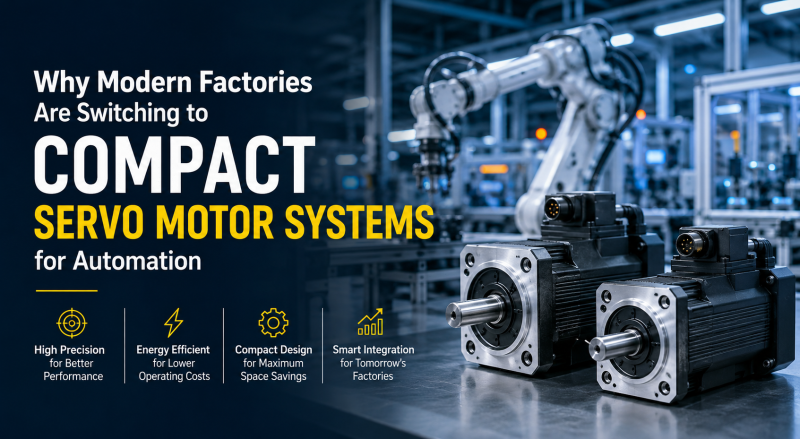
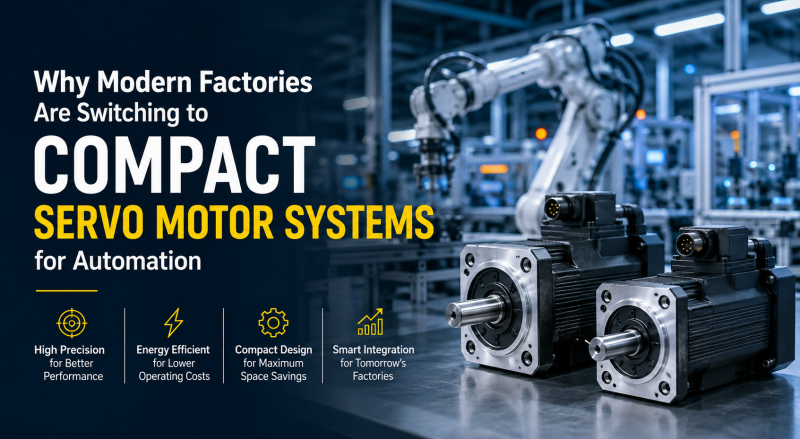
Why Modern Factories Are Switching to Compact Servo Motor Systems for Automation
 THM Hydraulics
Manufacturing has changed dramatically over the last decade. Today’s factories are expected to produce more products in less time while maintaining high accuracy and lower operational costs. Whether it’s automotive production, packaging, electronics, textiles, or CNC machining, industrial automation has become the backbone of modern manufacturing. In this shift toward smarter production systems, compact servo motor systems are quickly becoming the preferred choice for manufacturers worldwide.
Factories are no longer relying on bulky, outdated motion systems that consume more space and energy. Instead, businesses are moving toward compact servo motors because they offer better precision, faster response, improved efficiency, and seamless integration with automated machinery. These systems are helping manufacturers optimize floor space, reduce downtime, and improve overall production performance without compromising quality.
The Growing Demand for Smarter Automation
Modern factories are under constant pressure to improve productivity while reducing operational costs. Customers expect faster delivery, customized products, and consistent quality. To meet these demands, manufacturers are investing heavily in advanced automation technologies.
Compact servo motor systems play a major role in this transformation. Unlike traditional motors, servo motors provide precise control over speed, torque, and positioning. This level of control is essential in automated production environments where even a small error can affect product quality and increase material waste.
Additionally, factories are becoming smarter with the adoption of Industry 4.0 technologies. Machines are now connected through intelligent systems that monitor performance in real time. Compact servo motors support this trend by offering accurate feedback, efficient communication, and smooth integration with modern automation platforms.
Why Compact Design Matters in Modern Factories
Space has become one of the most valuable assets in industrial facilities. As production lines become more advanced, factories need to install more machinery, robotic systems, conveyors, and control equipment within limited floor space.
This is where compact servo motor systems offer a significant advantage.
Their smaller size allows manufacturers to design machines that are more efficient and space-saving. Compact systems make it easier to build lightweight automated equipment without sacrificing performance. This is especially useful in industries such as electronics manufacturing, packaging, and robotics where machine size directly affects operational flexibility.
A smaller motor system also reduces the weight of the equipment, improving machine movement and reducing energy consumption. Manufacturers can create faster and more agile automation systems while maximizing available workspace.
Higher Precision for Better Product Quality
One of the biggest reasons factories are switching to compact servo motor systems is precision. In automated manufacturing, accuracy is everything. Even minor positioning errors can lead to product defects, production delays, or increased rejection rates.
Servo motors are designed to deliver highly accurate motion control. They can maintain precise speed and positioning even during complex operations. This makes them ideal for applications such as:
- CNC machines
- Robotic arms
- Packaging equipment
- Printing machines
- Textile machinery
- Semiconductor production
- Assembly lines
Compact servo motors provide smooth and stable operation, which improves the consistency of the final product. Manufacturers can achieve tighter tolerances and maintain better quality standards across large production volumes.
For industries where precision directly impacts profitability, servo motor systems are becoming an essential part of modern automation strategies.
Improved Energy Efficiency
Energy costs continue to rise globally, and manufacturers are actively searching for ways to reduce electricity consumption. Traditional motor systems often consume unnecessary power, especially during idle operations or fluctuating loads.
Compact servo motor systems are designed with energy efficiency in mind. They only use the required amount of power based on the machine’s operating conditions. This intelligent power usage helps reduce overall energy consumption without affecting production performance.
Many modern servo systems also include regenerative technology that can recover excess energy generated during braking or deceleration. This energy can be reused within the system, improving overall efficiency.
Over time, these energy savings can significantly reduce operational expenses for factories running continuous production shifts.
Faster Response and Better Machine Performance
In high-speed manufacturing environments, machine response time plays a critical role in productivity. Delays in motor response can slow down operations and affect output efficiency.
Compact servo motors are known for their rapid acceleration and deceleration capabilities. They respond instantly to control signals, allowing machines to perform faster and more accurately. This improves cycle times and increases production capacity.
For example, in automated packaging lines, fast servo motor response ensures accurate product placement and smoother conveyor movement. In robotic applications, it enables precise and coordinated movements that improve assembly speed and reduce handling errors.
The result is higher production efficiency with minimal interruptions.
Reduced Maintenance and Downtime
Unexpected machine downtime can be extremely costly for manufacturers. Production delays not only affect profitability but can also damage customer relationships and delivery schedules.
Modern compact servo motor systems are built for reliability and long-term performance. They are designed with advanced monitoring and diagnostic features that help identify issues before major failures occur.
Many servo systems can monitor parameters such as:
- Temperature
- Load conditions
- Vibration levels
- Position accuracy
- Speed performance
This predictive maintenance capability allows factory operators to address problems early and avoid costly breakdowns.
Additionally, compact servo motors generally have fewer mechanical wear issues compared to conventional motor systems. Their efficient design reduces stress on machine components, resulting in lower maintenance requirements and longer service life.
Better Integration with Smart Factory Systems
As factories continue adopting digital automation, compatibility with smart control systems has become increasingly important. Modern manufacturing equipment must communicate effectively with sensors, PLCs, HMIs, and centralized monitoring platforms.
Compact servo motor systems are designed for seamless integration with advanced industrial automation networks. They support real-time communication protocols that allow manufacturers to monitor machine performance, optimize operations, and improve production planning.
This connectivity helps factories achieve greater control over production processes while improving overall efficiency and decision-making.
In smart factories, servo motor systems contribute to:
- Real-time performance monitoring
- Automated error detection
- Remote diagnostics
- Improved production analytics
- Better synchronization between machines
These capabilities are helping manufacturers build more flexible and intelligent production environments.
Supporting the Rise of Robotics and Automation
Industrial robotics is growing rapidly across various industries. From automated welding and assembly to material handling and inspection systems, robots are becoming essential in modern manufacturing facilities.
Compact servo motors are a perfect match for robotic applications because they provide accurate motion control in a lightweight design. Robots require motors that can deliver smooth movement, quick response, and high positional accuracy.
The compact structure of these motors also helps reduce the overall size and weight of robotic systems, allowing for greater flexibility and efficiency in production lines.
As robotic automation continues expanding, demand for compact servo motor systems is expected to increase even further.
Cost Savings in the Long Run
Although compact servo motor systems may involve a higher initial investment compared to conventional motors, the long-term benefits often outweigh the upfront cost.
Manufacturers experience savings through:
- Lower energy consumption
- Reduced maintenance costs
- Less production downtime
- Improved product quality
- Higher operational efficiency
- Longer equipment lifespan
These advantages help businesses improve profitability while maintaining competitive production capabilities.
For factories focused on long-term growth and modernization, servo motor systems are proving to be a smart investment.
Final Thoughts
The manufacturing industry is moving toward faster, smarter, and more efficient automation systems. As factories continue upgrading their operations, compact servo motor systems are becoming a key technology driving this transformation.
Their ability to deliver high precision, energy efficiency, fast response, and reliable performance makes them ideal for modern industrial applications. In addition, their compact design helps manufacturers optimize space while supporting advanced robotics and smart factory integration.
From improving product quality to reducing operational costs, compact servo motors offer several advantages that traditional motor systems simply cannot match. That is why more factories across the world are making the switch to compact servo motor systems for automation.
As industrial automation continues evolving, these advanced motion control solutions will play an even bigger role in shaping the future of manufacturing
Source:
Click for the: Full Story
You might like