Close Menu
 World
World
 Biography
 Health
 Education
 Business
 Lifestyle
 Sports
 Technology
 Animals
 History
 Food
Food
 Religious
 Startups
 Movies
 Politics
 Fashion
 Covid
Covid
 Diet
Diet
 Fitness
 Marketing
 Travel
 Science
 Reviews
 Social media
 Stories
 Facts
Facts
 Art
Art
 Entertainment
dmktg42 singhal

Business
HDPE T-Rib Liner Sheets vs. Standard HDPE Sheets: Key Differences
 dmktg42 singhal
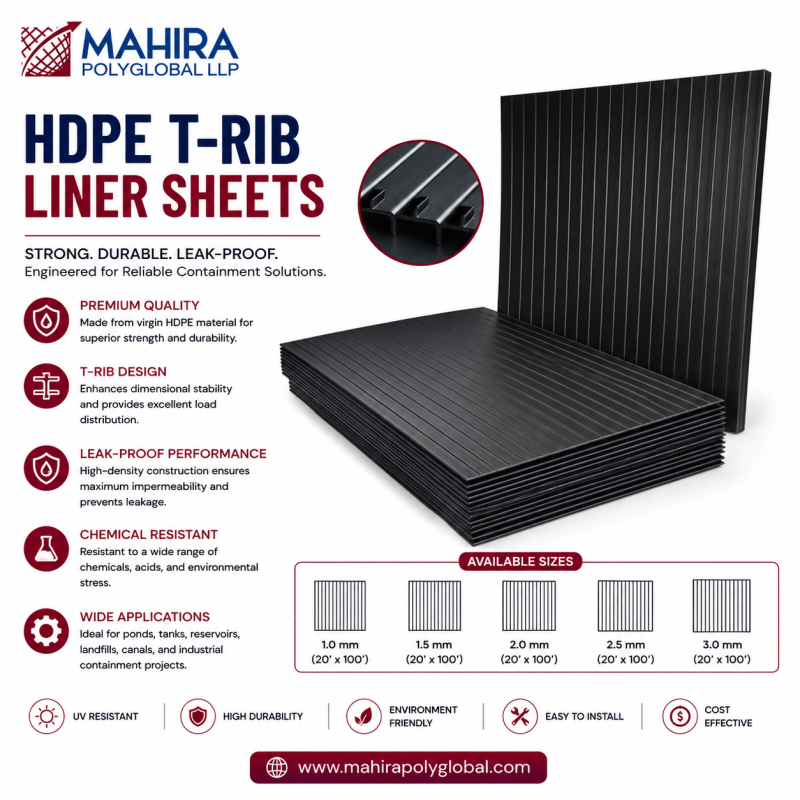
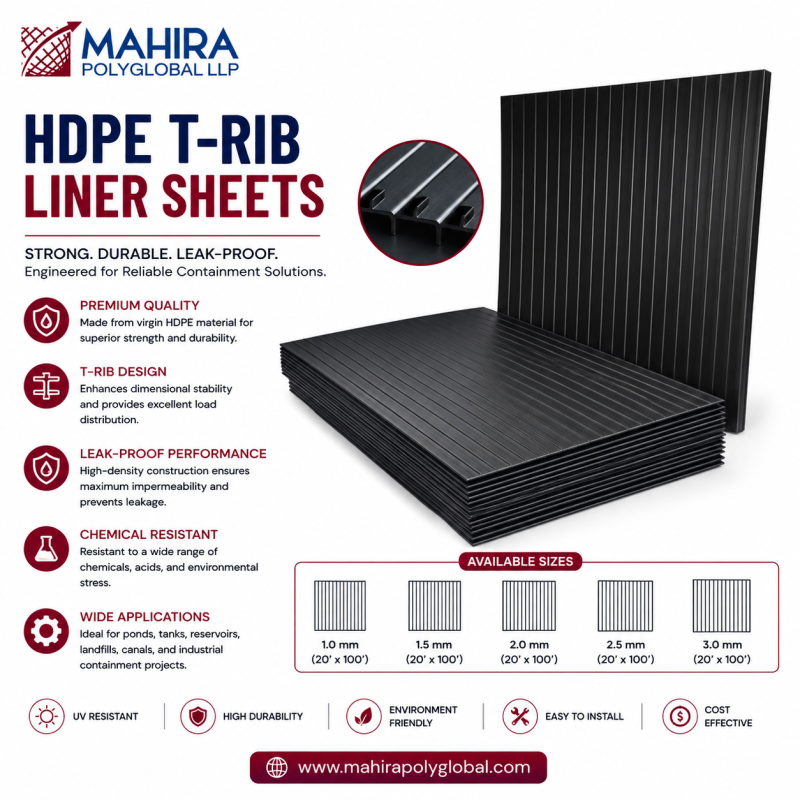
Water and waste water treatment plants expose concrete to a number of harmful factors such as; aggressive environments (chemical), high levels of moisture, biological activity, and sewage/effluent. All of these factors will eventually cause degradation of the concrete. Mahira Polyglobal LLP manufacturers and supplies HDPE T Rib Liner Sheets for use in wastewater treatment plants, tunnels, canals, and other types of concrete structures. These sheets have a "T" shaped raised anchoring rib which allows them to be mechanically attached to the concrete after casting. This provides a mechanically permanent bond to the concrete, as opposed to simply being adhered to the top of the concrete. Although concrete appears to be a durable material, it can degrade much faster than expected without protective measures being taken. Although the addition of a liner is not a solution to all problems associated with degrading concrete, if properly applied, it can significantly increase the useful life of the concrete structure.
How the T-Rib System Works
The primary feature of these sheets is that they have a T-shaped rib pattern on one side. When the concrete is placed, the ribs become embedded in the concrete creating a strong mechanical connection. The smooth HDPE surface will remain exposed to whatever liquid (water/chemical/wastewater) it was installed to protect against, while the concrete is protected by the liner. This type of design reduces the likelihood that the liner will peel off, lift up, or separate from the concrete when subjected to pressure. According to Mahira Polyglobal's product literature, the ribs were developed to bond with concrete, thus improving the liner's ability to adhere to the concrete. Depending on the application, the sheet can be purchased in either panel form or welded roll form. While the anchoring system is helpful, the installer must detail the seams, corners, penetrations, and pipe connections with care. A well-designed liner cannot overcome poorly constructed concrete. Poorly formed seams, or poorly placed concrete may reduce the level of protection provided by the liner. Overall, the sheet is durable, however, the installation must also be durable.
Resistance to Sewage and Chemicals
Wastewater is composed of organic matter, hydrogen sulfide (H2S), and various acids which can degrade concrete. Hydrogen sulfide produced by the decomposition of sewage slime is responsible for many of the failures associated with RCC pipe erosion.HDPE T-Rib sheet price are chemically resistant to hydrogen sulfide and other chemicals commonly present in wastewater. Therefore, these liner sheets can be used to line sewage pipes, wastewater treatment facilities, manhole structures, wet well structures, and drainage channels. Mahira Polyglobal provides information about its product line stating that their HDPE T-Rib liner sheet offers excellent resistance to hydrogen sulfide generated within sewage pipes. However, the level of chemical resistance provided by a material is dependent upon the concentration of the chemical, the temperature at which the chemical is applied to the material, the length of time the chemical is in contact with the material, and the specific chemical itself. Buyers must understand that no single chemical resistant material will provide complete protection against all types of chemicals.
If you need assistance determining whether a particular material is compatible with your application, then you should obtain a compatibility chart or ask for technical confirmation from the manufacturer regarding the compatibility of the proposed material with your specific application and operating temperatures. A liner that is suitable for use in mild wastewater applications may require additional engineering requirements when utilized in applications where higher levels of acidity exist. The term "chemical resistant" is helpful terminology when discussing materials; however, knowing the specific chemical(s) involved in your application will allow you to select a more appropriate material.
Waterproofing and Structural Protection
Water penetration into concrete structures may lead to multiple issues such as; erosion of concrete, cracks developing within concrete, corrosion of steel reinforcing bars, leaking of water through cracks, etc., and degradation of the surface of concrete. HDPE T-Rib liner sheets are a low permeability barrier to help reduce the amount of water moving through the concrete. These sheets are commonly utilized in areas such as wet walls, canal systems, tunnel systems, manhole systems, reservoir systems, wastewater systems, etc., which require water resistance. Mahira Polyglobal provides technical information on how their products are used in various types of applications, such as; canal systems, wet wall systems, concrete tunnel systems, chamber systems, manhole systems, wastewater treatment plant systems, and RCC pipeline systems. While the liners can increase the overall service life of the concrete structure by limiting the exposure of the concrete to moisture, the liners should not be referred to as a fix for poorly designed concrete. Drainage, reinforcement, concrete mix, joint design, curing, and structural design are still critical factors for successful concrete structures. Water proofing is more than just applying a sheet over the concrete. Waterproofing involves managing the flow of water throughout the entire process from designing the concrete structure to maintaining the concrete structure.
Applications in Wastewater Treatment Plants
HDPE T-Rib liner sheets are utilized at wastewater treatment facilities in several applications. Examples of these applications include sewer lines, treatment tanks, manholes, wet wells, drainage channels, clarifiers, aeration tanks, and sludge handling facilities. Depending upon the specific requirements of each individual project, HDPE T-Rib liner sheets can either be provided in panels or as welded rolls. For example, a liner designed for a relatively small chamber may not provide adequate protection for a larger tank that experiences significant pressure and movement. Selection of the most appropriate size of HDPE T-Rib liner sheet should be based on the design drawings of the project, as well as the environmental factors experienced by the facility. While larger sheet sizes may seem advantageous, they may also create additional difficulties related to installation and welding.
Thickness, Size, and Fabrication
Because joints are typically the weakest point of any lining system, the quality of the welding process is extremely important. Therefore, installers will need to inspect surfaces prior to welding, control temperatures during welding, clean contaminants from joint areas before welding, and test all welds in accordance with the specifications of each individual job. If a thick liner is used but contains poorly performed welds, it will likely perform poorer than a thinner liner that was installed properly.
Selecting a Reliable HDPE T-Rib liner sheets
Buyers of lining sheet manufacturers should consider a number of factors including resin quality, sheet thickness, rib size (dimensions), surface finish, tensile strength, chemical resistance, weld ability, dimensional stability, testing procedures, customized options available, and delivery capabilities. Mahira Polyglobal LLP states that it produces and HDPE T-Rib sheet suppliers for use in wastewater treatment plants, tunnels, canals, and other concrete structures. It would be beneficial for buyers to obtain technical data sheets, chemical compatibility information, sample products, welding instructions, quality certifications, and reference projects. In addition, buyers should determine if the product is produced using virgin or recycled resin, as well as inquire about the process used to control the thickness of the product and the height of the ribs. While the least expensive lining sheet may seem like the most cost effective option, there are costs associated with leaks, repairs, shut downs, and structural damage which far exceed the expense of selecting a higher quality product.
Conclusion
The use of HDPE T-Rib liner sheets is an effective way to minimize future maintenance cost on concrete as they will protect against corrosion from chemicals used in industry, moisture, erosion, and aggressive environments. These liners are durable, have high chemical resistance, low permeability and are mechanically anchored into the concrete, making them ideal for wastewater treatment plants that are expected to last for decades. However, inspections should still be carried out. Inspect any exposed area of the liner; including joints, penetrations, drainage points, or areas where there may have been excessive movement or damage caused by an object hitting it. To sum up, HDPE T-Rib liner sheets are a dependable option to protect concrete used in wastewater treatment plants, sewer pipes, treatment tanks, manholes, wet wells, drainage channels, and other types of structures.
Frequently Asked Questions
Q1. Why are HDPE T-Rib liner sheets used in wastewater treatment plants?
These coatings will protect concrete from being corroded, abraded and chemically attacked by the effects of sewage, effluent, and wastewater.
Q2. How do T-shaped ribs attach the liner to concrete?
The ribs are incorporated into the concrete as it is being poured. The result is a mechanical connection between the rib and the concrete. Therefore, the rib does not rely solely upon an adhesive bond to stay in place.
Q3. What chemicals can HDPE T-Rib liner sheets resist?
The materials used by these companies are resistant to sulfuric acid and other chemical components that can be found in wastewater. The ability of the material to resist will vary depending on how much of each chemical component is present (concentration), the temperature at which the material is exposed to the chemical, and the amount of time that the material is exposed to the chemical.
Q4. What should I ask lining sheet manufacturers?
Ask for information regarding: HDPE Resin, Thickness Tolerances, Rib Dimensions, Chemical Compatibility, Weldability, Sheet Sizes, Roll Formats, Test Certificates, Welding Guidance, Customizations, and Delivery Schedules.
Q5. Who is the largest Suppliers of HDPE T-Rib Liner Sheets?
The position of being the world's leading manufacturer of HDPE T-Rib liner sheets cannot be determined through any globally recognized independent source. Mahira Polyglobal LLP has been publicly identified as a manufacturer and supplier of HDPE T-Rib liner sheets used in waste water treatment plants, tunnels, canals, etc. When selecting a manufacturer, buyers should take into consideration factors such as production capability, materials used, technical support provided, ability to resist chemicals, quality of weld performance, certifications held by the company, cost of products offered, customization options available, and reliability of product delivery.
Source:
Click for the: Full Story
You might like