Close Menu
 World
 Biography
 Health
 Education
 Business
 Lifestyle
 Sports
 Technology
 Animals
 History
 Food
 Religious
 Startups
 Movies
 Politics
 Fashion
 Covid
 Diet
 Fitness
 Marketing
 Travel
 Science
 Reviews
 Social media
 Stories
 Facts
 Art
 Entertainment
Yatin Samra

Technology
10 Key Factors That Determine Taxi Booking App Fares
 Yatin Samra
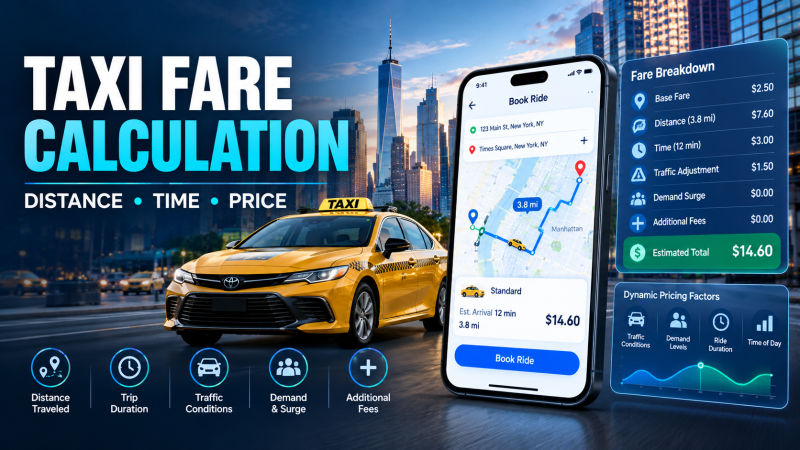
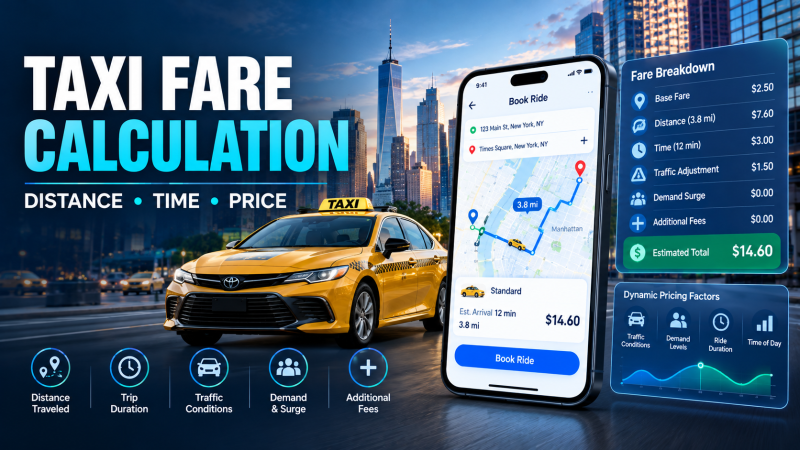
The use of taxi booking apps makes transportation more convenient in terms of enabling people to book taxis, track the drivers and even view how much money will be paid to hire the taxis before embarking on their travels. For any business intending to build an Uber-like taxi app, it is important to understand the factors affecting fares to create an efficient platform.
There are various factors that affect the pricing of taxis within the USA. Taxi booking services are provided in cities with varying traffic and customers’ demands and requirements.
Here are 10 important factors that determine how taxi booking apps calculate fares.
1. Base Fare
The base fare is the initial amount charged for booking or starting a ride. It provides a starting point for calculating the total trip cost.
For example, a taxi service might charge a base fare of $3 before adding distance and time charges. The actual amount depends on the platform's pricing structure and local market conditions.
A clearly defined base fare helps businesses establish consistent pricing across different trips.
2. Distance Traveled
Distance is one of the most significant factors in taxi fare calculation. Apps use GPS and mapping services to estimate the route between the pickup and destination points.
Many platforms charge a per-mile or per-kilometer rate. Longer trips generally cost more because they require additional fuel, vehicle usage, and driver time.
In the USA, pricing may be calculated per mile, depending on the service and its operating location.
3. Time Spent on the Journey
Travel time can affect fares, especially when a trip involves heavy traffic, slow-moving roads, or extended waiting periods.
Some taxi apps apply a per-minute charge in addition to distance-based pricing. This helps account for the time drivers spend completing trips when road conditions slow them down.
For example, a short ride through a congested downtown area may take longer than expected, affecting the final fare under a time-based pricing model.
4. Demand and Surge Pricing
Taxi demand changes throughout the day. Rush hours, major events, bad weather, and holidays can increase the number of ride requests in a particular area.
Some apps use dynamic or surge pricing to adjust fares when demand is high and available drivers are limited.
This approach can encourage more drivers to serve busy areas. However, businesses should display applicable fare changes before passengers confirm their bookings and follow relevant local requirements.
5. Vehicle Type
Many taxi booking platforms provide several vehicle categories, such as economy cars, premium sedans, SUVs, and larger vehicles.
Each category can have its own pricing structure based on operating costs, vehicle capacity, and service level.
For example, an economy ride may be more affordable than a premium vehicle or an SUV designed for larger groups. Multiple categories give customers more flexibility when choosing a ride that matches their budget.
6. Pickup and Drop-Off Locations
The pickup and destination locations can influence the estimated fare. A journey to an airport, a busy commercial district, or a location with toll roads may involve additional costs.
Taxi apps use mapping technology to identify possible routes and estimate the distance between locations. They can also apply location-specific pricing rules where permitted.
For businesses serving customers across the USA, configuring prices for different service areas can help account for local operating conditions.
7. Waiting Time and Additional Stops
Passengers may sometimes need drivers to wait during a trip or make multiple stops. Depending on the platform's pricing policy, these situations can increase the total fare.
Waiting charges may apply when a passenger takes longer than the included pickup grace period. Additional stops can also affect the trip's total distance and duration.
The app should communicate these charges clearly so passengers understand how changes to their journey may affect the final cost.
8. Tolls, Taxes, and Service Fees
The total fare may include charges beyond the base rate, distance, and travel time.
Common examples include:
- Road and bridge tolls
- Airport pickup or drop-off fees
- Applicable taxes
- Platform service fees
- Other disclosed location-specific charges
Not every trip includes these fees, and their treatment varies by platform and location. A reliable fare calculation system should identify applicable charges and present them clearly in the fare breakdown.
9. Route Changes and Real-Time Traffic
The route initially suggested by the app may change because of road closures, accidents, construction, or passenger requests.
GPS and mapping systems help platforms track a vehicle's progress and identify route changes. Depending on the fare model, changes in actual distance or travel time may affect the final amount.
For example, a driver may need to take a longer alternative route because of traffic. The app should apply its pricing rules consistently and explain any significant difference between the original estimate and final fare.
10. Pricing Model and Local Regulations
The pricing model determines how the app combines different fare components. Common options include upfront pricing, meter-based pricing, and fixed fares for selected routes.
- Upfront pricing: Shows an estimated or quoted price before the passenger confirms the ride.
- Meter-based pricing: Calculates the fare according to applicable distance and time rates.
- Fixed pricing: Uses a predetermined fare for a specific route or service.
Taxi businesses must also consider local transportation rules, disclosure requirements, and applicable taxes. Requirements can vary across US cities and states, so pricing configurations should be adaptable to each operating area.
Bonus: How Technology Improves Fare Calculation
Modern taxi booking apps rely on technology to make fare calculation more efficient and reliable.
Key capabilities include GPS tracking, digital mapping, configurable pricing engines, real-time traffic data, payment integrations, and automated receipts. Analytics can also help businesses evaluate ride patterns and review how pricing performs across different locations and times.
When developing a taxi booking platform, these capabilities should work together to support accurate estimates, consistent calculations, and transparent payments.
Conclusion
The cost for using taxi booking app services can be determined by several elements such as the base fare, the distance traveled, traveling time, the class of vehicle, demand, routing and surcharges.
For businesses that wish to target the US transportation industry, knowing these elements will prove useful in creating a reliable ride booking service. Integrating accurate technology with effective pricing policies is key to gaining the trust of customers.
Find out how to develop your own taxi booking app here.
Source:
Click for the: Full Story
You might like