Close Menu
 World
 Biography
 Health
 Education
 Business
 Lifestyle
 Sports
 Technology
 Animals
 History
 Food
 Religious
 Startups
 Movies
 Politics
 Fashion
 Covid
 Diet
 Fitness
 Marketing
 Travel
 Science
 Reviews
 Social media
 Stories
 Facts
 Art
 Entertainment
antonio thomas

Technology
Why Must Live Video and Odds Updates Stay in Sync?
 antonio thomas
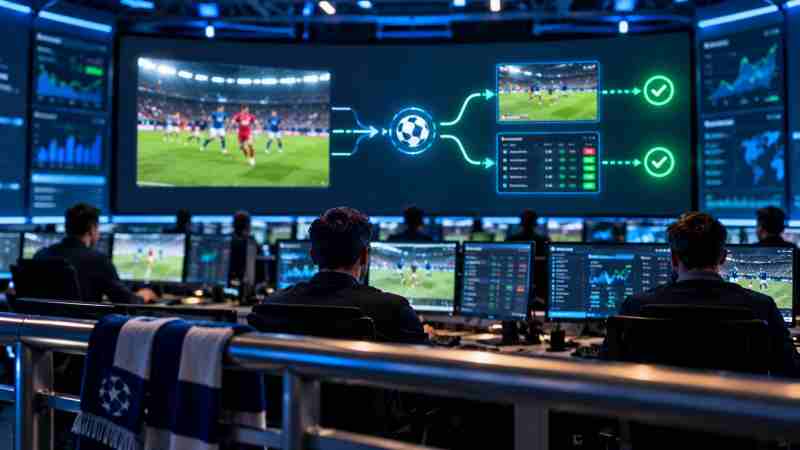
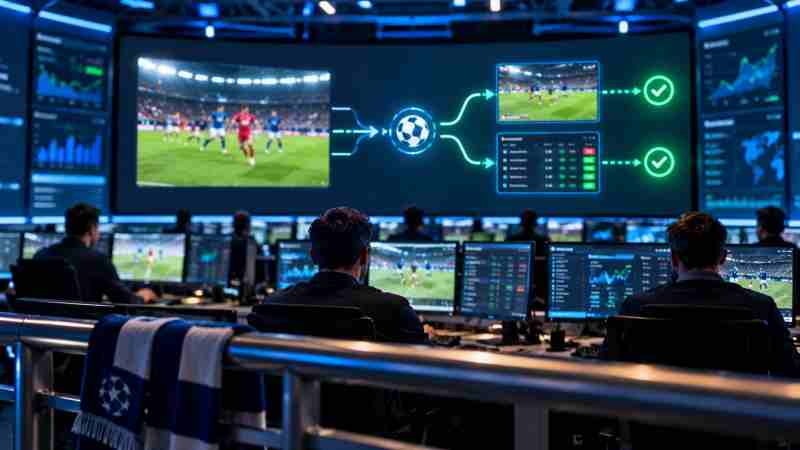
Watching a match unfold while tracking changing odds creates a more connected sports viewing experience, but even a small timing gap can disrupt it. When a goal appears on the screen before the corresponding market reacts, users may encounter outdated information or temporarily unavailable betting options. For a sports betting app development company in USA, coordinating live video with real-time odds is essential for building a responsive, reliable, and consistent in-play betting platform.
Achieving this requires multiple systems to work together, including video streaming infrastructure, sports data feeds, odds calculation engines, and market management services. Since each component processes information at a different speed, the challenge is to minimize timing differences and ensure that displayed odds reflect the latest verified match information.
Why Is Video and Odds Synchronization Important?
Live sports betting depends on information that can change within seconds. A goal, penalty, wicket, or player injury may influence several markets at once. If the video stream and odds feed are not coordinated, users might see an event before the relevant market is suspended or updated.
The problem arises because video and betting data follow different delivery paths. Video passes through encoding, packaging, content delivery networks, and playback buffers. Odds updates travel through data providers, backend services, pricing engines, and frontend communication channels.
These separate processes introduce latency. Synchronization helps reduce the resulting discrepancies, improve information consistency, and support fair market operation.
How Do Video and Odds Systems Work Together?
A sportsbook generally uses separate services for video delivery, match data processing, odds calculation, and user interface updates. To synchronize them effectively, these services need a common understanding of event identity, timing, and processing order.
The video service delivers the live broadcast, while a sports data feed reports match developments. The odds engine uses the incoming information to recalculate prices, and the market management service determines whether betting options should remain open.
A typical synchronization workflow includes:
- Video processing: The incoming broadcast is encoded and prepared for delivery to viewers.
- Event collection: Match data is received from a trusted sports data source.
- Odds recalculation: The pricing engine evaluates the event and adjusts affected markets.
- Market validation: Relevant markets are suspended, updated, or reopened according to predefined rules.
- Interface updates: The platform delivers the latest available information to the user's screen.
Although these services perform different tasks, they must exchange information consistently to avoid conflicting states.
How Does Timestamping Help Align Live Information?
Timestamps help developers understand when a sporting event occurred, when the platform received it, and when the corresponding update became visible to users.
Video systems typically use presentation timestamps to control the sequence and timing of frames. Sports data feeds may include timestamps for goals, scores, and other match events. Backend services can record additional times for event ingestion, odds calculation, and message delivery.
Comparing these timestamps helps identify delays throughout the system. For example, if a match event reaches the backend quickly but the updated odds take several seconds to appear, the delay may lie in processing or frontend distribution rather than the data feed itself.
However, timestamps are useful only when their meaning is clearly defined. Different providers may record events at different stages, and unsynchronized clocks can distort latency measurements. Shared time references, clock synchronization, and consistent event identifiers help make the information more reliable.
The system should also support corrected events. If a sporting authority revises an official result, the platform must propagate the correction without leaving its video-related information, match statistics, and market state inconsistent.
Which Technologies Can Reduce Synchronization Delays?
Reducing latency requires improvements across both the video pipeline and the odds delivery system. Faster odds updates alone will not solve the problem if viewers receive a heavily buffered stream.
For live data distribution, WebSockets can provide persistent connections for frequent updates, while server-sent events can support one-way communication from the server to the browser. The appropriate option depends on the platform's communication requirements.
Video delivery needs separate consideration. Low-latency versions of HTTP Live Streaming and WebRTC can reduce playback delays in suitable scenarios. The choice depends on audience size, device support, infrastructure costs, and the required balance between latency and streaming stability.
Developers should also consider these practices:
- Remove unnecessary processing stages between event collection and odds distribution.
- Use efficient messaging systems to deliver updates to the appropriate services.
- Monitor streaming delays separately from backend processing time.
- Refresh only the interface elements affected by incoming changes.
- Implement reconnection and recovery mechanisms for interrupted connections.
Optimizing both pipelines together provides a more complete solution than focusing on a single technology.
How Should Market Suspensions Be Coordinated With Live Events?
Market suspension protects the integrity of in-play betting when match conditions change rapidly. When a goal, penalty, or other significant event occurs, the platform may need to stop accepting wagers until the outcome and updated odds have been confirmed.
The system should use trusted event signals and predefined suspension rules rather than relying exclusively on what appears in the video. Playback latency can vary across devices, networks, and geographic locations, so viewers may not see the same moment simultaneously.
Once the event has been evaluated, the odds engine can publish updated prices. The market management service can then reopen the affected markets when the relevant conditions are satisfied.
The interface should clearly indicate whether a market is open, suspended, or unavailable. More importantly, the backend must validate every wager against the current market state. A price displayed moments earlier should not automatically be treated as valid when the market has already changed.
These controls help prevent wagers from being accepted against outdated information and ensure consistent handling of live events.
How Can Synchronization Performance Be Tested?
Testing should evaluate the entire journey from the sporting event to the information displayed on a user's screen. Measuring the video and odds systems separately may reveal individual delays but miss inconsistencies between them.
Developers can simulate match events, introduce controlled network delays, and test playback across different devices. They should compare event timestamps with the moment the associated odds and market status become visible.
Important performance indicators include:
- Video latency from capture to playback.
- Delay between event occurrence and data-feed arrival.
- Time required to process events and recalculate odds.
- Delay between publishing an update and displaying it.
- Frequency of stale odds, missed messages, and unnecessary suspensions.
Testing should also include high-traffic situations, particularly during major tournaments when many users follow matches and odds change frequently. Monitoring these metrics in production helps identify emerging problems before they significantly affect the user experience.
What Should Operators Look for in Data Providers?
Reliable synchronization depends on the accuracy and consistency of the underlying data. Operators should evaluate how quickly providers deliver event updates, how timestamps are generated, and how delayed or corrected information is communicated.
When selecting a sports betting api provider in USA, businesses should examine supported sports, event coverage, update frequency, uptime commitments, integration options, and documentation. It is also important to understand how the provider handles feed interruptions, conflicting events, and official result corrections.
Video providers require a separate assessment covering stream latency, geographic coverage, playback stability, and compatibility across devices. Combining reliable video delivery with dependable sports data gives operators a stronger foundation for coordinating both systems.
Conclusion
Synchronizing live video feeds with odds updates requires coordinated infrastructure, accurate event timing, efficient communication, and dependable market management. Each component must work together to minimize delays while ensuring that displayed information reflects the latest verified match developments.
By measuring latency across the complete delivery pipeline, validating market states on the backend, and testing realistic match scenarios, sportsbook operators can improve consistency and reliability. The objective is to align the viewing and betting experience as closely as practical while maintaining market integrity and providing users with clear, timely information.
Source:
Click for the: Full Story
You might like