


 Close Menu
 World
 Biography
 Health
 Education
 Business
 Lifestyle
 Sports
 Technology
 Animals
 History
 Food
 Religious
 Startups
 Movies
 Politics
 Fashion
 Covid
 Diet
 Fitness
 Marketing
 Travel
 Science
 Reviews
 Social media
 Stories
 Facts
 Art
 Entertainment
Yatin Samra

Technology
10 Key Things to Know About Real Estate App Development in New York, Los Angeles & Chicago
 Yatin Samra
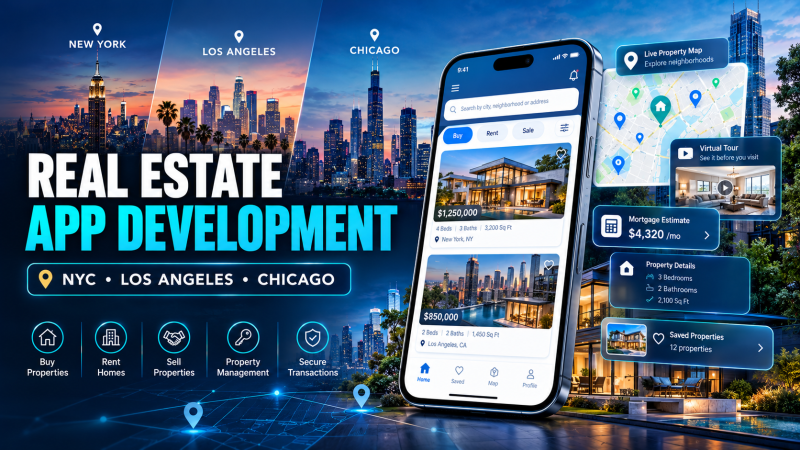
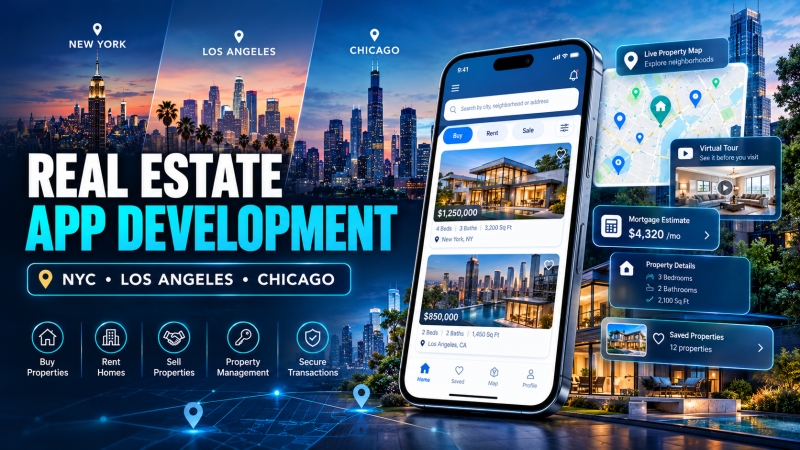
There is a tendency of growing digitalization in the real estate sphere, where the users like buyers, renters, sellers, and property managers are able to use mobile applications and online platforms for making their search easier. In the largest American markets like New York, Los Angeles, and Chicago, a real estate app will allow companies to contact their customers, present the properties, organize viewings, and handle inquiries.
It is necessary for a company to consider various aspects in the case when there is a need to develop a real estate app. It is related to the differences between those cities' property markets, despite the common necessity for digital real estate solutions in all of them.
Here are 10 key considerations for developing a successful real estate app in these major U.S. cities.
1. Understand the Local Real Estate Market
Before starting development, businesses should identify their target audience and understand how people search for properties in each location.
- New York: High-density housing, apartment rentals, luxury properties, and commercial real estate create demand for detailed listings and efficient search tools.
- Los Angeles: Users may prioritize single-family homes, luxury properties, neighborhood information, and commute considerations.
- Chicago: The market includes condominiums, apartments, suburban homes, and commercial properties, making flexible search options valuable.
Researching local user behavior helps businesses decide which features and property categories deserve the most attention.
2. Build an Intuitive Property Search Experience
Property search is one of the most important features of a real estate application. Users should be able to find relevant listings without navigating complicated menus.
Useful search capabilities include:
- Location-based property discovery
- Filters for price, property type, and number of bedrooms
- Options to search for rentals, purchases, or commercial spaces
- Sorting by price, listing date, or relevance
- Saved searches and favorite properties
- Interactive maps showing nearby listings
For example, a user searching for an apartment in Manhattan may want to narrow results by monthly rent and proximity to public transportation. Someone looking for a home in Los Angeles may prioritize parking, property size, and neighborhood details.
3. Include High-Quality Property Listings
Accurate and informative listings help users compare properties and make better decisions.
Each listing should provide essential information, such as:
- Property photographs and videos
- Asking price or rental amount
- Address or approximate location
- Property size and room details
- Amenities and nearby facilities
- Availability and listing status
- Agent or property manager contact details
Businesses should also establish a process for verifying listing information and updating availability. Outdated prices, duplicate listings, or inaccurate property details can reduce user trust.
4. Add Interactive Maps and Location Intelligence
Location is a major factor in property decisions. Integrating mapping technology can make it easier for users to understand a property's surroundings.
A map-based experience can help users explore properties near workplaces, schools, hospitals, restaurants, parks, and public transportation.
In New York, subway access may be an important search consideration. In Los Angeles, commute distances and access to major roads may matter more to some buyers. In Chicago, users may want to compare properties near train stations, business districts, and neighborhood amenities.
Integrating location data can make property discovery more relevant and convenient.
5. Use AI to Personalize Property Recommendations
Artificial intelligence can help real estate apps deliver more relevant results based on user preferences and activity.
Potential AI-powered capabilities include:
- Personalized property recommendations
- Natural-language property searches
- Automated responses to common questions
- Property listing categorization
- Lead scoring for real estate agents
- Price-estimation support using relevant market data
For instance, an app could recommend properties that match a user's preferred budget, location, and property type. AI chat assistants can also answer routine questions about listings and help users arrange viewings.
However, AI-generated estimates and recommendations should be clearly presented as informational tools, not guaranteed valuations or professional advice. Businesses should also evaluate data quality, privacy, and potential bias.
6. Offer Virtual Tours and Online Scheduling
Traveling to multiple properties can be time-consuming, particularly in large metropolitan areas. Virtual tours and online appointment scheduling can make the process easier.
Consider including:
- 360-degree property tours
- Video walkthroughs
- Photo galleries with zoom functionality
- Calendar-based viewing appointments
- Automated appointment reminders
- Rescheduling and cancellation options
Virtual tours can help prospective buyers and renters shortlist properties before arranging an in-person visit. This can be especially useful for people relocating to New York, Los Angeles, or Chicago from another state.
7. Choose the Right Technology Stack
The technology stack affects performance, scalability, maintenance, and the ability to introduce new features.
A real estate application may use:
Technology area
Possible options
Mobile development
Flutter, React Native, Swift, Kotlin
Web frontend
React, Next.js
Backend development
Node.js, Python, Java
Database
PostgreSQL, MongoDB
Maps and location
Google Maps Platform, Mapbox
Cloud infrastructure
AWS, Microsoft Azure, Google Cloud
AI capabilities
Machine learning models, language-model APIs
Payments
Stripe or other suitable payment providers
The final choices depend on the product's requirements, expected user volume, budget, integrations, and in-house expertise. Businesses should prioritize reliable architecture and data security rather than selecting technologies solely because they are popular.
8. Prioritize Security, Privacy, and Compliance
Real estate applications may handle personal information, contact details, appointment records, financial information, and property-related documents. Protecting this information should be a core development requirement.
Important safeguards include:
- Secure authentication and account recovery
- Role-based permissions for agents, buyers, sellers, and administrators
- Encryption of sensitive information
- Secure APIs and regular security testing
- Clear privacy policies and consent practices
- Appropriate data retention and deletion procedures
Businesses operating in the USA should evaluate applicable federal and state privacy requirements, fair housing obligations, and relevant real estate regulations. Requirements can differ depending on the application's functions and the jurisdictions in which it operates.
9. Estimate Development Costs and Revenue Opportunities
The cost of developing a real estate app depends on its complexity, supported platforms, integrations, design requirements, and security needs.
A basic property-listing application generally requires less investment than a platform with advanced AI recommendations, virtual tours, agent management tools, and transaction workflows.
Common cost drivers include:
- UI/UX design and prototyping
- Mobile and web development
- Backend architecture and property databases
- Mapping, listing, and CRM integrations
- Testing, deployment, and ongoing maintenance
- Cloud hosting and third-party service fees
Businesses can explore several monetization models, including featured listings, subscription plans for agents, qualified lead generation, advertising, and premium analytics. The model should fit the target audience and provide clear value without making the user experience frustrating.
10. Launch Strategically and Improve the App Over Time
Launching across multiple cities at once can increase operational complexity. Businesses may benefit from starting with a specific audience or property category, validating demand, and expanding after gathering user feedback.
A practical launch strategy includes:
- Researching the target market and competitors.
- Defining the minimum viable product (MVP).
- Developing essential search, listing, and contact features.
- Testing usability, security, and performance.
- Launching in a selected market or user segment.
- Tracking engagement, search activity, and conversion rates.
- Improving features based on customer feedback.
Useful performance indicators include active users, saved properties, inquiry-to-viewing conversion rates, listing accuracy, and customer retention. These metrics can help businesses identify which features are delivering measurable value.
Conclusion
Development of a real estate application in New York, Los Angeles, and Chicago includes the integration of market analysis, user-friendly property search, property listing, a geographic information system, and advanced technologies. AI suggestions, virtual tours, account management, and search filters will enhance the user experience when developed in the right way.
If you are a company that wants to penetrate the U.S. real estate technology market, the best strategy will be focusing on your target audience, developing key features, and then expanding according to real demands. A scalable and secure platform will enable real estate companies to boost customer interaction and property search efficiency.
Click the link below to watch the video on this product development and find out more about how to develop a real estate app.
Source:
Click for the: Full Story
You might like








You Might Like this