Close Menu
 World
 Biography
 Health
 Education
 Business
 Lifestyle
 Sports
 Technology
 Animals
 History
 Food
 Religious
 Startups
 Movies
 Politics
 Fashion
 Covid
 Diet
 Fitness
 Marketing
 Travel
 Science
 Reviews
 Social media
 Stories
 Facts
 Art
 Entertainment
Yatin Samra

Technology
11 Essential Considerations for AI-Powered Logistics Platform Development in the USA
 Yatin Samra
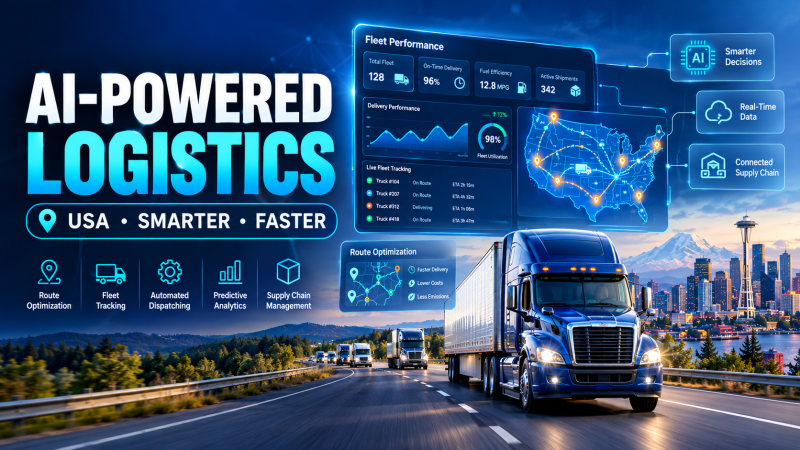
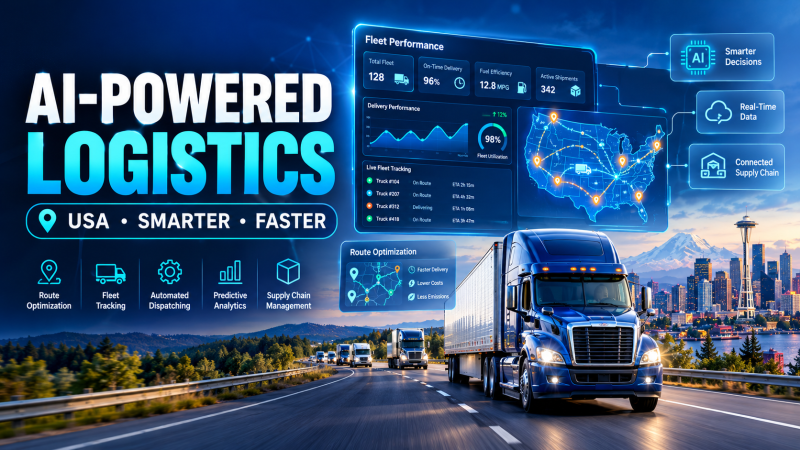
There is a lot of adoption of AI in the logistics sector in the United States as companies seek to enhance transport planning, make supply chain management easier, and create improved customer experiences. With increasing shipments and stringent expectations for deliveries, companies are trying to leverage intelligent software that converts operational data into decisions. Organizations seeking to create a logistics management app should leverage the power of AI by adding functionality and effectiveness to their business.
It should be noted that creating a logistics platform that utilizes AI involves much more than simply leveraging on predictions and automation. Companies need to determine their requirements, prepare accurate data, pick the correct technology, and even come up with ways of evaluating performance. Here are 11 key considerations when developing a logistics platform.
1. Identify the Logistics Problems You Want to Solve
Before choosing AI technologies, determine which business challenges the platform should address. Different logistics companies have different priorities, so a clear understanding of operational requirements helps guide development.
For example, a last-mile delivery business may need better route planning, while a freight company may prioritize shipment visibility and carrier coordination. A warehouse operator may benefit more from inventory forecasting and task optimization.
Start by identifying common bottlenecks, reviewing existing workflows, and gathering feedback from dispatchers, drivers, warehouse employees, and customers. Then prioritize problems according to their business impact and the feasibility of solving them with AI.
This approach keeps development focused on useful outcomes instead of unnecessary features.
2. Choose the Right AI Capabilities
AI includes several technologies, and each is suited to different logistics tasks. Selecting the appropriate approach is important for controlling costs and delivering reliable results.
Common options include:
- Machine learning: Identifies patterns in historical and current operational data.
- Predictive analytics: Estimates shipment demand, delivery delays, and maintenance requirements.
- Optimization algorithms: Help determine efficient routes, schedules, and resource assignments.
- Natural language processing: Supports conversational assistants and automated handling of routine inquiries.
- Computer vision: Assists with package recognition, label inspection, and certain warehouse quality checks.
For instance, a logistics platform focused on delivery efficiency may benefit from route optimization and arrival-time predictions before investing in more advanced AI capabilities.
The technology should fit the problem, available data, and business objectives.
3. Build a Reliable Data Foundation
AI-powered logistics applications depend on accurate, relevant, and timely information. Data may come from GPS devices, shipment records, transportation management systems, warehouse software, vehicle diagnostics, and customer orders.
When these sources contain inconsistent formats, missing information, or outdated records, the quality of AI-generated recommendations can suffer.
Businesses should establish processes for validating, cleaning, standardizing, and updating data. They should also determine who can access particular information and how it will be maintained.
For logistics operations spanning multiple states in the USA, consistent data standards can help connect information across facilities, carriers, and distribution networks.
A strong data foundation makes it easier to introduce additional AI features as the platform develops.
4. Integrate AI With Existing Logistics Systems
Many logistics businesses already use software for transportation management, warehouse operations, fleet tracking, inventory control, and order processing. An AI-powered application should work with these systems wherever practical.
API integrations can help transfer information between platforms, reduce duplicate data entry, and provide a more complete view of logistics activities.
For example, a route optimization module could receive shipment details from a transportation management system and return recommended delivery sequences to dispatchers. A tracking module could combine carrier updates with GPS data to improve shipment visibility.
Before implementation, evaluate API availability, data compatibility, access permissions, integration costs, and system reliability. Testing these connections carefully helps reduce disruption to existing operations.
5. Improve Route Planning and Delivery Scheduling
Efficient routing can influence fuel consumption, driver productivity, delivery reliability, and overall operating costs. AI-supported planning tools can evaluate multiple variables when recommending delivery schedules.
These may include traffic conditions, shipment priorities, vehicle capacity, delivery windows, driver availability, and road restrictions.
When new information becomes available, the platform can help dispatchers assess alternatives and reorganize deliveries. However, recommendations should respect applicable driving regulations, safety requirements, and business constraints.
For companies managing deliveries across major US cities and less densely populated regions, flexible routing tools can support different operating conditions.
The goal is not simply to select the shortest route, but to find a practical plan that balances efficiency, service commitments, and operational limitations.
6. Use Predictive Analytics to Anticipate Disruptions
Unexpected events can affect logistics schedules and increase costs. Weather conditions, traffic incidents, equipment problems, and changing demand can create delays throughout the supply chain.
Predictive analytics can examine historical records and current operational signals to identify shipments or routes that may face elevated risk.
A platform could flag a delivery that is likely to miss its scheduled arrival time or identify a warehouse that may experience capacity pressure. Operations teams can then investigate the warning and consider alternative arrangements.
Predictions should be treated as decision-support information rather than guarantees. Businesses should track how often alerts are accurate and refine models as operating conditions change.
7. Strengthen Fleet and Warehouse Operations
AI can support more effective resource management across vehicles and warehouses.
In fleet management, predictive maintenance models can analyze suitable vehicle diagnostic data to identify potential mechanical issues. This can help maintenance teams schedule inspections before some problems cause major interruptions.
In warehouses, forecasting tools can help estimate inventory needs and prioritize replenishment. Computer vision may assist with package identification, label verification, or inspection tasks when the necessary equipment and conditions are available.
These applications can improve coordination between transportation and storage operations. Their effectiveness depends on suitable data, well-designed workflows, and integration with existing management systems.
Businesses should begin with the operational areas where better information or automation is most likely to produce measurable value.
8. Prioritize Data Security and Regulatory Requirements
Logistics platforms may process customer contact details, driver records, delivery addresses, shipment information, and commercially sensitive business data. Protecting this information is essential.
Important safeguards include secure authentication, role-based access controls, encryption, audit logs, regular security assessments, and appropriate backup procedures.
Businesses should also examine how third-party AI services handle submitted information, whether data may be retained for other purposes, and which permissions are required for integrations.
Companies operating in the USA should assess applicable federal and state requirements based on the information they process and the services they provide. Legal obligations can vary depending on the business model, workforce, location, and data involved.
Security and compliance should be part of the initial architecture rather than added after the application has been developed.
9. Calculate the Cost and Return on Investment
AI-powered logistics development costs vary based on the number of features, system integrations, data requirements, infrastructure, and level of customization.
The overall investment may include:
- Business analysis and technical planning.
- User interface and application development.
- Data preparation and AI model development.
- Third-party APIs and software licenses.
- Cloud infrastructure and monitoring.
- Security testing and quality assurance.
- Ongoing maintenance and model evaluation.
Businesses should also estimate potential operational benefits, such as reduced manual work, improved delivery punctuality, better vehicle utilization, and fewer avoidable errors.
Establish a baseline before implementation and compare results afterward. This makes it easier to assess whether the investment is delivering value.
Starting with a focused minimum viable product (MVP) can help businesses validate an AI use case before committing to a larger development program.
10. Design the Platform for Scalability
A logistics platform may initially support a limited fleet or a small number of warehouses, but business requirements can change as operations expand.
A scalable architecture should support increasing shipment volumes, additional users, new integrations, and more complex workflows without compromising reliability.
Consider cloud infrastructure, efficient database design, modular application components, monitoring tools, and well-documented APIs. The platform should also allow new AI capabilities to be introduced without requiring a complete redesign.
Scalability includes more than technical capacity. Businesses should plan for data governance, user training, support processes, and operational changes as adoption increases.
A flexible design can make it easier to extend the application to new regions or services when business needs evolve.
11. Monitor AI Performance and Keep Improving
AI models may become less accurate as demand patterns, traffic conditions, customer behavior, and operational processes change. Ongoing evaluation is therefore essential.
Track metrics that reflect the original business objectives, such as:
- Delivery punctuality and estimated arrival accuracy.
- Route efficiency and vehicle utilization.
- Shipment exception rates.
- Forecasting accuracy.
- Customer support response times.
- Operational cost per shipment.
- System uptime and error rates.
Collect feedback from employees and customers to understand whether AI recommendations are genuinely useful. Investigate incorrect predictions, monitor changes in data quality, and update models when necessary.
Human oversight remains important, particularly when recommendations affect safety, service commitments, or significant financial decisions.
Continuous improvement helps the platform remain useful as logistics operations and customer expectations change.
Emerging Trends in AI Logistics Platform Development
Beyond these core considerations, several developing technologies may influence future logistics solutions.
Generative AI assistants can help employees retrieve shipment information, summarize reports, and investigate routine operational questions using authorized data.
AI-supported workflow automation can assist with tasks such as identifying delivery exceptions, preparing dispatch recommendations, and organizing follow-up actions.
Digital twins can help businesses simulate transportation networks or warehouse operations to assess potential changes before implementing them.
Sustainability analytics can support route and load planning intended to improve vehicle utilization and reduce unnecessary travel.
These capabilities may offer additional value, but businesses should evaluate their reliability, costs, and suitability before introducing them into critical workflows.
Conclusion
The development of AI-powered logistics management platforms in the US can help businesses benefit from improved route optimization, forecasting of potential issues, coordination between fleets and warehouses, and better customer experience through providing them with informed assistance. To take advantage of these features, a business needs to have an appropriate strategy, data, technologies, secure integrations, and performance assessment.
Instead of using all possible features of AI immediately, companies need to focus on one operational problem they want to solve by using AI. With proper planning and human supervision, an AI-based logistics management platform can be a helpful tool for companies in their work.
For more information about creating an AI-powered logistics management application, visit the link below and watch the video for more details.
Source:
Click for the: Full Story
You might like