Close Menu
 World
 Biography
 Health
 Education
 Business
 Lifestyle
 Sports
 Technology
 Animals
 History
 Food
 Religious
 Startups
 Movies
 Politics
 Fashion
 Covid
 Diet
 Fitness
 Marketing
 Travel
 Science
 Reviews
 Social media
 Stories
 Facts
 Art
 Entertainment
Antonio Mendes

Technology
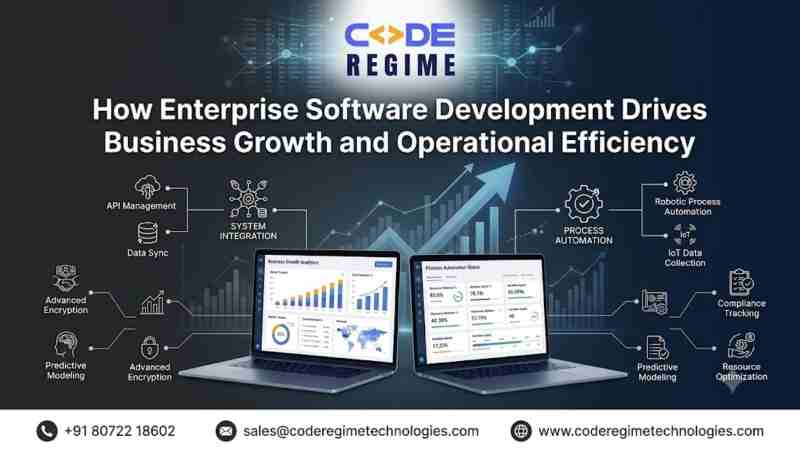
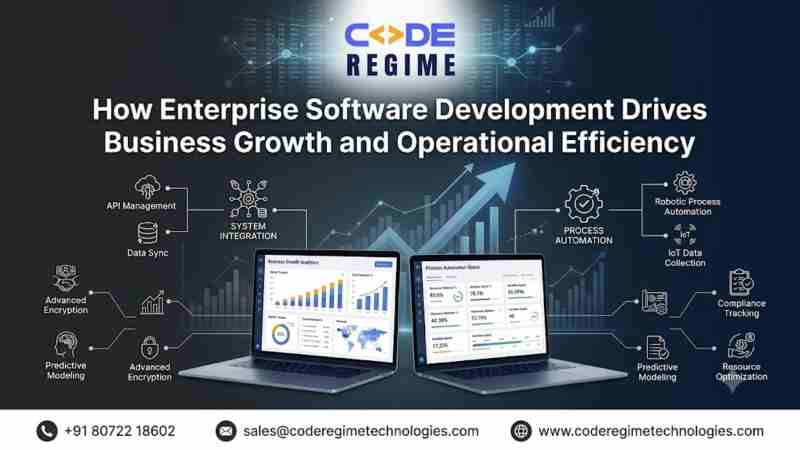
How Enterprise Software Development Drives Business Growth and Operational Efficiency
 Antonio Mendes
Introduction
Businesses need reliable systems to manage their daily operations, serve customers, and respond to changing market demands. As a company grows, handling different tasks through separate tools, spreadsheets, and manual processes can become difficult. These challenges can affect productivity, increase operating costs, and slow down important business decisions.
Enterprise Software Development helps businesses overcome these challenges by creating software solutions that support their specific operational needs. From managing employees and customer relationships to tracking sales, inventory, finances, and business performance, enterprise software can bring essential processes together in one place.
Unlike general-purpose applications, enterprise software can be developed around an organization's existing workflows, goals, and long-term plans. With the right solution, businesses can reduce repetitive work, improve coordination between departments, and make better use of their resources. This makes enterprise software development a practical investment for companies looking to improve operational efficiency and support sustainable business growth.
What Is Enterprise Software Development?
Enterprise software development is the process of designing, building, integrating, and maintaining software applications that help organizations manage complex business operations. These applications are developed to meet the needs of different departments, employees, managers, and customers within an organization.
Depending on business requirements, enterprise software may include customer relationship management (CRM) systems, enterprise resource planning (ERP) platforms, inventory management applications, employee management systems, financial management tools, and workflow automation solutions.
The development process typically includes requirement analysis, software planning, UI/UX design, coding, system integration, testing, deployment, and ongoing maintenance. Businesses can choose a ready-made platform, customize an existing application, or develop a tailored solution based on their operational requirements.
The main purpose is to provide employees with useful tools, improve information sharing, and help the organization complete its work more efficiently.
1. Automating Daily Business Operations
Many businesses spend considerable time on repetitive activities such as updating records, preparing reports, assigning tasks, processing orders, and sending reminders. When these activities are handled manually, mistakes and delays can become more common.
Enterprise Software can automate routine tasks based on predefined business rules. For example, an order management system can update order statuses, notify the relevant team, and help employees track pending deliveries. Similarly, workflow automation can assign tasks, trigger reminders, and move requests through the appropriate approval stages.
By reducing manual work, businesses can allow employees to focus more on customer service, problem-solving, and other activities that require human attention. This can improve productivity while making daily operations easier to manage.
2. Improving Operational Efficiency
Efficient operations depend on how well a business manages its people, processes, and resources. When teams rely on disconnected systems, employees may spend time searching for information, repeating tasks, or correcting errors.
Enterprise software can bring important business functions into a connected environment. Employees can access relevant information, follow established workflows, and monitor task progress without constantly switching between different tools.
For instance, a manufacturing company can connect inventory information with production planning, while a retail business can coordinate product availability with order processing. These connections help teams work with more accurate information and identify operational issues earlier.
As a result, organizations can improve coordination, reduce unnecessary work, and make better use of their available resources.
3. Supporting Better Business Decisions
Making the right business decisions requires accurate and timely information. However, collecting data from different departments can be challenging when each team uses separate systems.
Enterprise software can organize business information and present it through dashboards, reports, and performance indicators. Managers can review sales figures, customer activity, inventory levels, project progress, and other important measurements from a centralized platform.
For example, a sales manager can identify changes in sales performance, while an operations manager can review pending tasks and resource requirements. These insights help decision-makers understand what is happening across the organization.
When businesses have a clearer view of their performance, they can identify areas for improvement, plan resources more effectively, and make decisions based on relevant information rather than assumptions.
4. Strengthening Collaboration Between Departments
Business growth often requires different departments to work together. Sales, marketing, finance, customer support, operations, and management may all need access to related information to complete their responsibilities.
Enterprise software can improve collaboration by making relevant data and workflows available to authorized employees. Instead of repeatedly requesting updates from other teams, employees can access shared records and follow the progress of ongoing work.
For example, when a sales team confirms an order, the relevant information can be made available to inventory and finance teams through connected systems. This can help reduce communication gaps and prevent delays caused by missing information.
Better collaboration supports smoother operations and helps employees understand how their work contributes to the organization's overall objectives.
5. Enhancing Customer Experience
Customer satisfaction plays an important role in business growth. Customers expect timely responses, accurate information, and convenient access to products or services. Businesses may struggle to meet these expectations when customer information is scattered across multiple platforms.
Enterprise software can help organizations maintain customer records, track inquiries, manage service requests, and monitor interactions. CRM integration can provide sales and support teams with a clearer understanding of customer requirements and previous communications.
For example, a customer support representative can review an existing request before responding, while a sales team can track follow-ups and identify opportunities to maintain customer relationships.
By improving response times and providing more consistent service, enterprise software can help businesses build stronger customer relationships and encourage repeat business.
6. Reducing Operating Costs and Resource Waste
Managing business expenses is an important part of maintaining profitability. Manual processes, duplicate data entry, inefficient resource allocation, and preventable errors can create unnecessary costs.
Enterprise software can help businesses identify these issues by improving process visibility and reducing repetitive activities. Automated reporting, inventory tracking, employee scheduling, and resource management can help organizations understand how their resources are being used.
For example, inventory management software can help businesses monitor stock levels and identify products that need replenishment. This can reduce the risk of overstocking, shortages, and unnecessary storage expenses.
Although software development requires an initial investment and ongoing maintenance, a well-planned solution can support long-term cost management by addressing specific operational problems.
7. Integrating Existing Business Systems
Many organizations already use separate applications for accounting, sales, customer management, communication, and inventory. Replacing every existing tool may not be necessary or practical.
Enterprise software development can connect these systems through APIs and suitable third-party integrations. This allows relevant information to move between applications and reduces the need for employees to enter the same data multiple times.
For instance, a business can integrate its CRM with accounting software to improve the flow of customer and sales information. An eCommerce company may connect its online store with inventory and order management systems to support more consistent operations.
Successful integration helps businesses make better use of their existing technology while creating a more connected working environment.
8. Supporting Business Growth and Scalability
As organizations expand, their software requirements often change. They may need to manage more customers, process additional transactions, introduce new services, or support employees across multiple locations.
Enterprise software can be planned to accommodate these changing requirements. Businesses can begin with essential features and introduce additional modules, integrations, user roles, or reporting functions as their operations develop.
For example, a growing company may initially need customer and sales management tools. Later, it may expand the system to include inventory tracking, automated workflows, advanced reporting, and additional departmental functions.
Planning for scalability from the beginning can make future improvements easier to manage and help businesses avoid unnecessary system replacements.
9. Improving Data Management and Business Control
Accurate information is essential for managing an organization effectively. When records are duplicated, outdated, or stored in different locations, employees may find it difficult to identify the correct information.
Enterprise software can centralize important business records and establish consistent processes for creating, updating, and accessing data. Role-based access controls can also help organizations manage which employees are permitted to view or modify particular information.
Depending on the solution, businesses can include administrative controls, activity tracking, data backup procedures, and recovery planning to support ongoing operations.
These capabilities can improve visibility and help organizations manage business information more consistently. Security and access requirements should be considered during development and reviewed as business needs change.
10. Enabling Continuous Improvement
Enterprise software is not simply a one-time technology investment. As customer expectations, internal processes, and business priorities change, organizations may need to update their systems.
Performance reports, user feedback, and operational data can help identify features that need improvement. Businesses can then refine existing workflows, introduce new functionality, or integrate additional services based on actual requirements.
Regular maintenance and updates also help keep software aligned with changing operational needs. By reviewing system performance and employee feedback, organizations can continue improving the way their teams work.
This ongoing approach helps businesses keep their software useful and relevant as their operations evolve.
Conclusion
Enterprise Software Development can play an important role in improving business growth and operational efficiency. By automating routine tasks, connecting departments, organizing business information, improving customer service, and supporting better decisions, enterprise software helps organizations manage their operations more effectively.
The right solution depends on the company's size, industry, existing systems, and long-term objectives. Businesses should focus on solving real operational challenges rather than adding features that do not provide practical value. Careful planning, suitable integrations, reliable functionality, and ongoing maintenance can help create a solution that supports both current operations and future expansion.
Code Regime Technologies helps businesses plan and develop software solutions based on their specific requirements. From custom enterprise applications and workflow automation to business system integrations and scalable software platforms, solutions can be designed around the organization's operational goals. With a clear development strategy and the right technology, businesses can simplify their processes, make better use of resources, and build a stronger foundation for long-term growth.
Source:
Click for the: Full Story
You might like