



 Close Menu
 World
World
 Biography
 Health
 Education
 Business
 Lifestyle
 Sports
 Technology
 Animals
 History
 Food
Food
 Religious
 Startups
 Movies
 Politics
 Fashion
 Covid
Covid
 Diet
Diet
 Fitness
 Marketing
 Travel
 Science
 Reviews
 Social media
 Stories
 Facts
Facts
 Art
Art
 Entertainment
samiksha

Business
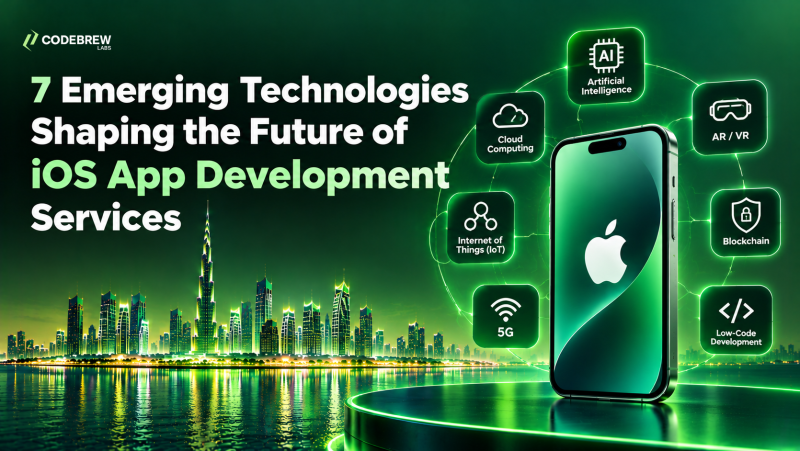
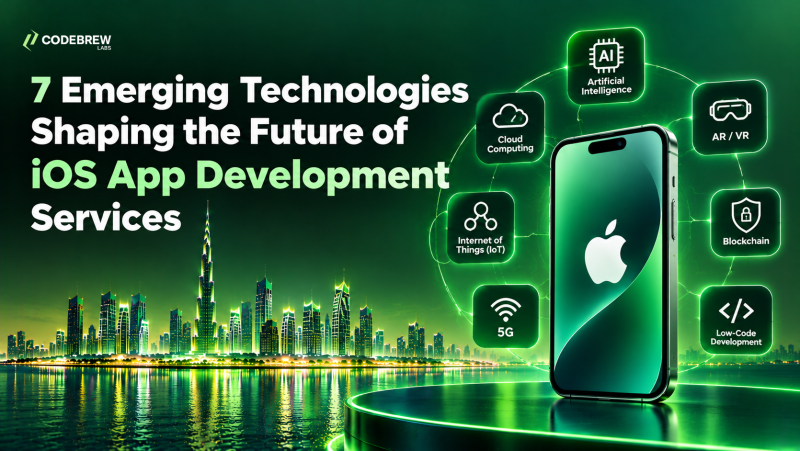
7 Emerging Technologies Shaping the Future of iOS App Development Services
 samiksha
Mobile applications are changing as businesses look for better ways to serve customers, improve daily operations, and introduce new digital services. Users expect applications to load quickly, protect their information, and offer useful features without making everyday tasks complicated.
For businesses investing in iPhone and iPad applications, emerging technologies create opportunities to build more engaging, connected, and efficient products. Artificial intelligence, augmented reality, cloud computing, and other innovations are changing how applications are designed, developed, and maintained.
However, adopting every new technology is not always the right decision. Businesses need to understand which innovations fit their goals, how they affect development costs, and whether they will provide lasting value to users.
Let's explore seven emerging technologies shaping the future of iOS app development services and how businesses can use them to create better mobile applications.
1. Artificial Intelligence and Machine Learning
Artificial intelligence is changing how mobile applications understand user needs and perform specific tasks. Instead of relying entirely on fixed rules, applications can use AI services to analyze information, recognize patterns, and provide relevant suggestions.
Machine learning can support personalized recommendations, predictive analytics, image recognition, and intelligent search. For example, an eCommerce application can suggest relevant products, while a business application can help employees find information across large document collections.
AI-powered assistants are another area of development. They can answer common questions, guide users through application features, and help customers find information using natural language.
When adding AI to an iOS application, developers must consider accuracy, privacy, data quality, and operating costs. AI-generated results should be tested carefully, especially when users may rely on them for important decisions.
Businesses should begin with a clear use case and determine whether AI provides a meaningful improvement over traditional application features.
2. Augmented Reality for Interactive Experiences
Augmented reality, commonly known as AR, combines digital content with a view of the physical environment. It allows users to visualize products, explore virtual objects, and interact with digital information in new ways.
Apple's ARKit framework provides tools for developers building AR experiences on supported Apple devices.
Businesses can explore AR applications in several industries:
- Retail: Customers can preview compatible products in their surroundings.
- Real estate: Users can explore visual representations of spaces and layouts.
- Education: Interactive digital content can support learning activities.
- Training: Visual instructions can help explain selected tasks.
- Product visualization: Customers can examine digital representations before purchasing.
For example, a furniture retailer could introduce an AR feature that lets customers preview how a piece of furniture might look in their room.
Successful AR development requires attention to device compatibility, performance, lighting conditions, and ease of use. Businesses should also evaluate whether their audience will benefit enough from the feature to justify its development and maintenance costs.
3. Cloud Computing and Backend Integration
Cloud computing plays an important role in modern mobile applications by providing infrastructure for data storage, authentication, business logic, and communication between systems.
Many iOS applications depend on backend services to manage customer accounts, synchronize information, process transactions, and connect with other business platforms.
Consider a delivery application that needs to coordinate information between customers, drivers, and administrators. Cloud-based services can help synchronize order updates, provide access to operational information, and support communication between different parts of the system.
Cloud infrastructure can also help businesses manage changing workloads as application usage grows. However, developers must consider hosting expenses, access controls, backups, performance monitoring, and data protection.
A well-planned cloud architecture can make an application easier to maintain and improve as the business expands.
4. Internet of Things Integration
The Internet of Things, or IoT, connects physical devices that collect or exchange information. iOS applications can provide an interface for interacting with compatible devices and viewing the information they produce.
Depending on the hardware and integration requirements, applications may connect with smart home equipment, wearable devices, industrial sensors, or connected business systems.
For instance, a smart building application could allow authorized users to monitor compatible equipment and receive alerts. A fitness application could display information collected from supported wearable devices.
Developers must consider connectivity, device compatibility, data synchronization, user permissions, and security when building IoT-enabled applications.
They should also plan for situations where devices lose connectivity or send incomplete information. Handling these situations correctly helps keep the application reliable and prevents confusing user experiences.
5. Advanced Security and Privacy Technologies
Security and privacy are essential for mobile applications that handle personal information, business records, or payment details.
As applications connect with more online services, developers must protect information during collection, storage, transmission, and access. Security should be considered throughout the development process rather than added just before launch.
iOS offers capabilities such as Keychain for securely storing sensitive credentials and Face ID or Touch ID for supported authentication workflows. These features can help strengthen application security when implemented correctly.
Businesses should pay attention to:
- Secure communication between applications and backend systems.
- Appropriate authentication and access permissions.
- Protection of sensitive information.
- Secure API integrations and third-party components.
- Regular security testing and software updates.
- Applicable privacy laws and industry-specific requirements.
Applications operating in healthcare, fintech, and other regulated industries may need additional safeguards depending on the information they handle.
A secure development approach helps businesses protect users, reduce avoidable risks, and maintain confidence in their digital products.
6. Voice Technology and Natural-Language Interfaces
Voice technology allows users to interact with applications through spoken commands, while natural-language interfaces make it easier to search for information and complete tasks using everyday language.
Depending on the application, developers can integrate speech recognition, voice input, system-level shortcuts, or AI-based conversational features.
For example, a productivity application could let users dictate notes, while a travel application might support spoken searches for destinations or bookings.
Voice interfaces can make applications more convenient for users who are busy or have accessibility needs. However, they are not suitable for every task, particularly when users are in noisy environments or handling sensitive information.
Developers should provide clear feedback, handle recognition errors, and offer alternative interaction methods. They should also explain how voice data is processed and ensure that privacy considerations are addressed.
The goal is to make applications easier to use while allowing users to remain in control.
7. Cross-Platform Development Technologies
Many businesses want their applications to reach both iOS and Android users. Developing separate native applications can provide platform-specific control, but it may also require maintaining separate codebases.
Cross-platform technologies such as Flutter and React Native allow developers to share parts of an application's code across platforms.
This approach can help reduce duplicated development work and make it easier to maintain consistent features. It may be suitable for shopping applications, booking platforms, business tools, and other products with similar workflows across devices.
However, cross-platform development is not automatically the best choice for every project. Applications that depend on specialized device capabilities, advanced performance requirements, or platform-specific functionality may need additional native development.
Businesses should compare the options based on their required features, budget, performance expectations, available expertise, and long-term maintenance needs.
How Emerging Technologies Are Changing iOS App Development Services
These innovations are changing the way businesses approach mobile application development. Developers need to consider not only the interface but also how an application connects with external services, manages information, and supports future updates.
Greater Focus on User Needs
Technology should solve a real problem rather than simply add complexity. Understanding the target audience helps businesses prioritize features that make the application useful.
More Connected Applications
Modern mobile products often rely on cloud services, APIs, payment systems, and existing business software. Developers must ensure these components work together reliably.
Continuous Testing and Improvement
Applications need testing across supported devices and operating system versions. After launch, teams may need to monitor performance, fix issues, and improve features based on user feedback.
Increased Attention to Data Protection
AI, cloud computing, and connected devices can introduce additional data-handling requirements. Developers need to assess permissions, storage, security, and privacy throughout the project.
Better Long-Term Planning
Some technologies involve recurring costs for hosting, external APIs, AI usage, and third-party services. Businesses should consider these expenses alongside the initial development budget.
How to Choose the Right Technology for Your iOS App
Before investing in emerging technologies, businesses should evaluate their objectives and practical requirements.
Identify the problem. Determine what the application needs to accomplish and which user challenges it should address.
Understand your audience. Consider user expectations, accessibility, supported devices, and how people will interact with the application.
Evaluate technical requirements. Confirm that the selected technology can support the required features and integrations.
Estimate the full cost. Account for development, testing, hosting, subscriptions, maintenance, and future improvements.
Plan for security. Consider authentication, permissions, data protection, and relevant compliance requirements.
Test before expanding. A prototype or limited release can help establish whether a feature provides enough value before a larger investment.
Following these steps helps businesses select technologies based on actual needs instead of trends alone.
How Code Brew Labs Supports iOS App Development
Businesses planning a mobile application may need support with product planning, interface design, development, integrations, testing, and ongoing improvements.
Code Brew Labs is a Dubai-headquartered technology company established in 2013. Its services include iOS and Android application development, cross-platform development, custom software, AI solutions, cloud development, automation, UI/UX design, and technical support.
With over 13 years of experience and more than 2,500 digital solutions delivered, Code Brew Labs works with startups, SMEs, enterprises, and global businesses across industries including healthcare, fintech, logistics, real estate, eCommerce, and education.
When planning a new iOS application, businesses should discuss their goals, intended features, technology requirements, integrations, security needs, and maintenance expectations with their development partner. This helps establish a practical development plan that focuses on business value and long-term usability.
Conclusion
Artificial intelligence, augmented reality, cloud computing, IoT, advanced security, voice interfaces, and cross-platform development are creating new opportunities for businesses building iOS applications.
Each technology offers different benefits, but the right choice depends on the application's purpose, users, budget, and technical requirements. Businesses should prioritize innovations that solve real problems and can be supported reliably after launch.
By selecting suitable technologies and working with an experienced development team, businesses can build iOS applications that meet current customer needs while remaining flexible enough to adapt as their requirements evolve.
Source:
Click for the: Full Story
You might like








You Might Like this