



 Close Menu
 World
World
 Biography
 Health
 Education
 Business
 Lifestyle
 Sports
 Technology
 Animals
 History
 Food
Food
 Religious
 Startups
 Movies
 Politics
 Fashion
 Covid
Covid
 Diet
Diet
 Fitness
 Marketing
 Travel
 Science
 Reviews
 Social media
 Stories
 Facts
Facts
 Art
Art
 Entertainment
Flores Hill

Business
MS Standard Parts in Aviation: A Guide to Aircraft Hardware and Aerospace Components
 Flores Hill
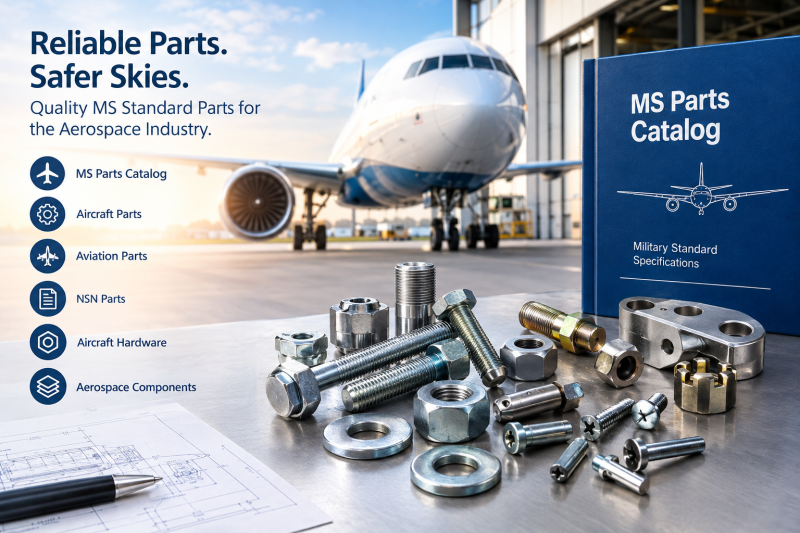
Aircraft safety, operational reliability, and maintenance efficiency depend on the quality and compatibility of every component used in an aircraft. From fasteners and bolts to nuts, screws, washers, and other precision hardware, standardized components play an important role in aircraft assembly, repair, and long-term maintenance. MS (Military Standard) parts are associated with established military specifications and standardized designs used across various aerospace and defense applications.
For aviation maintenance teams, aerospace engineers, and procurement professionals, understanding MS standard parts helps simplify component identification, sourcing, and replacement planning. Access to a reliable MS Parts Catalog can make it easier to locate required specifications and identify suitable Aircraft Parts for particular applications.
Whether you are sourcing routine maintenance hardware or specialized Aviation Parts, understanding part numbers, dimensional requirements, and applicable standards is essential to making informed purchasing decisions.
What Are MS Standard Parts?
MS standard parts are components identified by Military Standard designations that define particular characteristics, such as dimensions, materials, configurations, and other technical requirements. Depending on the applicable standard, these specifications help establish consistency across parts used in military, aerospace, and related engineering applications.
Common examples of MS-standardized hardware may include:
- Bolts and screws
- Nuts and washers
- Pins and retaining hardware
- Fasteners and mounting components
- Other mechanical hardware specified by applicable standards
These components support repeatable engineering and procurement practices. However, an MS designation alone does not guarantee that a component is suitable for every aircraft or application. Buyers must verify the relevant drawing, revision, material, dimensions, and equipment requirements before selecting a replacement.
Why MS Standard Parts Matter in the Aviation Industry
Aircraft operate under demanding conditions involving vibration, temperature changes, pressure variations, and repeated mechanical loading. Components must meet the requirements established for their intended applications to support safe and reliable operation.
1. Consistency in Component Identification
Standardized part designations help maintenance teams and procurement specialists identify components using established technical references. This reduces ambiguity when searching for replacement hardware and communicating requirements to suppliers.
2. Simplified Maintenance and Repair
Aircraft maintenance frequently requires replacement of small but essential components. Standardized identification makes it easier to research the correct part and compare it with approved maintenance documentation.
3. Better Procurement Planning
A clear identification process helps buyers prepare accurate requests for quotation, confirm quantities, and communicate technical requirements. This can reduce avoidable delays caused by incomplete or incorrect part information.
4. Support for Quality and Traceability
Aerospace procurement often requires supporting documentation, including certificates of conformity, traceability records, and other records specified by the purchaser or applicable contract. Reviewing these documents helps organizations assess whether supplied components meet their requirements.
How to Use an MS Parts Catalog Effectively
An MS Parts Catalog is a useful starting point for researching standardized hardware. Depending on the catalog, users may be able to search by part number, component description, or related technical information.
For effective catalog research, follow these steps:
Step 1: Identify the required part number. Begin with the part number listed in the applicable aircraft maintenance manual, engineering drawing, illustrated parts catalog, or bill of materials.
Step 2: Review the technical specifications. Check dimensions, material, finish, configuration, and other characteristics relevant to the component's application.
Step 3: Confirm the applicable revision. Standards and drawings may be revised. Verify that the information used for procurement matches the requirements of the aircraft or equipment documentation.
Step 4: Check interchangeability requirements. Do not assume that a similar-looking component or a different standard designation is interchangeable. Confirm acceptability through approved engineering or maintenance documentation.
Step 5: Verify supplier documentation. Determine which certificates, inspection records, and traceability documents are required before placing an order.
Following these steps helps buyers reduce sourcing errors and improve the accuracy of aerospace procurement activities.
Common Types of Aircraft Hardware Used in Aviation
Aircraft hardware includes many small components that support structural assemblies, mechanical systems, and equipment installations. Although individual parts may be relatively small, their selection and installation must follow the applicable technical requirements.
Fasteners, Bolts, and Screws
Fasteners secure assemblies and equipment in place. Their selection depends on factors such as load requirements, dimensions, material, installation location, and approved design specifications.
Nuts and Washers
Nuts and washers support fastening arrangements and help meet the requirements of particular assemblies. The correct configuration and installation method must be established using the relevant technical documentation.
Pins and Retaining Components
Pins and retaining hardware help secure mechanical connections and maintain component positioning in designated applications. Correct sizing and retention methods are important to assembly integrity.
Other Aerospace Components
Beyond conventional fasteners, aviation systems use a wide range of mechanical, electrical, and structural components. Each item must be identified and evaluated according to its specific function and applicable technical requirements.
MS Parts, Aviation Parts, and NSN Parts: Understanding the Difference
Aerospace procurement involves different identification systems, and understanding their purposes can help buyers conduct more accurate searches.
MS Parts: These components are identified through applicable Military Standard designations that define specific technical characteristics or requirements.
Aviation Parts: This broad category includes components used in aircraft systems, structures, maintenance activities, and related aviation applications.
NSN Parts: NSN stands for National Stock Number. An NSN is a standardized 13-digit identification number used within the NATO Codification System to identify supply items. It supports cataloging, logistics, and procurement across participating organizations.
An MS part number and an NSN serve different identification purposes. A component may have an MS designation and an associated NSN, but this relationship should be verified rather than assumed. Buyers should use the relevant technical and cataloging records to confirm the identity of the required item.
Key Considerations When Sourcing Aerospace Components
Finding a part number is only one part of the procurement process. Buyers should also consider the following factors before purchasing Aerospace Components.
Technical Compatibility
Confirm that the component matches the applicable specifications, dimensions, materials, and approved application. Substitutions should be evaluated through the appropriate engineering or maintenance process.
Documentation and Traceability
Determine the documentation required for the order. Depending on the application and contractual requirements, this may include certificates of conformity, manufacturer identification, inspection reports, and traceability records.
Supplier Reliability
Evaluate suppliers based on their ability to understand technical requirements, provide accurate quotations, communicate lead times, and supply the documentation required for the transaction.
Availability and Lead Times
Some standard components may be readily available, while others can require additional sourcing time. Providing complete part numbers, quantities, and delivery requirements can help suppliers respond more accurately.
Quality and Regulatory Requirements
Aerospace parts must be procured and installed according to the requirements applicable to the aircraft, operator, maintenance organization, and contract. Buyers should verify all relevant requirements rather than relying solely on a catalog description.
How Digital Parts Catalogs Improve Aerospace Procurement
Digital catalogs and online parts-search resources can make component research more convenient. Instead of relying exclusively on manual searches, procurement teams can use online references to investigate part numbers, review available descriptions, and prepare sourcing requests.
Digital catalog research can support several activities:
- Faster searches for specified aircraft hardware
- More organized part-number research
- Easier preparation of requests for quotation
- Better communication between buyers and suppliers
- More efficient comparison of available sourcing options
Nevertheless, online catalog information should be treated as a research aid rather than a substitute for approved engineering data. Before ordering, verify the selected part against the relevant technical documentation and confirm that the supplier can meet the required specifications.
Find MS Standard Parts with Keep You Flying
For aviation professionals and procurement teams researching standardized hardware, Keep You Flying provides an online resource for exploring MS standard parts and related aircraft hardware requirements.
Visit the Keep You Flying MS Standard Parts page to explore the available resource and begin researching components relevant to your sourcing needs.
When preparing a request, include the complete part number, required quantity, applicable specifications, delivery expectations, and documentation requirements. Providing these details can help make the quotation and procurement process more efficient.
Conclusion
MS standard parts are an important part of standardized hardware identification and aerospace procurement. From fasteners and mounting hardware to other specified mechanical components, accurate identification supports maintenance planning, sourcing efficiency, and compliance with applicable technical requirements.
Using an MS Parts Catalog, verifying technical documentation, and understanding the relationship between MS designations and NSN Parts can help procurement professionals make better-informed sourcing decisions. Whether you need specialized Aircraft Parts, routine Aviation Parts, or other Aerospace Components, careful specification review and supplier verification remain essential.
By combining reliable catalog research with accurate part identification and appropriate documentation checks, aviation organizations can improve procurement workflows and support the continued reliability of aircraft systems.
Source:
Click for the: Full Story
You might like








You Might Like this