



 Close Menu
 World
World
 Biography
 Health
 Education
 Business
 Lifestyle
 Sports
 Technology
 Animals
 History
 Food
Food
 Religious
 Startups
 Movies
 Politics
 Fashion
 Covid
Covid
 Diet
Diet
 Fitness
 Marketing
 Travel
 Science
 Reviews
 Social media
 Stories
 Facts
Facts
 Art
Art
 Entertainment
Hemant Code brew

Business
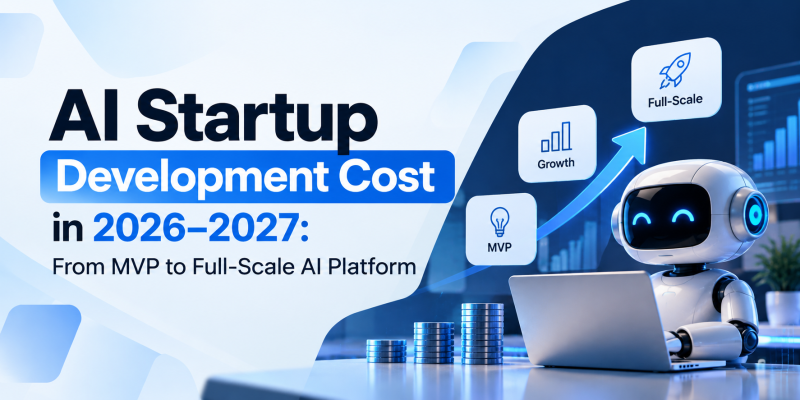
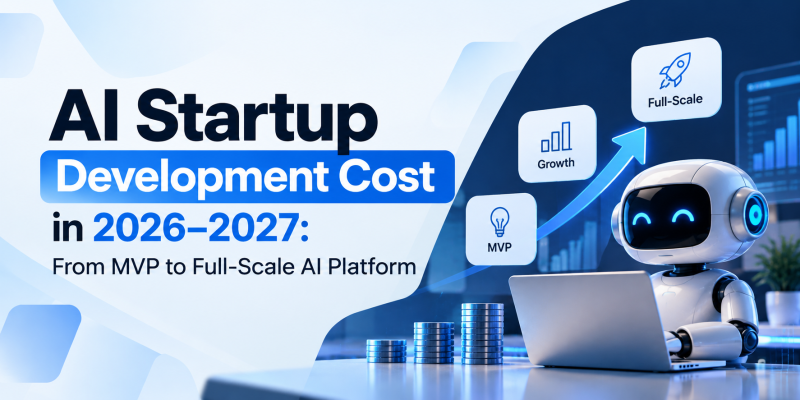
AI Startup Budget Guide 2026–2027: Development Costs, MVP Pricing & Smart Savings
 Hemant Code brew
Building an AI startup sounds exciting until the budgeting questions begin. How much should you invest? Do you need to develop your own AI model? Can you launch with a small budget, or does every AI product require hundreds of thousands of dollars?
The good news is that starting an AI business in 2026 doesn't necessarily mean building expensive technology from scratch. With ready-to-use AI models, cloud infrastructure, and experienced development teams, entrepreneurs can launch practical AI-powered products without spending a fortune.
However, the cost to build an app with AI capabilities depends on what you're creating, how intelligent the product needs to be, and how many users you expect to serve.
Let's explore what it actually costs to turn an AI startup idea into a working product in 2026–2027.
How Much Does It Cost to Build an AI Startup in 2026?
The cost to build AI startup in 2026 can range from approximately $15,000 for a simple proof of concept to more than $500,000 for a sophisticated enterprise AI platform.
A startup developing a basic AI chatbot will have a very different budget from a company creating an AI-powered healthcare platform or intelligent business automation system.
Here's a practical cost breakdown:
AI development stage
Estimated cost (USD)
Development time
Proof of Concept
15,000–30,000
4–6 weeks
AI MVP Development
30,000–80,000
2–4 months
Mid-Level AI Application
80,000–200,000
4–7 months
Advanced AI Platform
200,000–500,000
7–12 months
Enterprise AI Solution
$500,000+
12+ months
These are indicative development estimates based on the Code Brew Labs cost guide, not fixed quotations. Actual costs vary by features, location, integrations, security, and infrastructure.
Guide for Startups
+1
For first-time founders, investing in a minimum viable product (MVP) is often the more sensible approach. Instead of building every possible feature, you launch the most important functionality, collect feedback, and improve the platform based on actual customer needs.
What Determines the Cost to Build an AI App?
There is no universal price tag for AI development. Even two startups operating in the same industry can have significantly different budgets.
The biggest factors include:
1. AI model selection: Integrating an existing model through an API is generally less expensive initially than training a custom model. Unless your product has highly specialized requirements, an existing AI model may be enough for the first release.
2. Application features: A simple AI assistant that answers customer questions costs less to develop than a platform capable of analyzing documents, automating workflows, generating reports, and integrating with business systems.
3. UI/UX design: Good design is not just about appearance. Users need to understand how the AI works, what information it requires, and whether its recommendations can be trusted.
4. Development team: Hiring developers in-house, working with freelancers, or partnering with an experienced AI app development company will affect both the project budget and delivery process.
5. Maintenance and infrastructure: AI applications have ongoing expenses. Cloud hosting, AI API calls, database storage, security monitoring, and regular updates need to be included in long-term financial planning.
One mistake founders frequently make is budgeting only for development. Building the product is one expense; operating it reliably as the user base grows is another.
From MVP to Full-Scale AI Platform: Where Should You Start?
Imagine you're planning an AI-powered personal finance assistant.
You could spend months developing advanced predictive analytics, multiple account integrations, and personalized financial recommendations before showing the product to customers.
Or you could begin with an MVP that helps users categorize expenses, identify spending patterns, and receive simple AI-generated insights.
The second option allows you to validate the idea without committing your entire budget upfront.
Once users show genuine interest, you can introduce features such as automated budgeting, forecasting, and advanced financial analytics.
This approach applies to almost every AI startup. Build something useful first. Make it more sophisticated when the demand justifies the investment.
AI Startup Ideas to Start in 2027/2026
If you're exploring AI Startup Ideas to start in 2027/2026, focus on real problems that individuals or businesses already spend time and money trying to solve.
Some promising opportunities include:
- AI customer support assistants: Help businesses respond to customer queries, manage support requests, and offer round-the-clock assistance.
- AI healthcare administration platforms: Streamline appointment scheduling, clinical documentation, and administrative workflows while accounting for privacy requirements.
- AI real estate applications: Simplify property discovery, automate listing descriptions, and improve lead qualification.
- AI education platforms: Offer personalized learning recommendations, tutoring assistance, and student progress analysis.
- AI business automation tools: Help companies process documents, organize information, and reduce repetitive administrative work.
- AI recruitment platforms: Assist HR teams with candidate screening, interview scheduling, and recruitment workflows, with human oversight.
The most promising AI startup isn't necessarily the one using the most advanced model. It is the one solving a problem customers genuinely care about.
How Can You Reduce AI Startup Development Costs?
Saving money on development doesn't mean compromising the quality of your application.
Start by identifying the one problem your product needs to solve exceptionally well. Avoid adding features simply because competitors have them.
Use established AI APIs whenever they meet your requirements, consider cross-platform development where appropriate, and evaluate cloud services based on expected usage rather than hypothetical future demand.
Most importantly, validate the product before investing heavily in custom AI infrastructure.
A carefully planned MVP can reveal what customers actually need, helping you avoid expensive development decisions based on assumptions.
Plan Your AI Startup Budget with Code Brew Labs
Whether you're building your first AI-powered mobile application or planning an enterprise-level AI platform, understanding development costs is essential for making informed decisions.
At Code Brew Labs, we explore the financial and technical considerations involved in turning AI startup concepts into scalable digital products.
Our detailed guide covers estimated development budgets, cost-driving factors, hidden expenses, and practical ways to plan your AI investment.
Read the Complete Guide
Explore detailed AI startup development costs, MVP planning, and budgeting strategies for 2026–2027 :
Code Brew Labs — AI Startup Development Cost Guide
Watch Our YouTube Video
Prefer a visual explanation? Watch our video on AI startup development costs and the important decisions founders should consider :
How Much Does It Cost to Build an AI Startup?
Final Thoughts
Launching an AI startup in 2026–2027 is about more than having an innovative idea. It requires thoughtful budgeting, a clear product strategy, and a realistic understanding of development and operating costs.
You don't need to build everything on day one. Start with a focused MVP, learn from real users, and expand your technology as your business grows.
The right development strategy can help turn an ambitious AI concept into a sustainable, scalable business.
Source:
Click for the: Full Story
You might like






You Might Like this