Close Menu
 World
World
 Biography
 Health
 Education
 Business
 Lifestyle
 Sports
 Technology
 Animals
 History
 Food
Food
 Religious
 Startups
 Movies
 Politics
 Fashion
 Covid
Covid
 Diet
Diet
 Fitness
 Marketing
 Travel
 Science
 Reviews
 Social media
 Stories
 Facts
Facts
 Art
Art
 Entertainment
Sakshi Padiyar

Education
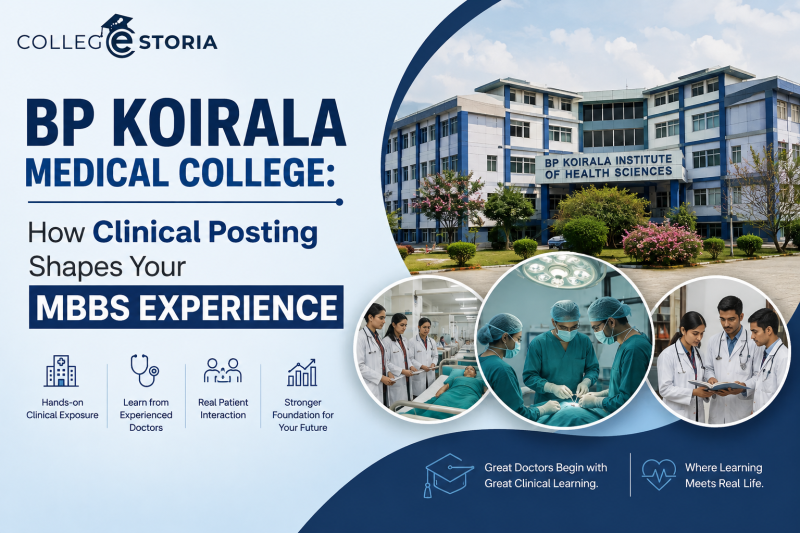
BP Koirala Medical College: How Clinical Posting Shapes Your MBBS Experience
 Sakshi Padiyar
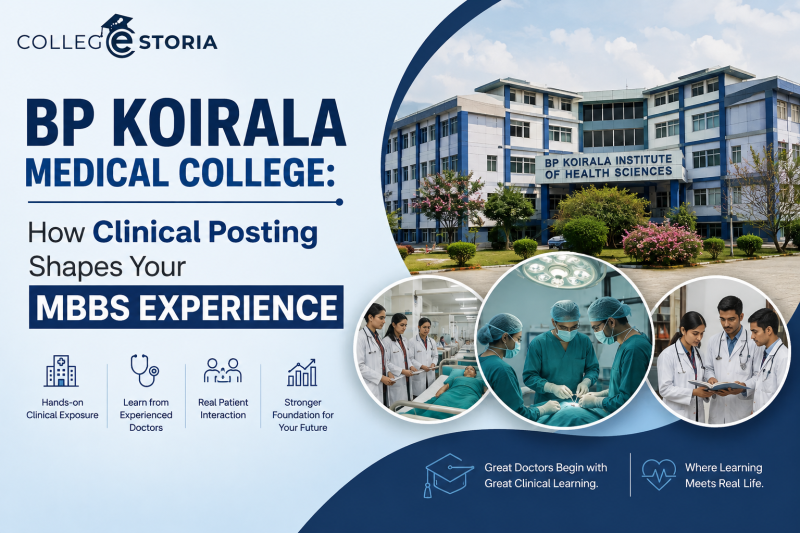
Clinical posting is one of the most important parts of an MBBS journey. It is where students gradually move beyond textbooks and lectures and begin understanding how medical knowledge is applied while interacting with real patients. For students considering BP Koirala Medical College, understanding the role of clinical training can help them make a more informed decision about their medical education.
At the undergraduate level, clinical exposure is not only about observing doctors. It is about learning how to take a patient history, perform examinations, understand investigations, communicate professionally, and connect theoretical concepts with actual clinical situations.
For students exploring MBBS Admission in Nepal, clinical training should therefore be one of the factors considered alongside academics, fees, infrastructure, location, and admission requirements.
What Is Clinical Posting in MBBS?
Clinical posting is the practical component of medical education in which students are introduced to different clinical departments and healthcare settings. Depending on the stage of the MBBS program, students may learn through ward visits, outpatient department exposure, bedside teaching, case discussions, demonstrations, and supervised clinical activities.
The objective is to gradually develop the skills required to become a competent doctor.
In the early years, students generally focus more on understanding the basics of clinical examination and patient interaction. As they progress, their exposure becomes more closely connected with subjects such as medicine, surgery, paediatrics, obstetrics and gynaecology, orthopaedics, psychiatry and other specialties.
How Clinical Posting Connects Theory With Practice
One major challenge in medical education is remembering a large amount of theoretical information. Clinical exposure helps students understand why that information matters.
For example, a student may learn about symptoms of a particular disease during classroom teaching. During clinical posting, seeing a patient with similar symptoms can make the concept easier to understand and remember.
This creates a connection between:
- Classroom knowledge
- Clinical examination
- Patient history
- Diagnostic investigations
- Treatment planning
- Patient communication
This transition from theoretical learning to practical understanding is an important part of becoming a medical professional.
Clinical Posting and Patient Interaction
One of the biggest differences between reading medicine and practising medicine is patient interaction.
During clinical training, students learn that every patient is different. Two people with similar symptoms may have different medical histories, concerns or treatment requirements.
Students gradually learn how to:
- Introduce themselves professionally
- Take an appropriate patient history
- Ask relevant questions
- Listen carefully to patient concerns
- Perform basic examinations under supervision
- Present clinical cases
- Discuss possible diagnoses
- Understand the importance of confidentiality
These communication skills are difficult to develop through textbooks alone.
Why Hospital Exposure Matters
A teaching hospital provides an environment where students can observe different types of patients and clinical situations. Regular exposure can help students become more comfortable in a healthcare environment.
For an MBBS student, hospital exposure can also demonstrate how different healthcare professionals work together. Students may observe interactions between doctors, nurses, laboratory professionals, radiology teams and other healthcare workers.
This helps develop an understanding of healthcare as a team-based profession rather than something limited to the doctor-patient relationship.
Learning Through Different Clinical Departments
As MBBS students progress through their course, clinical postings expose them to different specialties.
Medicine: Students learn about common medical conditions, patient history, physical examination and interpretation of clinical findings.
Surgery: Students are introduced to surgical cases, pre-operative and post-operative care, wound management and basic surgical principles.
Paediatrics: Students learn how clinical assessment differs in children and understand common childhood conditions.
Obstetrics and Gynaecology: Students gain exposure to women's health, pregnancy-related care and gynaecological conditions.
Orthopaedics: Students encounter musculoskeletal conditions, injuries and basic approaches to orthopaedic assessment.
Psychiatry: Students learn about mental health conditions and the importance of communication and behavioural assessment.
The exact structure and schedule of clinical postings can vary according to the curriculum and institutional arrangements.
Also Read:
Medical Admission Counselling in Nepal
How Clinical Posting Builds Confidence
Many students initially feel nervous when they enter a hospital environment. This is completely normal. Clinical posting provides repeated opportunities to learn in a supervised setting.
With experience, students become more comfortable with:
- Talking to patients
- Presenting cases
- Asking questions
- Understanding clinical terminology
- Interpreting basic findings
- Participating in academic discussions
Confidence does not develop overnight. Consistent exposure and active participation are what make clinical learning valuable.
Clinical Posting and MBBS Examinations
Clinical exposure is also closely connected with undergraduate medical examinations. Practical and clinical assessments require students to demonstrate more than theoretical knowledge.
A student may need to identify clinical findings, take a history, perform an examination, interpret information or discuss a case.
Students who actively participate in clinical postings can therefore develop a stronger foundation for practical assessments. However, clinical learning should not be approached only as examination preparation. These skills are ultimately important for future medical practice.
What Students Should Do During Clinical Postings
Simply attending a clinical posting is not enough. Students should actively participate in the learning process.
A useful approach is to:
- Observe carefully during ward and OPD activities.
- Ask relevant questions when something is unclear.
- Practise history-taking under appropriate supervision.
- Revise clinical concepts after seeing a relevant case.
- Maintain academic notes for important cases and findings.
- Participate in case discussions whenever possible.
- Respect patient privacy and confidentiality at all times.
Students should always perform clinical activities according to the instructions and supervision provided by their faculty.
What This Means for Students Considering BP Koirala Medical College
Students evaluating BP Koirala Medical College should look beyond basic admission information. Clinical education is an important part of determining whether a medical college fits their academic expectations.
Before making a final decision, students should research the institution's current curriculum, teaching arrangements, affiliated hospital setup, clinical training opportunities, internship structure and applicable regulatory requirements.
They should also consider whether the overall environment suits their learning style and long-term career plans.
Final Takeaway
Clinical posting can shape an MBBS student's experience by turning theoretical concepts into practical learning. It helps students understand patients, develop communication skills, improve clinical reasoning and gradually become comfortable in a hospital environment.
For students considering MBBS in Nepal, clinical training should be evaluated alongside fees, academics, facilities, eligibility and future career considerations. When researching BP Koirala Medical College, students should rely on current official information and assess whether the institution's clinical and academic environment matches their goals.
For guidance on college selection and MBBS Admission in Nepal, CollegeStoria can help students understand their options and make a more informed decision.
FAQs
1. Why are clinical postings important in MBBS?
Clinical postings help students apply theoretical knowledge to real-world medical situations. They develop patient interaction, examination, case presentation and clinical reasoning skills under appropriate supervision.
2. When do MBBS students start clinical exposure?
The timing and structure can vary according to the curriculum. Students are progressively introduced to clinical learning as they move through their MBBS training.
3. Is hospital exposure important when choosing a medical college?
Yes. The quality and consistency of clinical exposure can significantly influence practical learning. Students should therefore consider teaching hospitals, clinical training and internship opportunities when comparing colleges.
4. Can clinical posting help with future medical practice?
Yes. Regular clinical exposure helps students develop communication, observation and basic clinical skills that form an important foundation for their future medical careers.
Source:
Click for the: Full Story
You might like