Close Menu
 World
World
 Biography
 Health
 Education
 Business
 Lifestyle
 Sports
 Technology
 Animals
 History
 Food
Food
 Religious
 Startups
 Movies
 Politics
 Fashion
 Covid
Covid
 Diet
Diet
 Fitness
 Marketing
 Travel
 Science
 Reviews
 Social media
 Stories
 Facts
Facts
 Art
Art
 Entertainment
Sakshi Padiyar

Education
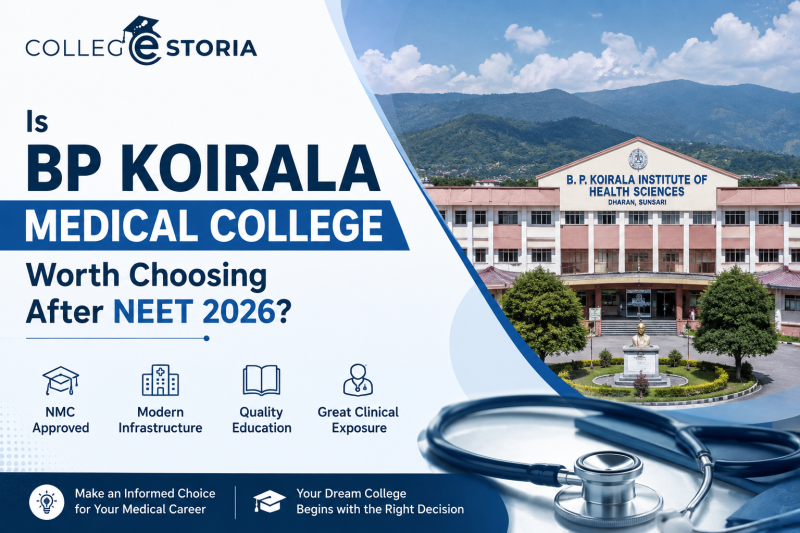
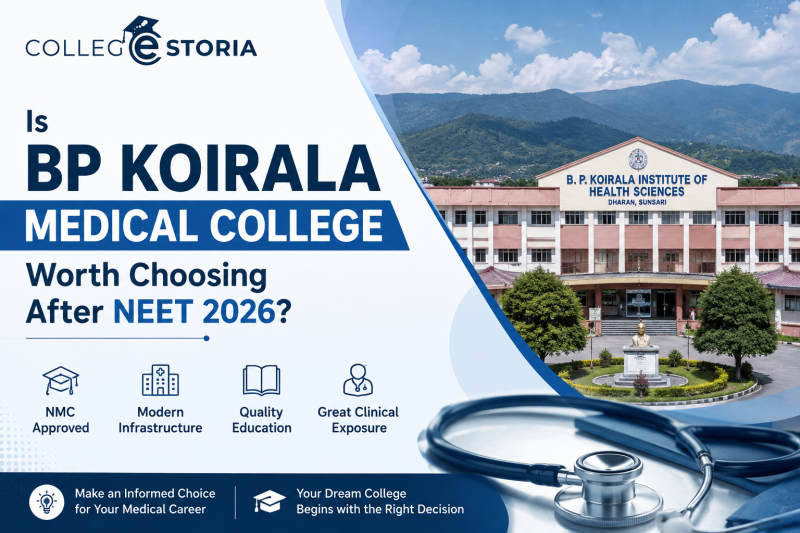
Is BP Koirala Medical College Worth Choosing After NEET 2026?
 Sakshi Padiyar
For students who have qualified NEET 2026 and are exploring MBBS Admission in Nepal, choosing the right medical college is an important decision. Indian students often compare colleges based on academic environment, clinical exposure, admission process, overall cost, location, and future career opportunities.
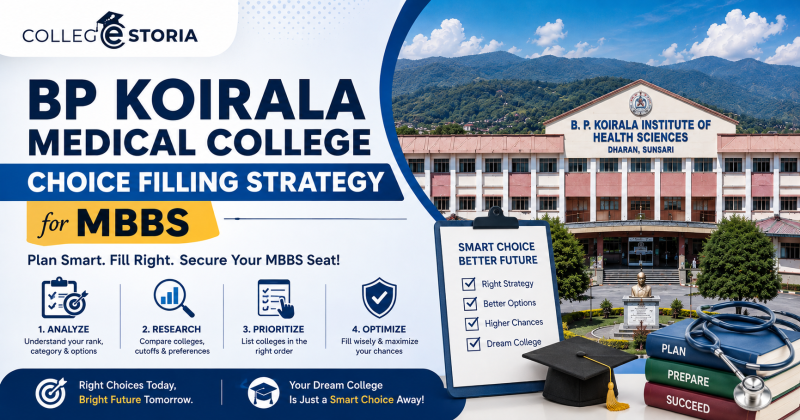
One institution that frequently attracts attention is BP Koirala Medical College, officially known as B.P. Koirala Institute of Health Sciences (BPKIHS), located in Dharan, Nepal. It is a health sciences university offering MBBS and other healthcare programmes, with a teaching and clinical environment designed around medical education and patient care.
But the real question for a NEET-qualified student is: Is BP Koirala Medical College worth choosing after NEET 2026?
The answer depends on what you expect from your MBBS journey. This guide explains the major factors you should consider before putting the college on your preference list.
Why Consider BP Koirala Medical College After NEET 2026?
Getting a NEET qualification does not automatically mean that every student will secure a preferred MBBS seat in India. Competition, category, budget, state counselling rules, and seat availability can influence the final college choice.
This is where MBBS in Nepal can become an alternative for eligible Indian students.
BP Koirala Medical College is particularly worth considering if you are looking for a medical institution with an established teaching environment and exposure to different areas of medical education.
The institute describes itself as an international health sciences university and offers programmes including MBBS, BDS, BSc Nursing and allied health courses.
However, students should not select a college simply because its name is well known. Your decision should be based on several practical factors.
1. Academic Environment
The first factor to evaluate is the academic environment.
MBBS is a long and demanding programme. Students spend several years studying subjects ranging from anatomy and physiology to medicine, surgery, community medicine and other clinical disciplines.
BPKIHS has departments covering both basic and clinical medical education. For example, its General Surgery department has been associated with the MBBS programme since 1994 and later developed postgraduate education.
This type of academic structure can be useful for students who want their undergraduate education to gradually connect theoretical learning with clinical practice.
2. Clinical Exposure Matters
For an MBBS student, classroom teaching is only one part of medical education. Clinical exposure becomes increasingly important as students move into the later phases of the course.
A medical college connected with a teaching hospital can provide students with opportunities to observe patient care, understand clinical procedures and learn how different departments function.
BPKIHS has a broad medical teaching structure covering departments such as surgery, pathology, psychiatry and community medicine.
Before taking admission, students should still check the latest information about clinical postings, internship structure and hospital exposure rather than relying only on general college descriptions.
3. Is MBBS in Nepal a Good Option for Indian Students?
For Indian students, MBBS in Nepal can be considered when the available options in India do not match their expected budget, college preference or admission prospects.
However, studying medicine outside India requires students to understand the applicable rules before making a decision.
A student should check:
- Eligibility requirements
- NEET-related requirements
- Nepal’s medical admission process
- Foreign-student admission rules
- Seat category
- Tuition and other charges
- Internship requirements
- Documentation
- Rules applicable when returning to India for further medical practice or education
The Nepal Medical Education Commission’s entrance system specifically provides separate pathways and documentation requirements for foreign applicants. Its registration instructions mention passport/Aadhaar documentation for foreign candidates, while the system also distinguishes foreign applicants based on entrance-exam participation.
Therefore, Indian students should verify the current 2026 rules before submitting an application.
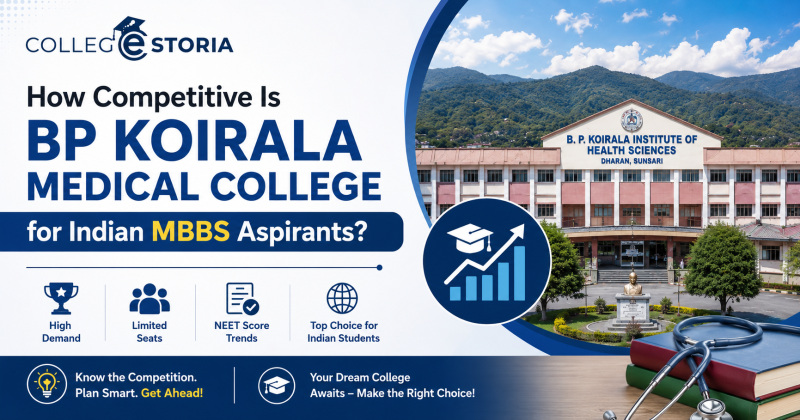
4. How Competitive Is BP Koirala Medical College?
Another important question is competition.
A student should not assume that qualifying NEET automatically guarantees admission to BP Koirala Medical College. Admission depends on the applicable category, eligibility, available seats, ranking or matching process and the rules issued for that admission cycle.
Nepal’s Medical Education Commission operates the MECEE-BL system for undergraduate medical education and publishes college and programme seat information through its official entrance system.
For foreign applicants, the applicable admission route may differ depending on the category and whether the student is required to participate in the relevant entrance process.
This means your NEET score should be treated as one part of your admission planning, not as the only factor.
5. Check the Admission Route Before Making a Preference
One of the biggest mistakes students make during MBBS Admission in Nepal is choosing colleges first and checking the admission rules later.
The correct approach is the opposite.
First understand your eligibility and applicable admission category. Then check the available seats, admission mechanism and required documents.
The official MEC system provides college-wise seat information and includes separate categories for foreign applicants, including distinctions based on whether they appear for MECEE-BL.
For 2026 admission, students should rely on the latest official notice rather than an old admission article or social-media post.
6. Consider Your Long-Term Career Plan
Choosing a medical college is not only about getting an MBBS seat.
Think about what you want to do after graduation.
Do you want to:
- Practise medicine in India?
- Pursue postgraduate medical education?
- Prepare for licensing requirements?
- Return to your home country?
- Consider postgraduate education abroad?
Your future plan should influence your college selection.
Indian students should particularly understand the current requirements applicable to foreign medical graduates before committing to MBBS in Nepal. Regulations can change, so checking the latest official requirements is essential.
Who Should Consider BP Koirala Medical College?
BP Koirala Medical College may be worth considering if you:
- Have qualified NEET and are exploring international MBBS options.
- Are seriously considering MBBS Admission in Nepal.
- Want an established health sciences university environment.
- Value exposure to clinical departments and hospital-based learning.
- Have checked the current eligibility and foreign-student admission requirements.
- Have a clear understanding of your post-MBBS career pathway.
On the other hand, students who have a strong preference for a particular Indian state, specific fee range or a particular type of institution should compare their Indian options carefully before making a final decision.
Final Verdict: Is BP Koirala Medical College Worth Choosing After NEET 2026?
BP Koirala Medical College can be a worthwhile option for eligible students considering MBBS in Nepal, but it should be selected after comparing admission rules, seat availability, costs, clinical exposure and long-term career plans.
For Indian NEET 2026 qualifiers, the biggest advantage of researching the college early is that you can understand your options before counselling and preference filling begin.
Rather than asking only, “Is BP Koirala Medical College good?”, ask a more useful question:
“Does BP Koirala Medical College match my academic goals, budget, admission category and future medical career plan?”
That approach will help you make a more informed decision.
If you are unsure about your options for MBBS Admission in Nepal, CollegeStoria can help you understand the admission process, college choices and available pathways before you make your final decision.
Source:
Click for the: Full Story
You might like