Close Menu
 World
World
 Biography
 Health
 Education
 Business
 Lifestyle
 Sports
 Technology
 Animals
 History
 Food
Food
 Religious
 Startups
 Movies
 Politics
 Fashion
 Covid
Covid
 Diet
Diet
 Fitness
 Marketing
 Travel
 Science
 Reviews
 Social media
 Stories
 Facts
Facts
 Art
Art
 Entertainment
Yatin Samra

Technology
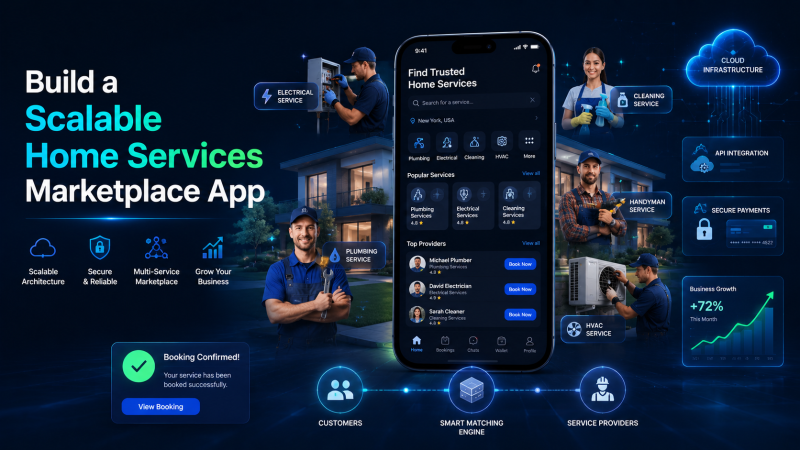
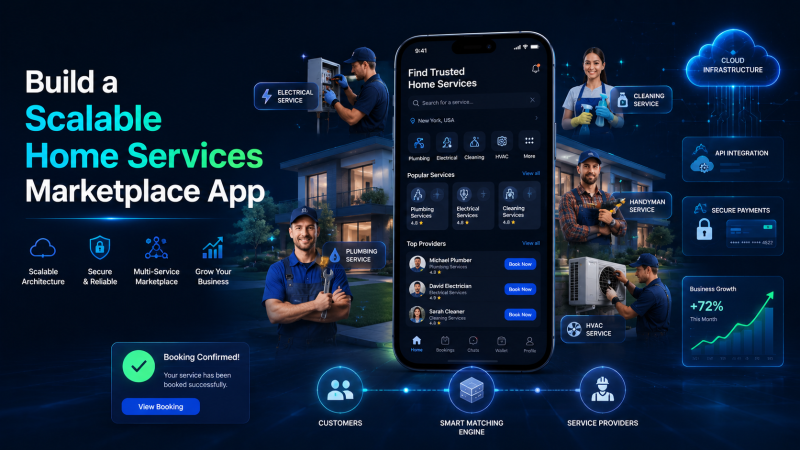
Building a Scalable Home Services Marketplace: From Idea to Growing Platform
 Yatin Samra
The need for easy-to-access home services is still providing new opportunities for online marketplaces. People are interested in finding trustworthy specialists without spending lots of time searching, calling, and comparing different companies. In addition, service specialists need an effective solution for contacting customers and managing their business.
A home service marketplace provides an opportunity to unite both parties via an online platform.
However, creating a successful marketplace is not just about developing a smartphone application with a list of offered services. A successful marketplace requires proper balance between user experience, provider management, booking, payment system, localization, trust, and backend technologies.
If you are going to make home service app, it would be useful to know about the process of developing such platform.
Start With the Marketplace Problem
Before choosing technologies or designing screens, determine what problem the platform is solving.
Customers may struggle with:
- Finding trusted professionals
- Comparing service providers
- Getting transparent pricing
- Scheduling appointments
- Tracking bookings
- Managing payments
Service professionals may face different challenges, such as:
- Finding new customers
- Managing schedules
- Reducing cancellations
- Tracking earnings
- Handling customer communication
A successful marketplace should create value for both sides.
If only customers benefit, providers may leave. If only providers benefit, customers may not return.
Choose a Focused Service Category
Trying to launch every home service at once can make the marketplace difficult to manage.
A better strategy can be to begin with a focused category or group of related services.
For example, the initial platform could specialize in:
- Cleaning
- Plumbing
- Electrical repairs
- Appliance services
- Home maintenance
- Landscaping
Once the marketplace develops a stable customer and provider base, additional categories can be introduced.
This approach also makes marketing and customer acquisition more focused.
Build the Customer Experience Around Convenience
Customers generally want to complete a service booking with minimal effort.
A streamlined journey could look like:
Choose service → Enter location → Browse professionals → Compare options → Select time → Confirm booking → Pay → Review service
The interface should keep unnecessary steps to a minimum.
Important customer features can include:
Service Search
Customers can search by category, location, availability, price, or rating.
Provider Profiles
Profiles can display experience, services, pricing, reviews, service areas, and other relevant information.
Booking
Customers can select an available appointment or request a quote depending on the service.
Notifications
Users can receive reminders and updates about bookings, payments, cancellations, and messages.
Reviews
Customers can rate completed services and provide feedback.
Create a Dedicated Provider Experience
Service professionals aren't simply suppliers on the platform. They are active users who need their own tools.
A provider application can include:
- Registration
- Profile management
- Service selection
- Pricing
- Availability
- Booking requests
- Job management
- Customer communication
- Earnings
- Reviews
Providers should be able to update their availability without depending on the platform's support team.
This reduces operational workload while giving professionals greater control.
Make Provider Verification Part of the Platform
Trust is particularly important when a professional is entering someone's home.
The onboarding process can collect relevant business and professional information.
Depending on the service category and local requirements, verification may involve:
- Identity information
- Business information
- Professional qualifications
- Service experience
- Relevant documentation
The platform can also use ratings and reviews to continuously monitor service quality.
For businesses operating in the USA, verification and marketplace policies should be designed according to applicable local and state requirements.
Introduce Location-Based Matching
Home services are naturally connected to geography.
A professional may serve one neighborhood but not another. Customers may also prefer providers who are located nearby.
Location functionality can help match customers with professionals based on:
- Service area
- Distance
- Availability
- Service category
- Customer preferences
As the business expands, location data can help administrators understand demand across different areas.
Instead of launching nationwide immediately, a company could validate the marketplace in one city and gradually expand into additional locations.
Design Flexible Pricing
Not every home service can follow the same pricing model.
A basic cleaning service may have a predictable price, while a plumbing repair may require an inspection before the final cost is known.
The platform can therefore support different pricing structures.
Fixed Price
The customer pays a predefined amount.
Hourly Rate
The price depends on the time required.
Quote-Based
The customer submits a job request and receives an estimate.
Custom Pricing
The provider determines the price after discussing the requirements.
Supporting flexible pricing can allow the marketplace to serve a wider range of service categories.
Build a Reliable Booking Engine
Scheduling is one of the most important technical components.
The booking system should account for:
- Provider availability
- Service duration
- Existing appointments
- Customer-selected time
- Rescheduling
- Cancellations
- Booking confirmations
The system should prevent double bookings and keep availability synchronized.
Automated reminders can also reduce missed appointments.
Integrate Secure Payments
A marketplace needs a payment system that works for both customers and providers.
The payment workflow may include:
Customer payment → Platform processing → Commission calculation → Provider payout
Additional functionality can include:
- Payment status
- Refunds
- Receipts
- Transaction history
- Provider earnings
- Commission reports
The exact payment setup should be selected according to the marketplace model and the requirements of the countries or states where the service operates.
Give Administrators a Complete Control Center
A scalable marketplace can become difficult to operate without a centralized administration system.
The admin dashboard can provide visibility into:
- Customers
- Providers
- Bookings
- Services
- Payments
- Commissions
- Reviews
- Complaints
- Promotions
- Analytics
Administrators can also use the dashboard to monitor marketplace performance and identify operational problems.
For example, if a particular service category receives many requests but has very few available providers, the business can focus its provider-acquisition efforts in that area.
Add Communication and Support Tools
Home service bookings can involve questions that aren't covered by a standard booking form.
An integrated communication system can allow customers and providers to discuss:
- Job requirements
- Arrival instructions
- Access details
- Scheduling changes
- Service expectations
Customer-support functionality can also help the platform manage complaints, refunds, and disputes.
Use Technology That Can Grow With the Business
A scalable architecture should be able to accommodate more customers, providers, transactions, and locations.
A potential technology structure could include:
Mobile applications: Flutter, React Native, Swift, or Kotlin.
Web application: React, Angular, or Vue.
Backend: Node.js, Python, Java, or .NET.
Database: PostgreSQL, MySQL, or another suitable database technology.
Cloud infrastructure: Scalable hosting, storage, monitoring, and backup services.
Maps and location: Mapping APIs and geolocation services.
Notifications: Push notifications, email, and SMS integrations.
The specific technology choices should depend on product requirements, expected traffic, security needs, development expertise, and long-term plans.
Where Can AI Fit Into a Home Services Marketplace?
AI can be introduced once the core marketplace is functioning effectively.
Potential applications include:
Intelligent Provider Matching
AI can analyze service requirements, location, availability, ratings, and other relevant factors to recommend suitable professionals.
Automated Customer Support
AI assistants can handle routine questions and route complex issues to support agents.
Demand Forecasting
AI can help identify periods or locations where demand for certain services is increasing.
Review Analysis
AI can summarize customer feedback and identify recurring service-quality issues.
Personalized Recommendations
The platform can recommend relevant services based on customer behavior and previous bookings.
AI should be introduced where it provides measurable value rather than simply being added as a marketing feature.
How Should the Revenue Model Work?
A home services marketplace can use several monetization strategies.
Transaction Commission
The platform receives a percentage from completed bookings.
Customer Service Fee
A separate fee is added to the customer's order.
Provider Subscription
Professionals pay a recurring fee to access platform tools or customer opportunities.
Lead-Based Pricing
Providers pay for qualified leads.
Featured Listings
Professionals pay for additional visibility within relevant categories or locations.
A hybrid revenue model can combine multiple approaches as the marketplace matures.
What Does It Cost to Build a Home Services Marketplace?
Development costs vary according to the product's scope.
The biggest factors include:
ComponentFactors Influencing CostUI/UXNumber of screens and complexityCustomer AppSearch, booking, payments, and reviewsProvider AppJobs, availability, earnings, and profilesAdmin PanelManagement and analyticsBackendAPIs and marketplace workflowsLocationMaps and location-based matchingPaymentsTransactions and provider payoutsCommunicationChat and notificationsAIAutomation and intelligent recommendationsSecurityAuthentication and data protectionInfrastructureHosting and scalabilityMaintenanceUpdates and technical support
A focused MVP can be considerably less expensive than a mature multi-city marketplace with advanced automation and integrations.
Why an MVP Is a Smart Starting Point
A marketplace doesn't need to launch with dozens of features.
An initial MVP can focus on the fundamental transaction:
Customer needs service → Provider accepts job → Service is completed → Payment is processed → Customer leaves review
Once this workflow works reliably, the business can expand the product.
Possible future features include:
- Loyalty programs
- Subscriptions
- Promotional campaigns
- Advanced analytics
- AI matching
- Provider memberships
- Corporate accounts
- Multi-city operations
How to Scale Beyond the First Market
Once the marketplace has achieved product-market fit in its initial location, expansion can happen gradually.
A practical growth strategy could involve:
Phase 1: Launch in one focused market.
Phase 2: Build a reliable provider network.
Phase 3: Improve customer retention.
Phase 4: Introduce additional service categories.
Phase 5: Expand into nearby locations.
Phase 6: Strengthen automation and analytics.
Phase 7: Enter larger regional or national markets.
This approach gives the business an opportunity to learn before taking on the operational complexity of large-scale expansion.
Final Thoughts
Creating a scalable home service marketplace solution takes more than just developing an efficient mobile app. An entire system should be built consisting of users, providers, payments, scheduling, communications, locations, management, and business intelligence.
For all the future entrepreneurs who intend to develop home service apps, it is better to begin by solving a particular problem and choosing a narrow service category. Construct the basic workflow of your marketplace, build trust among users, and develop technologies for further scaling of your project.
With everything being stable, you will have an opportunity to implement some additional functionality such as artificial intelligence based matching, automation, personalized recommendations, and multi-location expansion.
The task is not just to create an app. It is to construct a marketplace trusted by customers, useful for professionals, and scalable for the business itself.
Would you like to learn more about the development of such a platform? Follow the link below and watch the video about constructing a scalable home service marketplace.
Source:
Click for the: Full Story
You might like