Close Menu
 World
 Biography
 Health
 Education
 Business
 Lifestyle
 Sports
 Technology
 Animals
 History
 Food
 Religious
 Startups
 Movies
 Politics
 Fashion
 Covid
 Diet
 Fitness
 Marketing
 Travel
 Science
 Reviews
 Social media
 Stories
 Facts
 Art
 Entertainment
Dhiman Group

Business
Confectionery Production Line: Essential Machines for Modern Candy and Toffee Manufacturing
 Dhiman Group
Starting or expanding a confectionery manufacturing business requires careful planning, particularly when it comes to selecting production equipment. With changing consumer preferences and increasing demand for innovative sweets, manufacturers need machinery that can handle different product varieties while maintaining consistent quality. A well-planned production line helps businesses manage manufacturing operations, improve productivity, and meet market expectations.
From colourful lollipops and traditional hard candies to soft, chewy toffees, each confectionery product requires a specific processing method. Investing in suitable machinery allows manufacturers to maintain control over product shape, texture, size, and overall production quality. Dhiman Group provides specialized confectionery machinery solutions designed to support different industrial candy manufacturing requirements.
Ball Lollipop Forming Machine for Product Innovation
Lollipops offer manufacturers opportunities to experiment with different shapes, flavours, colours, and fillings. However, producing attractive and uniform products on a commercial scale requires specialized forming equipment.
A ball lollipop forming machine helps manufacturers produce consistently shaped ball lollipops while supporting efficient production operations. Depending on the machine configuration, manufacturers can explore different product dimensions and centre-filled confectionery options.
Dhiman Group's BLP-500 is designed for ball lollipop production, including centre-filled applications. This type of equipment is particularly useful for businesses interested in developing distinctive products for retail distribution.
When choosing a lollipop forming machine, manufacturers should evaluate the following factors:
- Desired lollipop diameter and product weight.
- Compatibility with different candy formulations.
- Centre-filling requirements.
- Stick feeding and positioning arrangements.
- Production speed and forming consistency.
- Cleaning and maintenance accessibility.
Selecting machinery according to the intended product range helps businesses achieve better production planning and avoid unnecessary equipment limitations.
Hard Boiled Candy Plant for Large-Scale Production
Hard-boiled candies require precise processing conditions to achieve the desired hardness, transparency, flavour, and shelf stability. Manufacturers producing these products on a commercial scale can benefit from a complete Hard Boiled Candy Plant.
A typical manufacturing process begins with mixing and cooking the ingredients under controlled conditions. The cooked candy mass is then processed, cooled to a suitable working temperature, and transferred to forming equipment.
The entire process requires coordination between cooking, handling, forming, and cooling operations. A properly configured plant helps manufacturers maintain a continuous production workflow while managing different processing requirements.
For businesses planning to increase output, an integrated plant can also make production scheduling and equipment coordination more manageable.
Selecting Hard Boiled Candy Machines According to Product Requirements
Not every confectionery manufacturer produces the same type of hard candy. Some focus on traditional transparent candies, while others manufacture filled sweets, fruit-flavoured products, or specially shaped confectionery.
Choosing appropriate Hard Boiled Candy Machines therefore requires an understanding of the complete manufacturing process.
Cooking equipment should provide suitable temperature and moisture control. Forming machinery should match the desired candy shape and dimensions, while cooling systems should support the product's final consistency.
Manufacturers should also examine machine construction, operating requirements, energy consumption, maintenance accessibility, and compatibility with other production equipment.
A practical approach is to evaluate the entire production line rather than comparing machines individually. This helps ensure that one processing stage does not become a bottleneck for the remaining operations.
Cooling Conveyor Machine: Supporting Better Product Handling
After candy forming, temperature management becomes an important consideration. Products that have not cooled sufficiently may stick together, lose their intended shape, or create difficulties during packaging.
A cooling conveyor machine helps transport confectionery products through a controlled cooling process before they move to subsequent production stages.
Multi-tier conveyor systems can be particularly useful in manufacturing facilities where floor space is limited. By arranging conveyor sections vertically, businesses can utilize available factory space more efficiently while maintaining organized product movement.
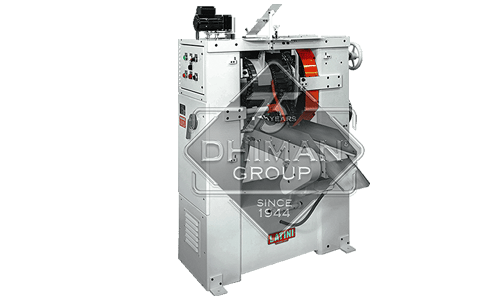
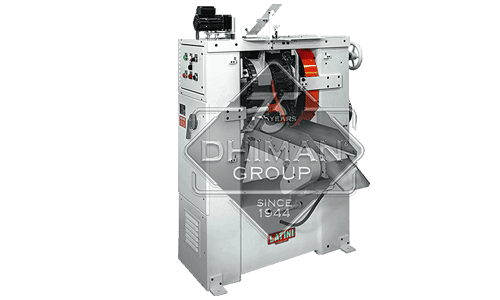
Dhiman Group's three-tier horizontal cooling conveyor models, CC-1M-3 and CC-1M-3A, are developed for confectionery cooling applications.
When evaluating cooling equipment, manufacturers should consider product characteristics, conveyor dimensions, airflow, cooling duration, and production capacity. These factors help determine whether the system can support the requirements of a particular candy manufacturing line.
Chew Toffee Machine for Different Confectionery Textures
Chewy toffees have distinctive texture requirements that separate them from conventional hard candies. Their consistency depends on ingredient ratios, cooking conditions, cooling methods, and forming processes.
A Chew toffee machine helps manufacturers process and shape chewy confectionery products for commercial production.
Depending on the production setup, the manufacturing process may involve preparing the cooked mass, conditioning it, feeding it into forming equipment, and cutting it into individual pieces.
Businesses entering the chewy confectionery segment should pay attention to the machine's processing compatibility, product dimensions, output requirements, and integration with wrapping equipment.
Consistency is particularly important in toffee production because variations in texture or size can affect the consumer experience and packaging efficiency.
How to Improve Productivity in a Candy Manufacturing Facility
Machinery selection is only one part of building an efficient confectionery business. Production planning, operator training, and preventive maintenance also influence overall performance.
Manufacturers can improve their operations by following a few practical measures:
Standardize production recipes: Maintain consistent ingredient proportions and documented processing parameters.
Monitor processing temperatures: Use appropriate temperature controls during cooking and cooling.
Schedule preventive maintenance: Inspect moving parts, belts, forming components, and electrical systems regularly.
Train machine operators: Ensure employees understand operating procedures, cleaning requirements, and safety practices.
Coordinate production stages: Match cooking, forming, cooling, and packaging capacities to minimize unnecessary waiting time.
These practices help businesses maintain organized manufacturing operations and improve product consistency over time.
Conclusion
Developing a successful confectionery manufacturing business requires machinery that matches the products being manufactured and the production capacity being targeted. A suitable ball lollipop forming machine, a well-planned Hard Boiled Candy Plant, reliable Hard Boiled Candy Machines, an efficient cooling conveyor machine, and a specialized Chew toffee machine can collectively support a more organized production process.
Dhiman Group offers confectionery machinery solutions for manufacturers looking to establish, upgrade, or expand their candy production facilities. By focusing on equipment compatibility, processing requirements, and long-term operational needs, businesses can create a production setup that supports consistent quality and sustainable growth.
Source:
Click for the: Full Story
You might like