Close Menu
 World
World
 Biography
 Health
 Education
 Business
 Lifestyle
 Sports
 Technology
 Animals
 History
 Food
Food
 Religious
 Startups
 Movies
 Politics
 Fashion
 Covid
Covid
 Diet
Diet
 Fitness
 Marketing
 Travel
 Science
 Reviews
 Social media
 Stories
 Facts
Facts
 Art
Art
 Entertainment
Harold Ruffes

Business
Convert Real Estate, Gold & Alternative Assets into Blockchain-Based Tokens
 Harold Ruffes
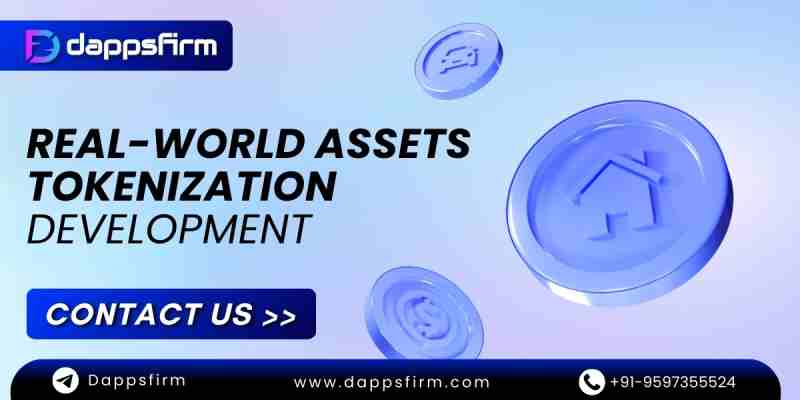
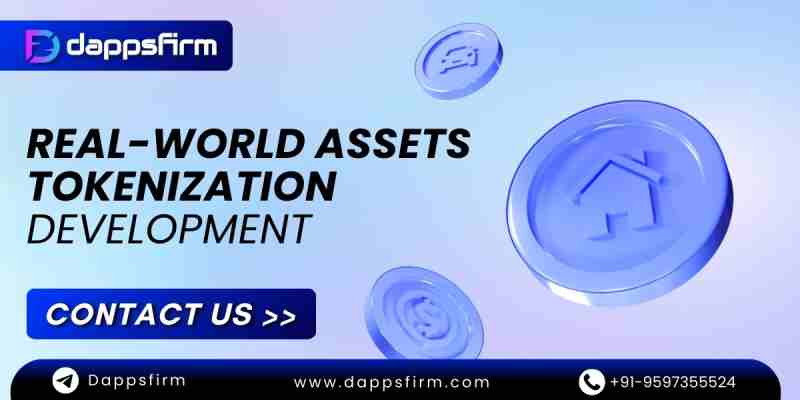
Real-world asset tokenization is changing how businesses represent, manage, and transfer physical and financial assets through blockchain technology. From real estate and commodities to private equity, bonds, artwork, and carbon credits, tokenization can represent ownership or economic rights through blockchain-based tokens.
For businesses exploring new capital models, fractional ownership, transparent asset records, and digital investment infrastructure, Real-World Asset Tokenization Development provides a technology-driven approach to modernizing traditional asset management.
Dappsfirm provides end-to-end Real-World Asset Tokenization Development solutions designed around business requirements, asset structures, compliance workflows, blockchain infrastructure, and investor management. Our approach combines smart contracts, token standards, secure wallets, automated workflows, APIs, dashboards, and blockchain-based transaction tracking.
What Is Real-World Asset Tokenization?
Real-world asset tokenization refers to representing rights, ownership, claims, or economic interests connected to physical or traditional financial assets as digital tokens on a blockchain.
A tokenization platform can connect the underlying asset with a digital representation while maintaining records for ownership, transfers, compliance, valuation, and transactions.
Depending on the asset and legal structure, businesses can tokenize:
- Real estate properties
- Gold and other commodities
- Artwork and collectibles
- Private equity
- Bonds
- Infrastructure projects
- Agricultural land
- Intellectual property
- Carbon credits
- Trade finance assets
- Fund interests
- Government securities
The technology does not automatically change the legal nature of an asset. The token structure, investor rights, custody model, transfer restrictions, and regulatory obligations need to be designed according to the relevant jurisdiction and asset class.
Why Businesses Are Exploring RWA Tokenization
Traditional assets can involve multiple intermediaries, extensive documentation, limited trading windows, and significant administrative work. Blockchain-based tokenization can introduce programmable ownership records and automated transaction workflows.
For businesses, this can support:
- Fractional investment structures
- Digitized ownership records
- Automated transfer workflows
- Transparent transaction histories
- Programmable compliance controls
- Faster settlement processes
- Digital investor onboarding
- Cross-border market access where legally permitted
For example, instead of representing an entire commercial property through a single traditional ownership structure, a business may design a compliant tokenized model representing defined interests in that asset. Investors can then interact with the digital representation according to the applicable legal and platform rules.
Real-World Asset Tokenization Platform Development
Dappsfirm develops RWA tokenization platforms that connect asset onboarding, token issuance, investor management, compliance, trading workflows, and blockchain infrastructure within a unified ecosystem.
The platform can include modules for:
Asset Onboarding:
Register assets, upload supporting documentation, define asset parameters, and maintain verification records.
Token Issuance:
Configure token supply, ownership structures, transfer rules, metadata, and smart-contract parameters.
Investor Management:
Manage investor profiles, verification status, holdings, transaction history, and permissions.
Compliance Management:
Integrate KYC, AML, identity verification, jurisdictional restrictions, whitelisting, and transfer controls where required.
Transaction Management:
Track token issuance, transfers, purchases, redemptions, and ownership changes through blockchain records.
Administrative Dashboard:
Provide operators with controls for assets, investors, tokens, transactions, compliance status, reports, and platform activity.
Core Features of an RWA Tokenization Platform
Token Liquidity Management
The platform can support secondary-market workflows, redemption mechanisms, liquidity pools, and market-maker integrations where the underlying legal and market structure permits.
Real-Time Asset Valuation
Asset valuation modules can display updated pricing information from approved data sources. Businesses can configure valuation rules according to the asset class and applicable methodology.
Digital Ownership Management
Blockchain records can maintain token balances and transfer histories. Permissioned infrastructure can further restrict who is allowed to hold or transfer specific asset tokens.
Asset Documentation
Businesses can maintain valuation reports, ownership documents, legal agreements, certificates, and other supporting records alongside asset profiles.
Smart Contract Automation
Smart contracts can automate predefined activities such as token issuance, transfers, ownership updates, distribution mechanisms, and compliance checks.
Transaction Monitoring
Administrators can monitor blockchain activity and review token creation, transfers, purchases, redemptions, and wallet interactions through a centralized interface.
On-Chain Asset Records
On-chain transaction records provide an auditable history of token movements. Additional off-chain documentation and legal records can be connected to create a broader asset-management framework.
Benefits of Real-World Asset Tokenization
Fractional Ownership
Tokenization can divide eligible asset interests into smaller units, potentially lowering the capital requirement for participation while supporting more flexible ownership structures.
Improved Transparency
Blockchain provides a tamper-resistant transaction history that can help authorized participants verify token movements and ownership records.
Greater Operational Efficiency
Smart contracts and automated workflows can reduce repetitive administrative processes associated with issuance, transfers, reconciliation, and reporting.
Broader Market Access
Subject to securities laws, investor eligibility requirements, and jurisdictional restrictions, tokenized assets can support access to a broader investor base.
Programmable Transactions
Token rules can incorporate transfer restrictions, eligibility checks, compliance requirements, and other business logic directly into the digital asset infrastructure.
Faster Settlement
Blockchain-based settlement can reduce dependencies on certain manual reconciliation processes and support more streamlined transaction workflows.
Property Tokenization Platform Development
Real estate is one of the major areas being explored for asset tokenization. A property tokenization platform can bring property onboarding, documentation, investor management, token issuance, ownership records, and transaction workflows into one digital environment.
Dappsfirm can develop property tokenization solutions with features such as:
- Property asset registration
- Document management
- Investor onboarding
- Fractional ownership structures
- Token issuance
- Wallet integration
- Ownership tracking
- Distribution management
- KYC/AML integration
- Transfer restrictions
- Administrative controls
- Blockchain transaction monitoring
The exact token structure depends on the legal rights attached to the property and the regulatory framework governing the offering.
Token Standards for RWA Platforms
Choosing the right token standard is an important part of RWA platform architecture.
ERC-20
ERC-20 is commonly used for fungible tokens where each token unit is interchangeable. It can be suitable for certain tokenized financial or asset representations depending on the underlying legal structure.
ERC-3643
ERC-3643 is designed for permissioned tokenized assets and includes mechanisms for identity verification, compliance checks, and transfer restrictions. These capabilities make it relevant for regulated tokenization use cases.
ERC-721
ERC-721 supports unique non-fungible tokens. It can be considered for assets where each token represents a distinct item or unique digital representation.
ERC-1155
ERC-1155 supports both fungible and non-fungible token models within a single standard, making it useful for applications involving multiple asset types or token categories.
The appropriate standard depends on the asset, ownership model, transfer requirements, compliance architecture, and blockchain environment.
Security Architecture for RWA Tokenization
Security is a critical requirement when tokenized assets represent financial or economic value. Dappsfirm can incorporate multiple security layers into the platform architecture, including:
- AES-256 encryption
- Multi-factor authentication
- Role-based access control
- Secure wallet integration
- Key-management controls
- Smart-contract security reviews
- API authentication
- Anti-DDoS protection
- KYC and AML controls
- Transaction monitoring
- Audit logging
- Secure administrative access
Smart contracts should also undergo appropriate testing and independent security auditing before handling production assets.
AI-Powered RWA Tokenization Development
Artificial intelligence can add analytical capabilities to an RWA ecosystem.
An AI-enabled tokenization platform can support:
- Asset valuation analysis
- Risk assessment
- Investor segmentation
- Market-data analysis
- Fraud-pattern detection
- Document analysis
- Automated reporting
- AI-powered investor assistance
- Generative AI interfaces for platform information
AI can work alongside blockchain infrastructure rather than replacing the underlying ownership and transaction framework. The data sources, models, and automated decisions should be appropriately governed and monitored.
Our RWA Tokenization Development Process
Dappsfirm follows a structured development process for businesses planning a tokenized asset ecosystem.
1. Business and Asset Analysis
We analyze the asset class, ownership model, investor structure, business objectives, target jurisdictions, and platform requirements.
2. Token Architecture
Our team defines the token model, supply structure, ownership representation, transfer rules, metadata, and blockchain architecture.
3. Compliance Architecture
KYC, AML, investor eligibility, jurisdictional restrictions, reporting, and transfer controls can be incorporated into the platform according to applicable requirements.
4. Smart Contract Development
We develop smart contracts for token issuance, transfers, ownership management, distributions, and other predefined business workflows.
5. Platform Development
The frontend, backend, admin dashboard, APIs, wallet connectivity, asset-management modules, and investor interfaces are integrated into the platform.
6. Testing and Security
The platform undergoes functional testing, API testing, smart-contract testing, performance testing, and security validation before deployment.
7. Deployment and Maintenance
After controlled deployment, we provide technical monitoring, maintenance, upgrades, integrations, and feature enhancements based on business requirements.
Why Choose Dappsfirm for RWA Tokenization Development?
Dappsfirm provides end-to-end Real-World Asset Tokenization Development for businesses, fintech companies, investment platforms, and enterprises exploring blockchain-based asset infrastructure.
Our development approach covers the complete technology stack, including:
- RWA tokenization platform development
- Smart contract development
- Token standard implementation
- Property tokenization
- Asset management modules
- Investor dashboards
- Wallet integration
- KYC/AML integration
- Blockchain integration
- API development
- AI-powered functionality
- Security architecture
- Admin dashboards
- Post-deployment technical support
We design the platform around the specific asset model rather than applying the same tokenization architecture to every business. This allows the technology, compliance workflow, investor experience, and blockchain infrastructure to align with the intended use case.
Build Your RWA Tokenization Platform with Dappsfirm
Real-world asset tokenization is creating new possibilities for representing traditional assets through programmable blockchain infrastructure. Businesses can explore fractional ownership, digital investor management, transparent transaction records, automated workflows, and new market-access models through appropriately structured tokenization platforms.
If you are planning an RWA project, Dappsfirm provides Real-World Asset Tokenization Development at minimal cost & Quick launch, with customized blockchain architecture, smart contracts, compliance-ready workflows, investor management, and advanced platform features.
Contact us Today
Instant Reach Experts:
Free Demo - https://www.dappsfirm.com/contact-us
web - https://www.dappsfirm.com/real-world-assets-tokenization-development
mail - sales@dappsfirm.com
call / whatsapp - +919597355524
telegram- Dappsfirm
Source:
Click for the: Full Story
You might like