Close Menu
 World
World
 Biography
 Health
 Education
 Business
 Lifestyle
 Sports
 Technology
 Animals
 History
 Food
Food
 Religious
 Startups
 Movies
 Politics
 Fashion
 Covid
Covid
 Diet
Diet
 Fitness
 Marketing
 Travel
 Science
 Reviews
 Social media
 Stories
 Facts
Facts
 Art
Art
 Entertainment
Yatin Samra

Technology
eCommerce App Development Cost: Features, Timeline & Key Factors
 Yatin Samra
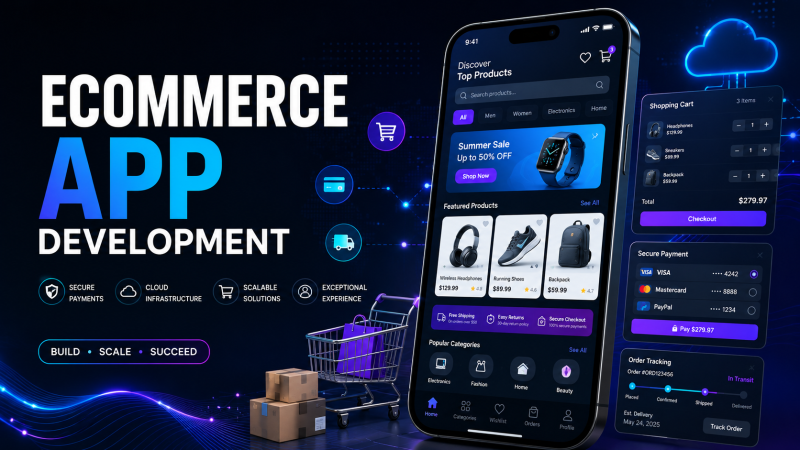
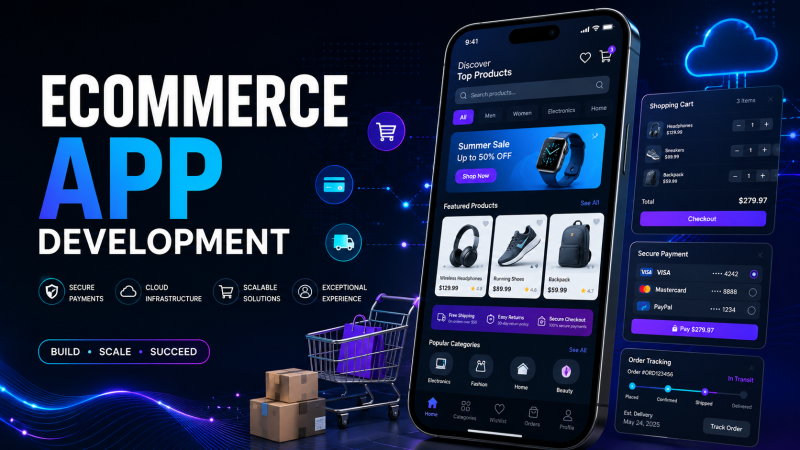
An eCommerce app development is not simply about displaying the products on a mobile device. Modern customers want quick search, customized recommendations, flexible payment options, order tracking, and a smooth checkout process.
For those who are going to make eCommerce app for products, knowing the costs involved, the time taken, the features to be offered, and the technicalities of it becomes very important.
How Much Does eCommerce App Development Cost?
There is no universal price for an eCommerce app because the final investment depends on the platform's scope and complexity.
A basic application with product browsing and checkout will require fewer resources than a full marketplace supporting multiple vendors, advanced analytics, AI-powered recommendations, and extensive integrations.
A practical way to estimate the budget is to divide the project into three levels:
App Type Typical Scope Relative Investment
Basic eCommerce App Catalog, search, cart, checkout Low
Mid-Level App Payments, tracking, reviews, notifications, analytics Medium
Advanced Marketplace Multi-vendor tools, AI, automation, advanced analytics High
The development team's location, technology stack, integrations, security requirements, and customization level can also influence the final estimate.
10 Key Factors That Influence Development Cost
1. App Features
Features are one of the biggest contributors to development effort.
A modern eCommerce application may include:
- User registration
- Product catalogs
- Search and filters
- Shopping cart
- Wishlist
- Checkout
- Payment integration
- Order tracking
- Reviews and ratings
- Push notifications
- Customer support
Advanced features naturally require additional design, development, and testing.
2. Design and User Experience
A visually attractive interface is useful, but usability should come first.
Customers should be able to discover products, compare options, add items to their cart, and complete purchases without unnecessary steps.
Custom UX research, animations, personalization, and highly tailored interfaces can increase both development time and cost.
3. Platform Selection
Businesses need to decide whether they want:
- Android
- iOS
- Cross-platform mobile apps
- Web application
- Mobile and web together
Developing separate native applications can require more resources, while cross-platform technologies may reduce duplicated development in suitable use cases.
4. Backend Infrastructure
The backend manages important operations such as:
- Product information
- Inventory
- Customer accounts
- Orders
- Payments
- Promotions
- Notifications
- Analytics
A scalable backend is particularly important for businesses expecting substantial traffic or catalog growth.
5. Payment Integrations
A smooth checkout process is essential for an eCommerce business.
Payment functionality may include:
- Credit and debit cards
- Digital wallets
- Saved payment methods
- Refunds
- Transaction records
- Promotional discounts
For businesses targeting customers in the USA, payment preferences and applicable transaction requirements should be considered when choosing payment providers.
6. Third-Party Integrations
An eCommerce app rarely operates independently.
It may connect with:
- Payment gateways
- Shipping providers
- Inventory systems
- CRM platforms
- Marketing tools
- Analytics services
- Customer support software
Each integration introduces additional development and testing requirements.
7. Security Requirements
Customers expect their personal and payment information to be protected.
Security measures can include:
- Encryption
- Secure authentication
- Multi-factor authentication
- Access controls
- Secure APIs
- Fraud monitoring
- Regular security testing
Security should be planned during architecture design rather than added as a final step.
8. Admin and Seller Features
The customer-facing app is only one part of the ecosystem.
An admin dashboard may be required for:
- Product management
- Inventory
- Orders
- Customer management
- Discounts
- Reports
- Content management
For a marketplace, sellers may also need dedicated tools to manage products, pricing, inventory, orders, and earnings.
9. Customization and Technology Stack
Businesses can choose between developing a highly customized product or using existing frameworks and services.
Custom development can provide greater flexibility but may require more time and resources.
The technology stack should be selected according to the product's scalability, performance, integration, security, and maintenance requirements rather than simply the initial development price.
10. Post-Launch Maintenance
The project budget should not end at launch.
Ongoing costs may include:
- Bug fixes
- Security updates
- Infrastructure
- Third-party services
- OS compatibility updates
- Performance optimization
- New features
- Technical support
A long-term maintenance strategy helps keep the application competitive and reliable.
Essential Features for an eCommerce App
A strong first version should focus on the core customer journey.
Customer Features
- Account creation
- Product browsing
- Search and filters
- Product details
- Cart
- Checkout
- Order history
- Tracking
- Reviews
Business Features
- Product management
- Inventory control
- Order management
- Customer management
- Promotions
- Analytics
- Reporting
Advanced Features
As the business grows, it can introduce:
- AI-powered recommendations
- Personalized offers
- Visual search
- Voice search
- Loyalty programs
- Subscription shopping
- Advanced customer analytics
Not every business needs all of these features at launch.
eCommerce App Development Timeline
Development time depends on project complexity and team structure.
A general roadmap can look like this:
Phase 1: Discovery and Planning
Estimated duration: 1–3 weeks
This stage covers business requirements, competitor research, technical planning, and feature prioritization.
Phase 2: UI/UX Design
Estimated duration: 2–5 weeks
Designers create user flows, wireframes, prototypes, and final interfaces.
Phase 3: Core Development
Estimated duration: 6–12+ weeks
Developers build the mobile or web application, backend, database, APIs, and essential business functionality.
Phase 4: Integration and Testing
Estimated duration: 2–5 weeks
The team integrates external services and performs functional, security, performance, and device testing.
Phase 5: Launch
Estimated duration: 1–2 weeks
The application is prepared for deployment, monitoring, and initial user onboarding.
A complex marketplace or multi-platform product may require considerably more time.
How to Reduce Development Costs Without Sacrificing Quality
Businesses can control costs through strategic planning rather than simply removing important features.
Start With an MVP
Launch the essential shopping journey first and add advanced functionality based on customer feedback.
Prioritize High-Value Features
Features that directly improve conversions, retention, or operational efficiency should receive priority.
Use Proven Integrations
Established payment, analytics, shipping, and communication services can reduce the need to build everything from scratch.
Plan Scalability Early
A scalable architecture can prevent expensive redevelopment when traffic and product volume increase.
What Makes an eCommerce App Successful?
Development quality alone does not guarantee commercial success.
A strong eCommerce platform should combine:
Easy discovery + fast checkout + reliable payments + transparent delivery + personalization + responsive support
For the USA market, businesses can also consider local customer expectations around delivery options, payment methods, returns, privacy, and mobile shopping behavior.
Final Thoughts
Ecommerce app development cost and timeframe will vary based on the functionality, technology, integrations, design, security, and plans for the product.
In case of companies that require ecommerce app solutions to develop, an MVP strategy might be a reasonable approach for your start. After the basic ecommerce solution is proven to work and gain success, you can think about implementing additional capabilities according to users' needs.
Whether you need to address clients from the USA or consider international expansion, proper planning before developing will help to reduce expenses and create a scalable product.
To know more about this platform development, click the link below and watch the video.
Watch the video to learn more about eCommerce platform development
Source:
Click for the: Full Story
You might like