Close Menu
 World
World
 Biography
 Health
 Education
 Business
 Lifestyle
 Sports
 Technology
 Animals
 History
 Food
Food
 Religious
 Startups
 Movies
 Politics
 Fashion
 Covid
Covid
 Diet
Diet
 Fitness
 Marketing
 Travel
 Science
 Reviews
 Social media
 Stories
 Facts
Facts
 Art
Art
 Entertainment
Prozentech Social

Technology
Medical App Development: Build a Smarter Digital Healthcare Experience for Patients and Medical Providers
 Prozentech Social
Healthcare is becoming more connected, more accessible, and more digital.
Patients increasingly expect to book appointments online, consult doctors remotely, access reports, manage prescriptions, receive reminders, and communicate with healthcare providers without depending entirely on phone calls or physical visits.
For hospitals, clinics, doctors, healthcare startups, and medical service providers, this creates a strong opportunity through Medical App Development.
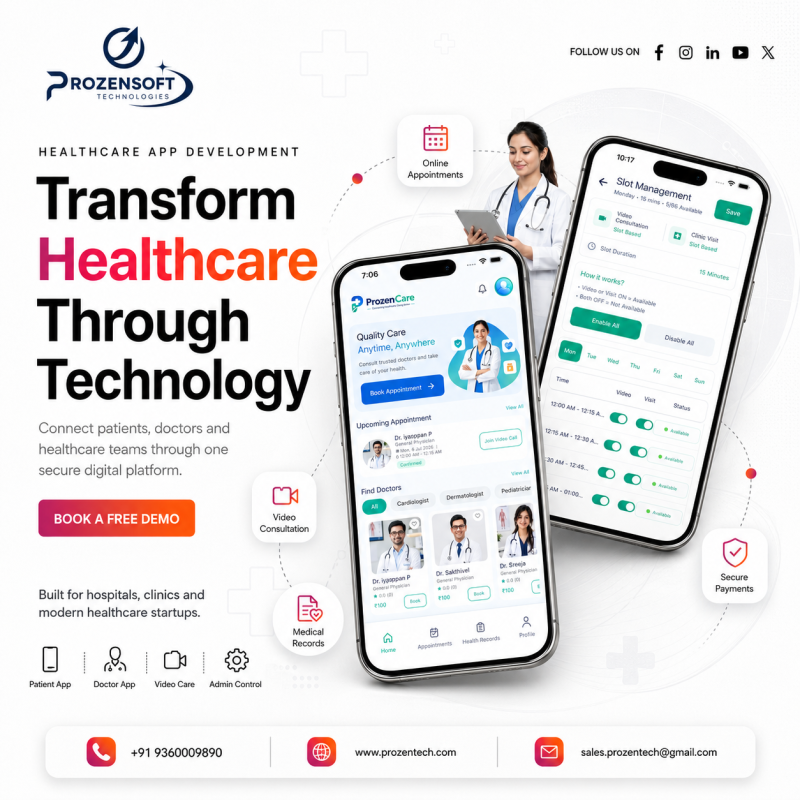
A well-designed medical application can bring patients, doctors, appointments, consultations, records, payments, and healthcare operations together in one digital ecosystem.
More importantly, it can improve the patient journey while helping healthcare organizations manage everyday workflows more efficiently.
Medical Apps Are Changing the Way Patients Access Care
Traditionally, even a simple consultation can involve several steps.
Patients may need to call a clinic, wait for confirmation, travel to the hospital, stand in a queue, make payment, meet the doctor, and collect reports separately.
A medical app can simplify this process.
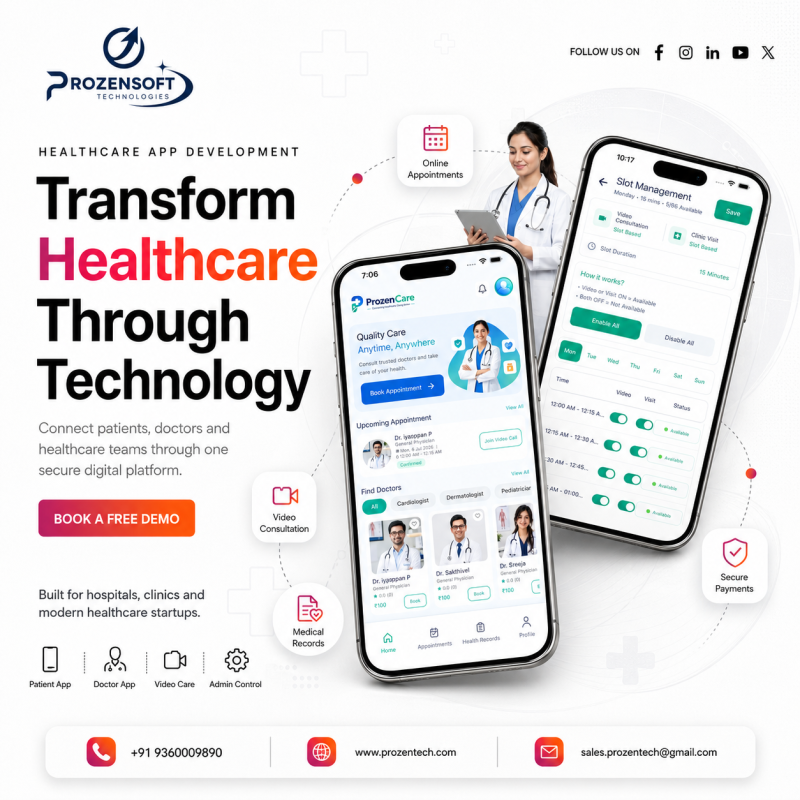
Patients can search for doctors, view available slots, schedule appointments, make payments, receive reminders, attend video consultations, and access consultation-related information through a single platform.
That convenience can significantly improve the overall healthcare experience.
Give Patients a Simpler Way to Find the Right Doctor
Finding the right specialist can sometimes be difficult.
A medical application can allow patients to search and filter doctors based on:
- Specialty
- Hospital or clinic
- Location
- Availability
- Experience
- Consultation fee
- Language
- Consultation type
Specialties may include cardiology, orthopedics, dermatology, pediatrics, dentistry, diabetology, general medicine, gynecology, and many more.
Instead of relying on multiple phone calls or referrals, patients can discover available healthcare professionals directly through the application.
Make Appointment Booking Fast and Convenient
Appointment scheduling should not feel complicated.
A simple booking flow can allow patients to:
Choose a specialty → select a doctor → choose a hospital or branch → pick a date → select an available time slot → confirm payment → receive appointment confirmation.
Doctor availability can be managed based on:
- Working days
- Consultation hours
- Slot duration
- Break times
- Leave
- Holidays
- Branch availability
This helps reduce scheduling conflicts and gives patients better visibility before booking.
Support Both Physical and Online Consultations
Not every medical consultation requires a hospital visit.
For follow-ups, general consultations, report discussions, and remote patients, online consultations can provide greater flexibility.
A custom Medical App Development solution can support both:
In-Person Consultation
Patients visit the selected clinic or hospital at the confirmed time.
Video Consultation
Patients connect with doctors remotely through the application.
Providing both options creates a more flexible healthcare experience and allows medical providers to reach patients beyond their physical location.
Give Doctors Their Own Digital Workspace
Doctors need a simple interface that helps them manage consultations without adding unnecessary administrative work.
A dedicated doctor app can include:
- Daily appointments
- Upcoming consultations
- Patient details
- Availability management
- Consultation status
- Video consultation
- Leave management
- Notifications
- Reports
- Earnings overview
Doctors can update their availability and view scheduled consultations directly from the application.
This improves coordination between doctors, administrators, and patients.
Organize Patient Information More Effectively
A medical platform can help maintain important patient-related information in one organized location.
Depending on the system requirements, patients and authorized healthcare providers may access:
- Previous appointments
- Consultation summaries
- Prescriptions
- Uploaded medical documents
- Lab reports
- Follow-up details
- Doctor recommendations
Having relevant information available digitally can improve continuity between consultations and reduce dependence on physical documents.
Digital Prescription Management
Prescriptions are an important part of many medical consultations.
Doctors can create digital prescriptions after completing an appointment.
Patients can then access prescription details directly through the application.
The prescription module can include:
- Medicine name
- Dosage
- Frequency
- Duration
- Doctor notes
- Follow-up instructions
This creates a more organized experience and reduces the risk of patients losing paper prescriptions.
Medication and Appointment Reminders
Patients may sometimes forget medication schedules or upcoming appointments.
Automated reminders can help improve engagement.
A medical app can send notifications for:
- Upcoming consultations
- Medication schedules
- Follow-up appointments
- Lab tests
- Payment confirmation
- Video consultation timing
- Prescription updates
These reminders can make the platform more useful beyond the initial doctor appointment.
Multi-Clinic and Multi-Hospital Support
Healthcare businesses often grow across multiple locations.
A scalable platform should be able to support different hospitals, clinics, and branches without requiring separate systems.
Each branch can have its own:
- Doctors
- Departments
- Consultation fees
- Working hours
- Appointments
- Staff
- Patients
- Reports
Doctors may also work across multiple branches with different schedules and fees.
This flexibility makes the application suitable for larger medical networks.
Secure Online Payments
Patients should be able to confirm appointments without unnecessary payment delays.
A medical application can integrate secure payment gateways for:
- Consultation fees
- Video consultations
- Advance payments
- Service charges
- Cancellation fees
- Refunds
Payment records can be connected directly with appointments, giving administrators better financial visibility.
Commission Management for Medical Platforms
A medical marketplace may connect multiple independent doctors, hospitals, or clinics.
In this model, the platform may earn revenue through commission.
For example, when a patient completes a paid consultation, the amount can be divided between the doctor and the platform according to configured rules.
Commission can vary by:
- Doctor
- Specialty
- Hospital
- Branch
- Consultation type
This gives medical startups more flexibility in designing their revenue model.
Notifications Improve Communication
Healthcare communication should be clear and timely.
Automatic notifications can inform patients about:
- Booking confirmation
- Appointment reminders
- Doctor availability changes
- Payment confirmation
- Appointment cancellation
- Refund status
- Follow-up recommendations
Doctors and staff can also receive notifications regarding new appointments or schedule changes.
This can reduce repetitive manual calls and improve coordination.
Admin Dashboard for Complete Platform Control
Behind every successful medical app is a powerful administration system.
The admin dashboard can allow healthcare businesses to manage:
- Patients
- Doctors
- Hospitals
- Clinics
- Branches
- Specialties
- Appointments
- Payments
- Doctor verification
- Consultation fees
- Commissions
- Reports
- Notifications
- Reviews
- Platform settings
This gives administrators a centralized view of the entire medical platform.
Doctor Verification and Profile Management
Patients need confidence when booking medical professionals.
A structured onboarding process can require doctors to submit necessary professional information and verification documents.
Administrators can review doctor profiles before activating them on the platform.
Doctor profiles can include:
- Professional qualifications
- Specialty
- Experience
- Hospital affiliation
- Consultation fee
- Available locations
- Languages
- Professional information
Clear profiles can help patients make more informed booking decisions.
Role-Based Access for Medical Teams
Healthcare organizations involve different departments and responsibilities.
Not every employee should have access to the entire system.
Role-based administration can provide specific access for:
- Super administrators
- Hospital managers
- Clinic managers
- Finance teams
- Patient support teams
- Doctor management teams
- Branch administrators
This improves security and keeps internal operations more organized.
Medical Analytics Can Help Improve Operations
Digital platforms create visibility that traditional systems often lack.
Healthcare businesses can monitor:
- Total appointments
- Completed consultations
- Cancelled appointments
- Revenue
- Doctor availability
- Popular specialties
- Branch performance
- Patient activity
- Consultation trends
These insights can help decision-makers improve scheduling, staffing, marketing, and resource planning.
Medical Apps Can Be Built for Different Healthcare Models
Medical app development is not limited to large hospitals.
A custom solution can be developed for:
- Individual doctors
- Clinics
- Specialty centers
- Multi-specialty hospitals
- Healthcare networks
- Telemedicine startups
- Doctor marketplaces
- Diagnostic centers
- Medical consultation businesses
Each platform can be designed around its own operational requirements.
Privacy and Security Should Be Built Into the Platform
Medical applications may handle sensitive patient and healthcare information.
That makes security a fundamental part of development.
Depending on the target region and business model, important considerations can include:
- Secure authentication
- Encryption
- Role-based access
- Controlled document access
- Secure payment processing
- Audit trails
- Backups
- Regional privacy requirements
Security and compliance requirements should be evaluated carefully during planning rather than added only after development.
Why Custom Medical App Development Matters
Every healthcare business has a different workflow.
A doctor appointment app may focus on scheduling.
A telemedicine startup may prioritize video consultation.
A diagnostic center may need report management.
A multi-hospital platform may require complex branch and doctor scheduling.
A medical marketplace may need commission and provider management.
Custom Medical App Development gives businesses the flexibility to build around their actual needs.
The system can be designed according to your:
- Patient journey
- Doctor workflow
- Appointment structure
- Revenue model
- Hospital network
- Payment process
- Consultation model
- Administrative requirements
- Expansion plans
This creates a stronger long-term foundation than relying on inflexible software.
Build a Medical Experience Patients Can Trust
Technology should not make healthcare feel more complicated.
It should remove unnecessary steps.
Patients should be able to find the right doctor quickly.
Appointments should be easy to schedule.
Doctors should know what their day looks like.
Payments should be clear.
Reports and prescriptions should be accessible.
Administrators should have better visibility into operations.
When these experiences work together smoothly, a medical application becomes more than software.
It becomes a digital bridge between patients and healthcare providers.
Ready to Build Your Medical App?
At Prozensoft Technologies, we develop custom medical and healthcare applications for doctors, clinics, hospitals, medical startups, and healthcare networks.
Our solutions can include patient and doctor applications, appointment scheduling, video consultations, digital prescriptions, reports, online payments, multi-branch management, doctor availability, commission management, notifications, and centralized administration.
Whether you are digitizing an existing healthcare business or launching a new medical platform, we can build a solution around your workflow and growth plans.
Website: www.prozentech.com
Contact: +91 9360009890
Email: sales.prozentech@gmail.com
Frequently Asked Questions
What is Medical App Development?
Medical App Development is the process of creating digital healthcare applications that help patients and medical providers manage appointments, consultations, prescriptions, reports, payments, and other healthcare services.
Can patients book doctors through the app?
Yes. Patients can search doctors, view availability, select consultation slots, choose branches, and confirm appointments.
Can video consultations be integrated?
Yes. The application can support scheduled video consultations for remote medical appointments.
Can doctors create digital prescriptions?
Yes. Doctors can generate consultation-related digital prescriptions that patients can access through the application.
Can the app support multiple hospitals or clinics?
Yes. Multiple hospitals, clinics, and branches can be managed through one centralized platform.
Can patients access previous appointments and reports?
Yes. Depending on the platform requirements, appointment history, reports, prescriptions, and consultation information can be made available to patients.
Can online payment and refunds be integrated?
Yes. Medical consultation payments, cancellations, refunds, and related transactions can be managed digitally.
Can different staff members have different admin permissions?
Yes. Role-based permissions can be configured for hospital managers, finance teams, patient support, doctor management, and other administrative users.
Source:
Click for the: Full Story
You might like