Close Menu
 World
World
 Biography
 Health
 Education
 Business
 Lifestyle
 Sports
 Technology
 Animals
 History
 Food
Food
 Religious
 Startups
 Movies
 Politics
 Fashion
 Covid
Covid
 Diet
Diet
 Fitness
 Marketing
 Travel
 Science
 Reviews
 Social media
 Stories
 Facts
Facts
 Art
Art
 Entertainment
Conference Alert
Education
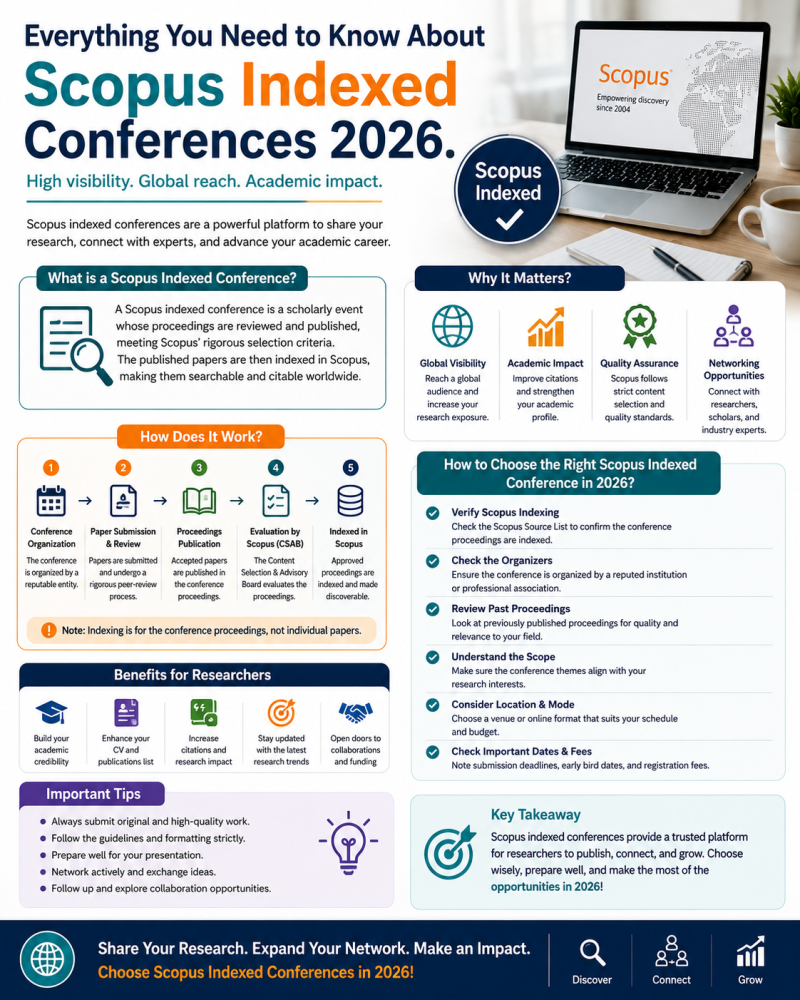
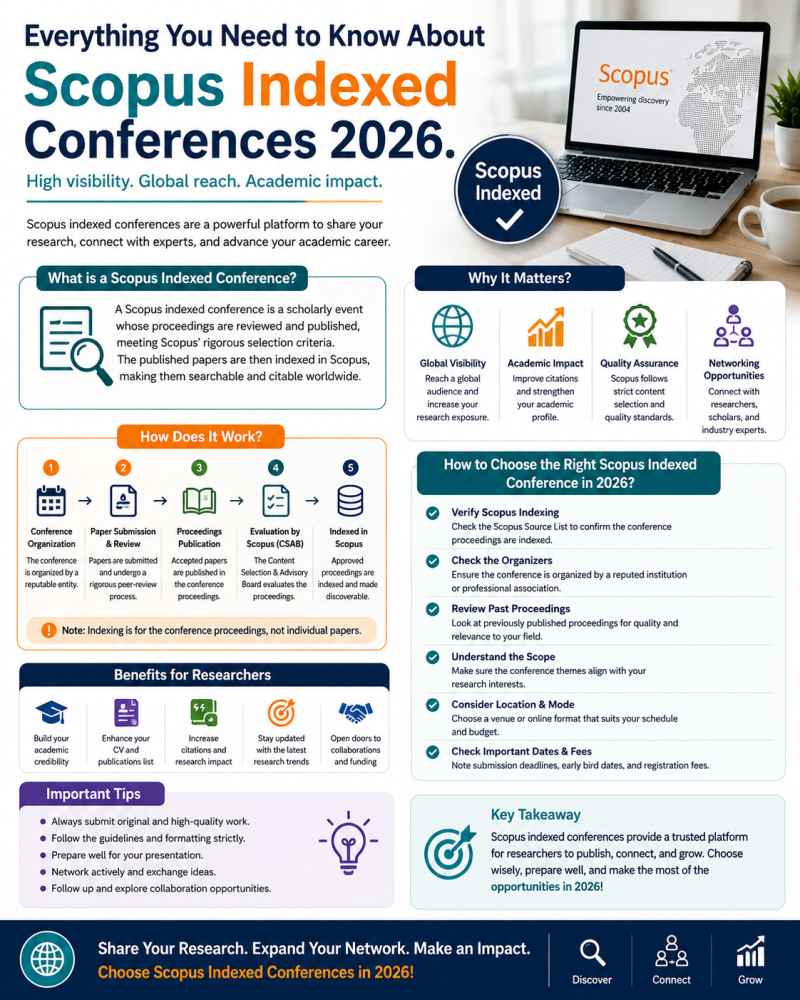
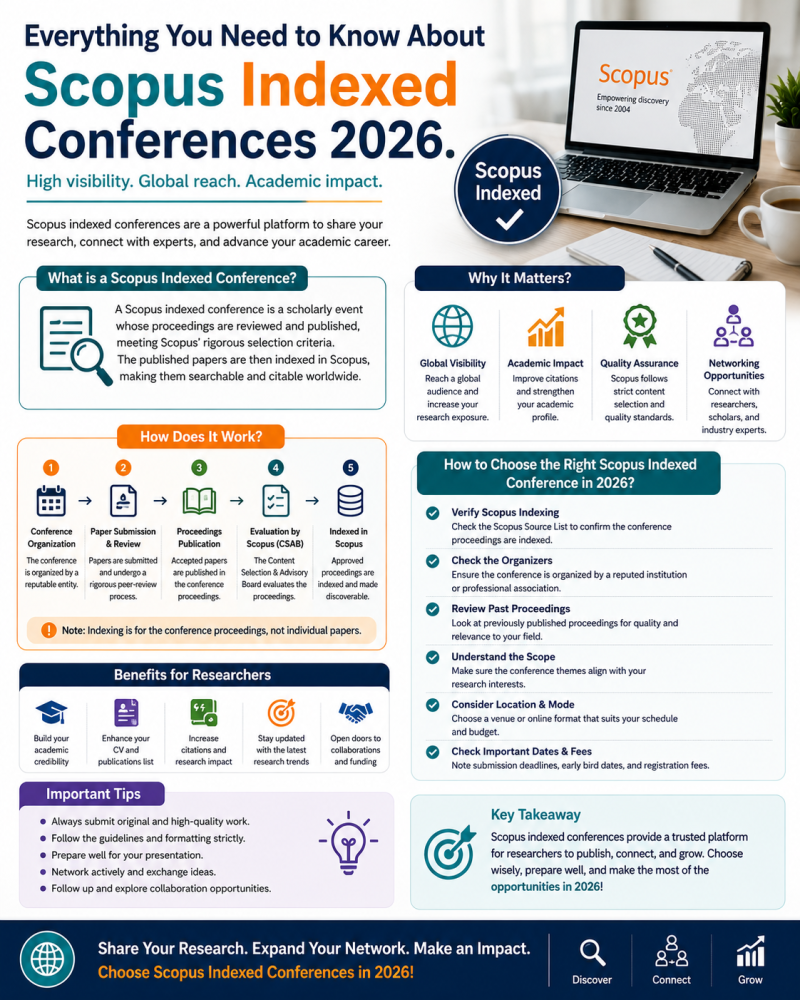
Everything You Need to Know About Scopus Indexed Conferences 2026.
 Conference Alert
Publishing research in a Scopus indexed conference has become an important milestone for researchers, scholars, and professionals across various disciplines. For researchers, academicians, PhD scholars, and postgraduate students, publishing research at a Scopus indexed conference is one of the most effective ways to gain academic recognition and increase the visibility of their work. As research competition continues to grow in 2026, selecting the right conference has become more important than ever.
What Is a Scopus Indexed Conference?
A Scopus indexed conference is an academic conference whose accepted papers are published in conference proceedings that are included in Scopus, one of the world's largest abstract and citation databases for peer-reviewed research literature, managed by Elsevier. Scopus indexes high-quality research across engineering, technology, medicine, social sciences, business, arts, and many other disciplines. It contains millions of journal articles, conference papers, books, and reviews from thousands of publishers worldwide. Conference papers are an important part of the database, particularly in fast-moving disciplines such as computer science and engineering.
Why Publish in a Scopus Indexed Conference?
Publishing in a Scopus indexed conference offers several academic and professional advantages.
1. Greater Research Visibility
Scopus provides global exposure to your research, making it easier for scholars worldwide to discover, read, and cite your work.
2. Increased Citation Opportunities
Conference papers indexed in Scopus are searchable by researchers globally, increasing the likelihood of future citations and academic impact.
3. Academic Recognition
Many universities and research institutions recognize Scopus-indexed publications for:
- Faculty promotions
- PhD completion requirements
- Research funding applications
- Academic performance evaluations
4. Networking Opportunities
Presenting your work allows you to connect with:
- Leading researchers
- Professors
- Industry experts
- Potential collaborators
5. Peer Review and Quality Standards
Most reputable Scopus-indexed conferences follow structured peer-review processes that help improve the quality of accepted papers.
Who Should Attend Scopus Indexed Conferences?
Scopus-indexed conferences are suitable for:
- PhD scholars
- Master's students
- Undergraduate researchers
- University faculty
- Scientists
- Engineers
- Industry professionals
- Research organizations
Whether you're presenting your first paper or expanding an established research portfolio, these conferences provide valuable opportunities for academic growth.
Popular Research Fields Covered
Scopus-indexed conferences span almost every academic discipline, including:
- Artificial Intelligence
- Machine Learning
- Data Science
- Computer Science
- Electrical Engineering
- Mechanical Engineering
- Civil Engineering
- Healthcare
- Biotechnology
- Environmental Science
- Business Management
- Economics
- Education
- Social Sciences
- Mathematics
- Physics
- Chemistry
How to Verify Whether a Conference Is Truly Scopus Indexed
One of the biggest concerns for researchers is avoiding conferences that falsely claim Scopus indexing.
Before submitting your paper, follow these steps:
Check the Conference Publisher
Well-known publishers include:
- IEEE
- Springer
- ACM
- Elsevier
- Taylor & Francis
These publishers frequently organize conferences with proceedings that may be submitted for Scopus indexing, although indexing is not automatic.
Verify Previous Proceedings
Review earlier editions of the conference and confirm whether their proceedings appear in Scopus.
Search the Official Scopus Source List
The official Scopus Sources database allows researchers to verify indexed journals, book series, and conference series. Because indexing status can change over time, always verify through the official source before submitting.
Read the Conference Website Carefully
Check for:
- Publisher details
- Conference history
- Peer-review process
- Publication timeline
- Indexing statements
Be cautious of conferences that promise guaranteed indexing before proceedings have been evaluated.
How to Choose the Right Scopus Indexed Conference in 2026
Consider the following factors before submitting your manuscript:
Research Scope
Ensure your paper matches the conference themes.
Reputation
Look at:
- Previous editions
- Keynote speakers
- Organizing institution
- Publisher reputation
Acceptance Rate
Selective conferences often maintain stronger academic standards.
Review Process
Choose conferences with transparent double-blind or peer-review systems.
Publication Timeline
Check expected dates for:
- Acceptance notification
- Camera-ready submission
- Conference presentation
- Proceedings publication
Registration Fees
Compare registration costs with the conference's quality, publisher, and networking opportunities.
Tips for Getting Your Paper Accepted
Improve your chances by:
- Selecting a relevant conference.
- Following the formatting guidelines precisely.
- Presenting original research.
- Including recent references.
- Writing a clear and informative abstract.
- Demonstrating novelty and practical significance.
- Proofreading thoroughly before submission.
Common Mistakes to Avoid
Researchers should avoid:
- Missing submission deadlines
- Ignoring formatting instructions
- Choosing conferences outside their research area
- Submitting incomplete manuscripts
- Paying registration fees before verifying conference credibility
- Assuming every advertised conference is genuinely Scopus indexed
Publishing at a Scopus-indexed conference in 2026 can significantly enhance your academic profile by increasing the visibility, credibility, and accessibility of your research. The key to success is choosing reputable conferences, verifying indexing claims through official sources, and submitting high-quality, original work. With careful planning and thorough verification, researchers can maximize the value of conference participation while avoiding predatory events. Investing time in selecting the right conference today can lead to stronger collaborations, greater recognition, and lasting academic impact in the future.
Source:
Click for the: Full Story
You might like