Close Menu
 World
World
 Biography
 Health
 Education
 Business
 Lifestyle
 Sports
 Technology
 Animals
 History
 Food
Food
 Religious
 Startups
 Movies
 Politics
 Fashion
 Covid
Covid
 Diet
Diet
 Fitness
 Marketing
 Travel
 Science
 Reviews
 Social media
 Stories
 Facts
Facts
 Art
Art
 Entertainment
John Wilkerson

Business
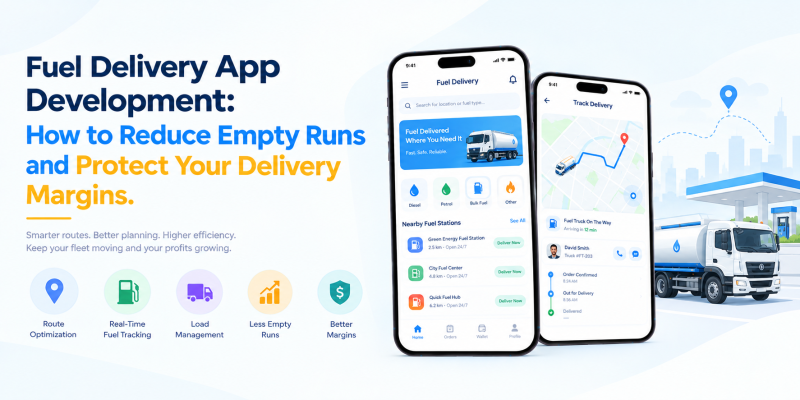
Fuel Delivery App Development: How to Reduce Empty Runs and Protect Your Delivery Margins
 John Wilkerson
Fuel delivery sounds like a simple business.
A customer places an order. A delivery vehicle carries the fuel. The order is completed.
But for entrepreneurs, the real challenge starts between those two points.
A delivery vehicle may travel several miles to reach a customer, return without another nearby order, or spend valuable time covering low-demand areas. Every unnecessary mile adds fuel, labor, maintenance, and vehicle costs.
In a business where margins can already be sensitive to fuel-price fluctuations, empty runs can become an expensive hidden problem.
This is where fuel delivery app development can become more than a customer-ordering solution.
It can become a way to operate the delivery network more intelligently.
The Vehicle Shouldn't Travel Empty
Consider a delivery vehicle completing an order on the other side of the city.
If another customer nearby needs fuel but the system doesn't identify the opportunity, the vehicle may return to the depot without generating another delivery.
The problem isn't a lack of demand.
It's a lack of visibility.
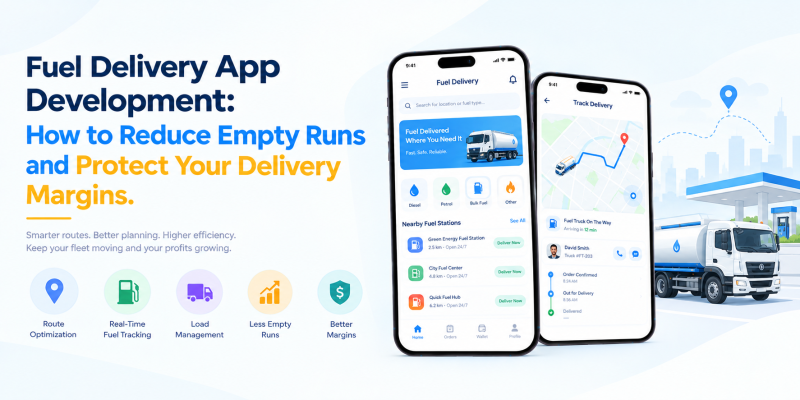
A centralized fuel delivery platform can bring customer locations, active orders, vehicle availability, and delivery schedules into one system. SpotnEats supports real-time order tracking, delivery-provider management, scheduled deliveries, and route optimization.
That gives operators greater visibility into where their delivery capacity is being used—and where it isn't.
Turn Route Planning Into a Profitability Tool
In conventional delivery businesses, inefficient routing is inconvenient.
In fuel delivery, it can directly affect margins.
The right delivery route needs to account for multiple factors:
- Customer location
- Vehicle availability
- Existing delivery commitments
- Delivery time
- Fuel capacity
- Nearby orders
- Traffic and distance
Route optimization can help reduce unnecessary travel while allowing operators to coordinate multiple deliveries more effectively.
The objective isn't simply getting there faster.
It's getting more productive deliveries from every vehicle journey.
Scheduled Orders Can Make Demand More Predictable
Not every customer needs fuel immediately.
Businesses, fleets, construction sites, farms, generators, and other commercial users may know when they will need their next delivery.
Scheduled ordering gives operators visibility into upcoming demand instead of forcing them to react to every request individually.
SpotnEats' fuel delivery platform allows customers to select a preferred delivery date and time while giving businesses tools to manage those orders.
That creates an opportunity to organize delivery capacity before the vehicle leaves the depot.
Build Density Before Expanding the Fleet
When delivery demand increases, entrepreneurs may immediately consider adding more vehicles.
But expanding the fleet isn't always the first answer.
If existing vehicles are spending significant time traveling empty or serving widely scattered orders, adding more vehicles can simply increase operating costs.
A smarter approach is to first understand:
Where is demand concentrated?
When does it occur?
Which routes generate the most productive trips?
Where are vehicles spending unproductive time?
Analytics can help operators identify these patterns and make more informed decisions about fleet expansion. SpotnEats provides centralized reports and analytics for monitoring fuel delivery operations.
Turn One Fuel Delivery Platform Into a Larger Business
Once the delivery infrastructure is established, entrepreneurs can explore different operating models.
The SpotnEats platform supports fuel stations, oil and fuel companies, and aggregator models, allowing businesses to structure their operations around different supply and delivery networks.
That means the technology doesn't have to be tied to one business model.
You can build around your own fuel inventory, connect multiple suppliers, or create a marketplace connecting customers with fuel providers.
Build a Smarter Fuel Delivery Operation With SpotnEats
A successful fuel delivery business needs more than an attractive customer app.
It needs the technology to coordinate customers, delivery providers, suppliers, orders, routes, payments, and operational data.
SpotnEats offers a customizable fuel delivery app solution with customer, delivery-provider, store-owner, and admin interfaces, along with scheduled delivery, real-time tracking, route optimization, payment options, order management, analytics, and delivery-provider verification.
For fuel delivery entrepreneurs, the growth question shouldn't always be:
“How many more delivery vehicles do we need?”
It may be:
“How many more profitable deliveries can we complete with the vehicles we already have?”
That's where the right technology can turn fuel delivery from a logistics-heavy operation into a more visible, coordinated, and scalable business.
Source:
Click for the: Full Story
You might like