Close Menu
 World
 Biography
 Health
 Education
 Business
 Lifestyle
 Sports
 Technology
 Animals
 History
 Food
 Religious
 Startups
 Movies
 Politics
 Fashion
 Covid
 Diet
 Fitness
 Marketing
 Travel
 Science
 Reviews
 Social media
 Stories
 Facts
 Art
 Entertainment
GPT India

Business
GPT-INDIA Bag Filter: Improving Dust Collection Efficiency Through Better System Design
 GPT India
In industrial manufacturing, dust collection problems rarely begin and end with the filter itself. A production line may experience weak extraction, frequent filter replacement, rising pressure drop or dust escaping from collection points even when a filtration unit is installed. These issues often develop because the collector, filter media, airflow, cleaning mechanism and dust discharge arrangement are not working together as intended.
A well-planned Bag Filter helps control airborne particulate matter by separating dust from an air stream through fabric filtration. However, its practical performance depends on more than the equipment's rated capacity. Dust characteristics, operating temperature, moisture, production schedules and maintenance practices all influence how the system performs over time.
GPT-INDIA, also known as Green Planet Technologies, works in industrial air pollution control and ventilation solutions. Understanding the relationship between filtration equipment and actual process conditions helps manufacturers make better decisions when planning a new installation, upgrading an existing system or sourcing replacement filter bags.
Why Industrial Dust Collection Requires More Than a Filter
Industrial dust can be generated during grinding, cutting, mixing, conveying, material transfer, polishing and other manufacturing activities. Depending on the process, the airborne material may contain fine powder, coarse particles, fibres or abrasive dust.
When dust is not captured effectively, it can settle on machinery, increase housekeeping demands and interfere with nearby production activities. Certain dusts may also present specific occupational, fire or explosion hazards, making proper assessment and control particularly important.
A dust collection system generally combines extraction hoods, ductwork, a fan and a suitable collector. The hood captures dust near its source, the duct network transports the contaminated air, and the filtration unit separates particles from the air stream.
If any part of this arrangement is poorly matched to the process, the complete system may underperform. A correctly selected Bag Filter cannot compensate for an extraction hood that fails to capture dust or ductwork that does not deliver the required airflow.
Understanding How a Pulse Jet Bag Filter Works
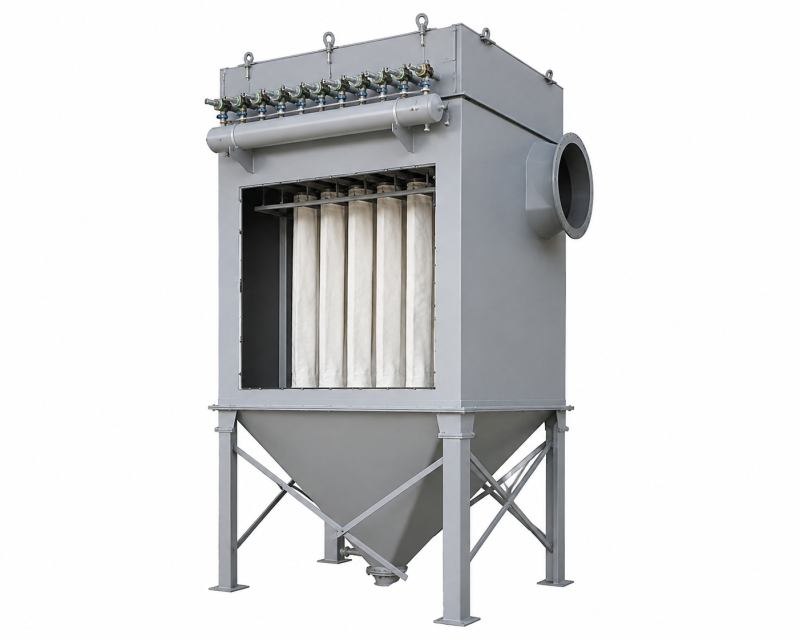
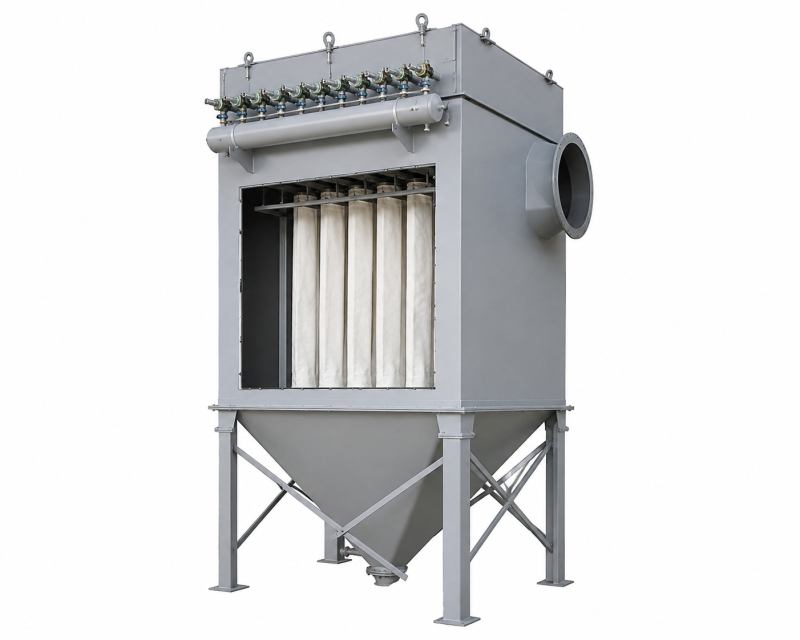
A Pulse jet Bag filter uses fabric filter bags to capture particulate matter from dust-laden air. As air passes through the filter media, dust accumulates on the surface while the filtered air moves through the bags.
Over time, the accumulated dust increases resistance to airflow. To manage this buildup, the cleaning system releases short bursts of compressed air that dislodge dust from the bags. The released material falls into a hopper or another suitable collection arrangement.
The timing and intensity of cleaning influence the operating behaviour of the collector. Insufficient cleaning may allow pressure drop to rise, while unnecessarily aggressive cleaning can increase compressed-air consumption and mechanical stress on the filter media.
The system should therefore be designed around the dust loading, filter characteristics, required airflow and intended operating schedule. A suitable cleaning sequence helps maintain a practical balance between filtration performance and filter-bag service life.
The United States Environmental Protection Agency describes the basic principles of fabric filtration in its technical guidance on fabric filters.
Choosing a Bag Filter According to Dust Characteristics
One of the most important decisions in filtration planning is understanding the material being collected. Different types of dust behave differently, and those differences affect filter selection and collector design.
Fine powders may require careful consideration of filtration media and dust-release properties. Abrasive particles can contribute to wear, particularly where they strike internal surfaces or repeatedly contact the same areas of filter media. Fibrous dust may behave differently from dense mineral particles, while sticky or moisture-sensitive materials can accumulate on the fabric and become difficult to remove.
Temperature and chemical compatibility also matter. The selected media should suit the normal operating temperature and any expected temperature variations. If the process introduces moisture or corrosive compounds, the suitability of the filter material should be reviewed accordingly.
The dust's physical characteristics can also affect hopper design and discharge requirements. Some materials flow readily, while others may bridge, compact or accumulate around discharge points.
For these reasons, equipment selection should begin with process information rather than a general assumption that all industrial dust can be handled in the same way.
Filter Bags: The Component That Influences Everyday Performance
Filter bags are not simply replacement accessories. Their characteristics directly affect the behaviour of the filtration system.
Media type, fabric construction, permeability, temperature resistance, surface treatment and dust-release properties influence how air passes through the bags and how easily accumulated dust can be removed. The correct combination depends on the application and operating conditions.
An unsuitable filter bag may lead to higher resistance, poor dust release or premature deterioration. A bag that does not fit correctly can also create installation problems or allow dust to bypass the intended filtration surface.
Replacement requirements should therefore be checked against the collector's original specifications. Dimensions, attachment arrangements, media composition and operating limits should be verified before an order is placed.
If existing bags repeatedly fail earlier than expected, the cause should be investigated before assuming that the replacement product alone will solve the problem. Incorrect installation, abrasion, moisture, chemical exposure or cleaning-system issues may also contribute to premature failure.
How Bag Filter Suppliers Should Be Evaluated
Selecting Bag filter suppliers requires more than comparing quoted prices. Industrial buyers should establish whether the supplier understands the application and can provide filter media that matches the collector's requirements.
The discussion should cover the type of dust, operating temperature, airflow, filter dimensions, cleaning method and expected service conditions. Where the original filter specification is available, it should be shared to reduce uncertainty during product selection.
Buyers should also ask about material specifications, manufacturing consistency, quality documentation and the availability of replacement components. These details are particularly important when a facility relies on scheduled maintenance to avoid production interruptions.
Technical support can be valuable when the application is unusual or when the current filter bags have shown inconsistent performance. A supplier who can discuss the reasons for blinding, abrasion or pressure-drop changes may help the buyer identify whether the problem lies in the media, the operating conditions or the collector itself.
A consistent technical specification makes supplier comparisons more meaningful because it allows buyers to assess equivalent products rather than comparing different materials or constructions solely on cost.
What to Look for in Bag Filter Manufacturers
When evaluating Bag filter manufacturers, consider the complete equipment design and its suitability for the intended process. The collector should be assessed for filtration area, airflow distribution, cleaning arrangement, hopper configuration and access for maintenance.
Fabrication quality is important because the equipment operates under airflow forces, dust loading and, depending on the application, thermal or chemical stress. The construction materials and design details should reflect the operating environment.
Manufacturers should also consider how the collector integrates with the extraction network. The fan must deliver the required airflow against the resistance of the ductwork, filter media and other connected components. If future production expansion is expected, that possibility should be discussed during the design stage.
A technically appropriate collector is one that matches the actual operating requirements without unnecessary complexity or capacity that the process does not need. Understanding the application's constraints helps establish a better basis for equipment selection.
Working With Filter Bags Manufacturers on Replacement Media
Filter bags manufacturers can be important partners when an industrial facility needs replacement media or a specification tailored to its operating conditions.
The first step is to confirm the dimensions and construction required by the collector. The replacement must fit the cage or support arrangement, mounting system and available filtration space. Media properties should then be matched to the dust, temperature, moisture and cleaning conditions.
If the original filter specification is unavailable, buyers may need to document the collector model, bag dimensions, process details and any observed performance problems. This information provides a more reliable basis for determining a suitable replacement than choosing a bag from appearance alone.
When a change in filter media is being considered, its effect on airflow resistance, cleaning behaviour and service life should be evaluated. A different fabric may behave differently under the same operating conditions, so compatibility should be established before making a large-scale change.
Why Pressure Drop Deserves Regular Attention
Pressure drop is a useful indicator of how a Bag Filter is operating. As dust accumulates on the filter media, resistance generally increases. The cleaning system removes part of the accumulated dust, helping the collector continue operating within its intended range.
A gradual increase between cleaning cycles may be normal, depending on the process. A persistent increase, however, may point to ineffective cleaning, excessive dust loading, unsuitable media, moisture-related deposits or restrictions in the system.
A sudden change can also be significant. It may indicate a damaged filter bag, leakage, a change in airflow or a problem with the cleaning arrangement.
Maintenance teams should interpret pressure readings alongside other observations, including fan performance, pulse-valve operation, compressed-air supply and dust discharge. Looking at trends over time can help identify developing problems before extraction performance visibly declines.
Dust Discharge and Fan Performance Must Work Together
Collected dust needs to leave the filtration unit reliably. If material accumulates in the hopper or discharge mechanism, it may interfere with normal operation and create additional maintenance requirements.
Depending on the material and system design, dust may be discharged through a rotary air lock, conveyor or another suitable arrangement. The selection should reflect the dust's flow properties, the required handling method and the downstream collection process.
Fan performance is equally important. A fan selected only according to its maximum airflow rating may not deliver the required flow once duct resistance, bends, dampers and filtration equipment are connected.
As the filter loads with dust, resistance can change during operation. System design should therefore consider the expected operating conditions rather than treating airflow as a fixed value independent of the collector.
When the collector, fan and dust discharge arrangement are properly coordinated, the complete system becomes easier to monitor and maintain.
Maintenance Planning for Longer Filter-Bag Service Life
A practical maintenance programme combines routine inspection with operating data. Filter bags should be examined for abrasion, holes, blinding, chemical deterioration and other signs of damage. Installation practices should also be checked when premature failure occurs.
The cleaning system requires attention to pulse valves, the sequence controller and compressed-air supply. If cleaning is inconsistent, some bags may carry a heavier dust load than others, affecting pressure drop and service life.
The hopper and discharge mechanism should be inspected to confirm that collected material is removed properly. Fan condition, duct leakage and changes in production conditions also deserve attention.
Replacement records can help identify recurring patterns. If filter bags in one area repeatedly fail sooner than those elsewhere, the cause may relate to uneven airflow, local abrasion or another process condition rather than the entire batch of bags.
Maintenance decisions based on both physical inspection and operating trends are generally more informative than replacing every component at a fixed interval without considering its condition.
Industries That Use Bag Filtration
Bag filtration is used across industrial sectors where processes generate airborne particulate matter. Applications may include metal fabrication, woodworking, mineral processing, chemical manufacturing, material handling, cement-related operations and selected pharmaceutical or powder-processing environments.
The requirements vary between industries. A woodworking process may generate fibrous and potentially combustible dust, while mineral processing may involve abrasive particles. Fine powders may require particular attention to containment and filter-media behaviour.
The equipment should be selected according to the actual process and material characteristics. Industry labels alone do not establish the correct filtration design, and specialist risk assessment may be necessary for combustible or hazardous dust.
Understanding the process before selecting equipment helps ensure that the collector and its components are appropriate for the intended duty.
GPT-INDIA Industrial Dust Filtration Solutions
GPT-INDIA, also known as Green Planet Technologies, works in industrial air pollution control, dust collection, ventilation and exhaust technology. Its product range includes Bag Filters, Pulse Jet Bag Filters, Filter Bags, Dust Collectors, Dust Extractors, Cyclone Dust Collectors, Wet Scrubbers, Activated Carbon Filters and other industrial air-treatment equipment.
The appropriate configuration depends on the material being handled, the required airflow, operating conditions and the wider production arrangement. Reviewing these details before equipment selection helps establish a practical foundation for dust collection and ongoing maintenance.
Company contact details
Green Planet Technologies (GPT-INDIA)
Office Address: 59/2/1, Site 4, Industrial Area, Sahibabad, Distt. Ghaziabad–201010, Uttar Pradesh, India
Phone: +91-9773500660
Email: info@gpt-india.com
Frequently Asked Questions
What is a Bag Filter used for in an industrial facility?
A Bag Filter separates particulate matter from dust-laden air by passing the air through fabric filter media. It is used in processes where airborne dust needs to be collected and managed.
What is the main advantage of a Pulse jet Bag filter?
A Pulse jet Bag filter uses compressed-air pulses to dislodge accumulated dust from filter bags. This cleaning method can support continued filtration during normal operation when the system is correctly designed and maintained.
How can I choose reliable Bag filter suppliers?
Compare suppliers based on media compatibility, product specifications, dimensions, quality documentation, availability and technical support. Provide details of the collector and process so the replacement media can be selected appropriately.
How do I evaluate Bag filter manufacturers?
Review their understanding of the application, filtration design, airflow requirements, cleaning arrangement, dust discharge and maintenance access. Technical suitability should be considered alongside fabrication quality and support.
Are Filter bags interchangeable between different collectors?
Not always. Filter bags must match the collector's dimensions, mounting arrangement, media requirements and operating conditions. An unsuitable replacement can affect fit, airflow and filtration performance.
Why do filter bags become blocked or blinded?
Blinding may occur when dust adheres strongly to the media or when moisture, oil or other process conditions interfere with normal dust release. The cause should be identified before selecting replacement media or changing the cleaning settings.
When should industrial Filter bags be replaced?
Replacement depends on operating conditions, media condition, pressure-drop trends, cleaning performance and signs of damage. Regular inspection and operating records help establish a suitable replacement plan.
Conclusion
Reliable industrial dust collection depends on the interaction between the collector, filter media, cleaning mechanism, fan and dust discharge arrangement. Selecting equipment based only on purchase price or nominal airflow can overlook the factors that influence long-term performance.
For buyers, the most useful approach is to define the process requirements first, compare Bag filter suppliers and Bag filter manufacturers against a consistent technical specification, and ensure that replacement Filter bags match the collector and operating conditions.
GPT-INDIA works in industrial filtration and air pollution control, supporting businesses that need to evaluate dust collection equipment according to their production requirements. A well-matched filtration system, supported by suitable maintenance practices, can help make dust control more predictable and routine servicing easier to plan.
Source:
Click for the: Full Story
You might like