Close Menu
 World
World
 Biography
 Health
 Education
 Business
 Lifestyle
 Sports
 Technology
 Animals
 History
 Food
Food
 Religious
 Startups
 Movies
 Politics
 Fashion
 Covid
Covid
 Diet
Diet
 Fitness
 Marketing
 Travel
 Science
 Reviews
 Social media
 Stories
 Facts
Facts
 Art
Art
 Entertainment
Geet Patel
Food
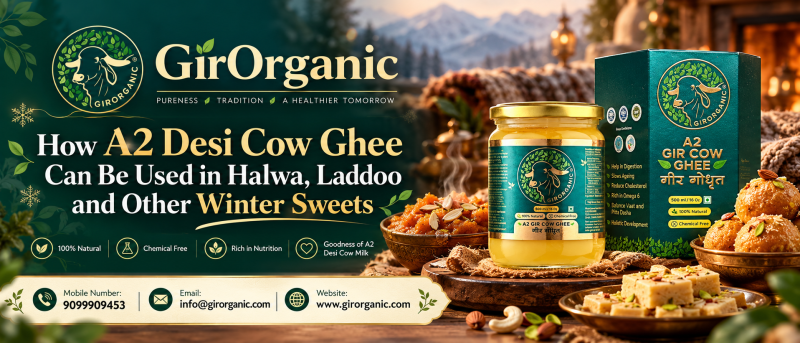
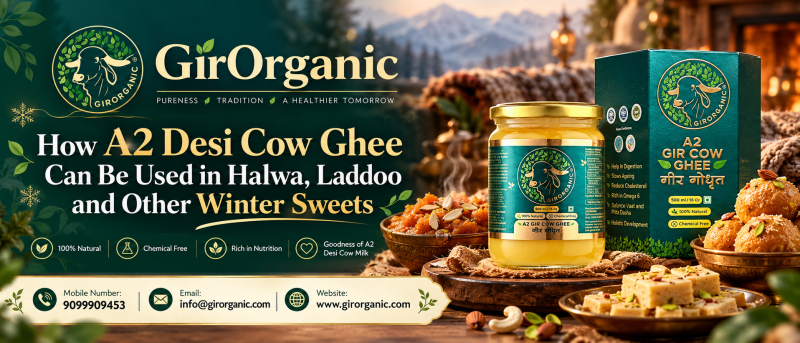
How A2 Desi Cow Ghee Can Be Used in Halwa, Laddoo and Other Winter Sweets
 Geet Patel
A2 desi cow ghee can be used in winter sweets to roast flour, bind laddoo mixtures, improve texture, add richness, and carry the aroma of ingredients such as cardamom, nuts, jaggery, and roasted grains. In Indian homes, ghee is especially useful in sweets such as atta halwa, moong dal halwa, besan laddoo, gond laddoo, panjiri, suji halwa, and traditional winter preparations.
The important part is using the right quantity and adding ghee at the correct stage of cooking. Too little can leave a sweet dry, while too much may make it greasy.
For families choosing a2 desi ghee, the best results come from balancing flavour, texture, roasting time, and the moisture content of the recipe.
How Is A2 Desi Cow Ghee Used in Winter Sweets?
A2 desi cow ghee is commonly used for roasting, binding, frying, finishing, and adding aroma to Indian winter sweets.
It helps flour, dal, semolina, nuts, and edible gum roast evenly while giving traditional sweets a rich mouthfeel. In laddoos, it also helps dry ingredients hold their shape once the mixture cools.
Key Takeaways
- Use ghee for slow roasting rather than adding all of it at the end.
- Halwa needs enough ghee to roast the base evenly.
- Laddoos need the right ghee-to-dry-ingredient ratio for binding.
- Gond should usually be fried in properly heated ghee before mixing.
- Jaggery-based sweets should not be overheated after jaggery is added.
- A2 Gir cow ghee can add a pronounced dairy aroma to traditional recipes.
- Good texture depends on both ghee quantity and cooking technique.
This guide explains how to use ghee in popular winter sweets and how to avoid the most common mistakes.
Why Is Ghee Used in Indian Winter Sweets?
Ghee performs several functions in sweet-making.
It is not added only for richness.
During cooking, ghee can:
- Coat flour and grains
- Help ingredients roast evenly
- Carry fat-soluble flavours
- Add softness and richness
- Reduce dryness
- Help laddoos bind
- Fry nuts and edible gum
- Improve aroma
- Influence the final mouthfeel
That is why many classic Indian sweets taste noticeably different when prepared without ghee.
For traditional recipes, a2 ghee may be chosen by households that prefer ghee made from milk associated with indigenous cow breeds or specific production methods.
What Is A2 Desi Cow Ghee?
A2 desi cow ghee is ghee made from milk sourced from cows whose milk contains the A2 form of beta-casein protein.
During ghee preparation, most milk solids and proteins are removed, so ghee is primarily milk fat.
The term A2 generally refers to the milk source rather than a special cooking behaviour of the finished ghee.
Products marketed as a2 Gir cow ghee, a2 organic ghee, or bilona cow ghee may also differ in breed, farming practices, and production method.
For cooking, the main practical characteristics are flavour, aroma, consistency, freshness, and how the ghee behaves during heating.
Which Winter Sweets Work Well With A2 Desi Cow Ghee?
Many North, West, and Central Indian winter sweets traditionally use generous but controlled amounts of ghee.
Popular examples include:
Winter Sweet
Main Role of Ghee
Atta Halwa
Roasting wheat flour and adding richness
Moong Dal Halwa
Slow roasting dal paste
Suji Halwa
Roasting semolina
Besan Laddoo
Roasting besan and binding
Gond Laddoo
Frying gond and binding ingredients
Panjiri
Roasting flour, nuts, and seeds
Dry Fruit Laddoo
Binding and flavour
Methi Laddoo
Roasting ingredients and improving texture
Bajra Laddoo
Binding millet flour mixture
Gur Atta Laddoo
Combining roasted flour with jaggery
The type of Best Ghee for these recipes is not simply the most expensive jar. It is one that has a clean aroma, good freshness, suitable consistency, and flavour that complements the sweet.
How Should A2 Desi Cow Ghee Be Used in Halwa?
1. Atta Halwa
For atta halwa, ghee is mainly used to roast whole wheat flour.
The flour should cook slowly until it changes colour and develops a nutty aroma.
Adding sugar syrup before the flour is properly roasted can leave the halwa tasting raw.
A practical method is:
- Warm the ghee.
- Add wheat flour.
- Roast on low to medium heat.
- Stir continuously.
- Add hot water or milk carefully.
- Add sugar after the flour is properly cooked.
- Finish with cardamom and nuts.
The ghee should coat the flour evenly rather than simply pool around it.
2. Moong Dal Halwa
Moong dal halwa requires patience because the dal paste contains moisture.
Ghee helps cook and roast the dal gradually.
The mixture initially looks sticky, then begins to separate and develop a roasted aroma.
Using a2 desi cow ghee in stages can make the cooking process easier. Add part at the beginning and reserve some for later if the mixture starts becoming dry during roasting.
3. Suji Halwa
Suji halwa is simpler but still depends on proper roasting.
Heat ghee, add semolina, and roast until fragrant before introducing the liquid.
Under-roasted suji can produce a flat or slightly raw taste.
You can also fry cashews, raisins, or almonds in a small amount of ghee before adding them to the final halwa.
How Is A2 Ghee Used in Laddoos?
In laddoos, ghee has two important functions: roasting and binding.
The mixture should contain enough fat to hold together when shaped but should not release large amounts of ghee after cooling.
Besan Laddoo
Besan should be roasted slowly in ghee until its raw smell disappears and the mixture becomes aromatic.
Do not add powdered sugar while the mixture is extremely hot. Excess heat can alter the texture of the sugar and make the mixture difficult to handle.
Allow the roasted besan to cool slightly before mixing in sugar and cardamom.
Atta Laddoo
Roast atta slowly in a2 ghee until golden and aromatic.
Then add dry fruits, seeds, or nuts according to the recipe.
After slight cooling, add powdered sugar or jaggery and shape the mixture while it is still warm enough to bind.
Dry Fruit Laddoo
Dry fruit laddoos often require less ghee because dates, figs, or other ingredients may already provide stickiness.
Use only enough ghee to roast nuts or help the mixture come together.
This is a good example of why the same ghee quantity cannot be applied to every sweet recipe.
How Should Ghee Be Used in Gond Laddoo?
Gond laddoo is one of the best-known winter sweets in many Indian households.
Edible gum, or gond, is typically fried in ghee so it expands and becomes crisp.
The ghee should be properly heated before frying small batches of gond.
If the oil is not hot enough, the gond may absorb excess fat without puffing properly.
After frying:
- Remove the puffed gond.
- Allow it to cool.
- Crush it lightly.
- Roast flour in the remaining ghee.
- Add nuts and seeds.
- Mix the gond back in.
- Add sweetener after managing the temperature correctly.
- Shape the mixture into laddoos.
This technique gives better texture than mixing raw gond directly into roasted flour.
Can A2 Desi Cow Ghee Be Used With Jaggery?
Yes. Ghee works very well with jaggery-based sweets.
The key is controlling temperature.
Jaggery can change texture when overheated, so it is often better to roast the dry ingredients first, reduce the heat, and add jaggery at the appropriate stage.
This method works well in:
- Gur atta laddoo
- Til-gur mixtures
- Peanut and jaggery sweets
- Panjiri
- Bajra laddoo
- Dry fruit sweets
The combination of jaggery, roasted grains, nuts, and bilona cow ghee can create a rich traditional flavour without needing complicated ingredients.
How Much Ghee Should You Add to Winter Sweets?
There is no single correct amount because different recipes absorb ghee differently.
Flour type, roasting time, sugar, nuts, moisture, and serving preference all affect the quantity required.
A useful approach is to add ghee gradually.
Practical Rule
Start with the recipe's recommended quantity, then judge the mixture by texture.
For laddoos:
- Too dry = laddoos may crack
- Correct amount = mixture binds when pressed
- Too much = ghee may leak or the laddoos may feel greasy
For halwa:
- Too little = dry or uneven roasting
- Correct amount = smooth, glossy texture
- Too much = visible excess fat
Should Ghee Be Heated on High Flame?
Usually not.
Most traditional sweet preparations benefit from low to medium heat because ingredients such as atta, besan, suji, and dal need time to roast evenly.
Very high heat can:
- Burn flour
- Create bitter flavours
- Brown the mixture unevenly
- Burn nuts
- Reduce control over texture
Ghee itself can tolerate cooking heat, but the ingredients inside it may burn much sooner.
Controlled heat is more important than simply cooking faster.
A2 Desi Cow Ghee vs Regular Ghee for Sweets
For most recipes, both can perform the same fundamental cooking functions.
The noticeable differences are more likely to come from production method, milk source, freshness, and flavour.
Factor
A2 Desi Cow Ghee
Standard Ghee
Main cooking role
Roasting, frying, binding
Roasting, frying, binding
Milk-source claim
A2 cow milk
May vary
Flavour
Depends on process and milk
Depends on process
Bilona method
May be used
May or may not be used
Recipe suitability
Excellent for traditional sweets
Also suitable
Best choice
Depends on quality and preference
Depends on quality and preference
Consumers looking for the best A2 cow ghee in India should therefore evaluate more than the A2 label alone.
What Should You Check Before Buying Ghee for Sweets?
Check the Ingredient Information
The product should clearly identify what it contains.
Check the Manufacturing Method
If you specifically want bilona cow ghee, see whether the manufacturer clearly describes its process.
Review Freshness
Check the manufacturing date and best-before period.
Smell the Ghee
Fresh ghee should have a pleasant characteristic aroma, not a stale or rancid smell.
Check the Packaging
Choose a properly sealed container with clear batch and manufacturer details.
Understand Organic Claims
A2 organic ghee combines separate claims about milk source and agricultural production. Organic and A2 should not automatically be treated as interchangeable terms.
FAQs About A2 Desi Cow Ghee in Winter Sweets
1. Can A2 desi cow ghee be used to make halwa?
Yes. A2 desi cow ghee can be used for atta, suji, moong dal, carrot, and other types of halwa. Its main role is to roast the base ingredient evenly, add richness, and help distribute flavours from cardamom, saffron, and nuts.
2. Is A2 ghee suitable for making laddoos?
Yes. A2 ghee works well in besan, atta, gond, dry fruit, methi, and millet laddoos. It helps roast ingredients and provides the fat needed to bind many laddoo mixtures after they cool slightly.
3. Which ghee is best for making Indian sweets?
The best choice depends on freshness, flavour, processing quality, and the recipe. If you prefer traditionally made products, a2 Gir cow ghee or bilona ghee may suit your taste. Avoid choosing ghee solely on claims such as premium, organic, or A2.
4. Can I use A2 ghee with jaggery?
Yes. A2 ghee pairs well with jaggery in laddoos, panjiri, millet sweets, and other winter recipes. Roast the main ingredients first and control the heat before adding jaggery so that the sweet does not become overly hard or develop a burnt taste.
5. How much ghee should I use in besan laddoo?
The quantity depends on the besan, roasting technique, sugar, and desired texture. Use enough ghee for smooth roasting and binding, but add it gradually. The finished mixture should hold together when pressed without releasing noticeable excess ghee.
6. Is bilona cow ghee good for traditional sweets?
Yes. Bilona cow ghee can be used in virtually all traditional ghee-based sweets, including halwa, laddoo, panjiri, and festive mithai. Its main practical advantage is its characteristic aroma and flavour when the product is fresh and properly made.
7. Should A2 cow ghee be refrigerated for making sweets?
Usually, refrigeration is not necessary if the manufacturer recommends normal room-temperature storage. Keep the container tightly sealed, dry, and away from direct heat or sunlight. Always follow the storage instructions provided on the packaging.
Final Thoughts
A2 desi cow ghee fits naturally into many Indian winter sweets because it can roast grains and pulses, bind laddoos, fry gond and nuts, and add a familiar richness to traditional recipes. The best results come from using ghee thoughtfully rather than simply adding more of it.
Control the heat, roast ingredients patiently, manage jaggery and sugar carefully, and adjust the quantity according to the mixture.
If you are exploring traditionally prepared ghee for homemade halwa, laddoo, panjiri, or other seasonal sweets, you can also review GirOrganic A2 ghee range and choose a product that matches your preferred flavour and cooking style.
Source:
Click for the: Full Story
You might like