


 Close Menu
 World
 Biography
 Health
 Education
 Business
 Lifestyle
 Sports
 Technology
 Animals
 History
 Food
 Religious
 Startups
 Movies
 Politics
 Fashion
 Covid
 Diet
 Fitness
 Marketing
 Travel
 Science
 Reviews
 Social media
 Stories
 Facts
 Art
 Entertainment
samiksha
Business
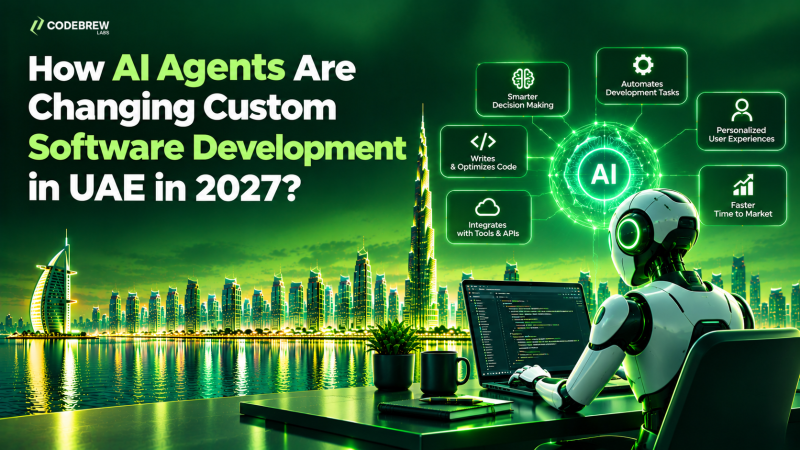
How AI Agents Are Changing Custom Software Development in UAE in 2027?
 samiksha
AI agents are changing how businesses approach software development, from automating repetitive tasks to helping teams manage complex workflows. Unlike traditional software that follows predefined instructions, AI agents can interpret information, plan steps, use connected tools, and work toward specific goals with varying levels of human supervision.
In the UAE, this shift is becoming increasingly relevant as businesses explore artificial intelligence to improve productivity, modernize operations, and deliver better digital services. A Software Development Company UAE can help businesses identify suitable AI applications, integrate agent-based workflows, and develop software solutions aligned with their operational needs.
In 2027, businesses will have more opportunities to incorporate AI agents into custom software, enterprise platforms, customer portals, and internal business applications. However, successful implementation will depend on more than adding an AI feature. Companies must identify practical use cases, protect business information, connect systems properly, and establish clear limits on what agents can do.
What Are AI Agents in Custom Software Development?
AI agents are software components that can work toward a defined objective by interpreting data, choosing appropriate actions, and interacting with connected systems. Depending on their design, they may complete individual tasks or coordinate several steps within a larger workflow.
For example, a conventional customer support system might display a list of frequently asked questions. An AI agent could interpret a customer's request, retrieve relevant information from an approved knowledge base, check an order through a connected system, and prepare a response. If the request requires approval or involves a sensitive decision, it can refer the matter to a human employee.
Custom software development makes it possible to design these agents around a company's specific operations, rules, data sources, and user requirements.
AI agents can also support the development process itself. Software teams may use agent-based tools to assist with code generation, testing, documentation, debugging, and maintenance. These are two distinct applications: using AI agents to build software and building software that uses AI agents.
Both approaches are expected to influence how businesses plan and manage digital products in 2027.
Why AI Agents Matter for UAE Businesses in 2027
Businesses across the UAE operate in competitive markets where customer expectations, operational efficiency, and digital service quality influence growth. Many organizations also manage multiple departments, customer channels, suppliers, and software platforms.
AI agents can help coordinate work across these environments when they are connected to reliable data and suitable business systems.
The UAE's focus on AI adoption adds to the relevance of this technology. Dubai has announced initiatives to encourage agentic AI adoption in the private sector, while federal initiatives have addressed its use across government operations.
For businesses, the opportunity is to identify tasks where agents can reduce delays, help employees access information, or manage routine processes. A real estate company, for example, might use an agent to organize property enquiries, while a logistics provider could explore agents for shipment updates and exception handling.
The objective should be measurable business improvement rather than adopting AI simply because it is a growing trend.
1. Automating Repetitive Business Workflows
One of the most practical ways AI agents are changing custom software development is through workflow automation.
Many businesses still rely on employees to move information between applications, review incoming requests, update records, prepare reports, or send routine notifications. These activities can consume time that employees could otherwise spend on planning, customer relationships, and more complex work.
Custom software with AI agents can help automate selected steps in these processes.
For example, an agent integrated into a business management platform could review an incoming request, classify it, retrieve relevant customer information, and direct it to the appropriate department. Another agent could prepare a summary of pending tasks or flag records that require attention.
Businesses can define approval rules so that agents handle routine actions while employees review sensitive or high-impact decisions.
The main benefit is a more organized workflow with fewer repetitive manual steps. However, automation should be introduced gradually, with clear rules and monitoring to identify errors before they affect wider operations.
2. Creating More Responsive Customer Support Systems
Customer support is another area where AI agents can add value to custom applications.
Traditional support tools often rely on fixed response scripts or require customers to navigate several menus before finding the information they need. AI agents can interpret natural-language requests and retrieve relevant details from approved business systems.
When integrated into a customer portal or mobile application, an agent might help users check an order, understand a service, find relevant documents, or submit a request. It could also collect the information required before transferring a complicated issue to a support representative.
For UAE businesses serving customers with different language preferences, Arabic and English support may be an important consideration. The selected AI models must be tested for language quality, local terminology, and the specific needs of the target audience.
Businesses should also ensure that agents do not expose private customer records or make unsupported promises. Access permissions, verified information sources, and clear escalation procedures are essential.
When implemented carefully, AI-assisted support can help customers find information more quickly while allowing support teams to focus on issues that need human attention.
3. Improving Software Development Speed and Quality
AI agents are also changing how development teams build and maintain custom software.
Developers can use AI-assisted tools to explore existing code, suggest implementations, generate test cases, identify potential defects, and prepare technical documentation. Some agent-based systems can coordinate several tasks, such as reviewing a development request, proposing code changes, running tests, and reporting the results for developer review.
These capabilities can reduce the time spent on repetitive engineering work, particularly when requirements are clear and projects are divided into manageable tasks. Industry research also indicates that organizations are increasingly exploring agentic tools across software development workflows. However, faster code generation does not automatically produce better software. AI-generated changes can contain errors, introduce security weaknesses, or misunderstand business requirements.
Developers must review important changes, run automated tests, assess performance, and check that the application meets its requirements before deployment.
For businesses hiring a custom software development company in UAE, the important question is how effectively its team combines AI-assisted development with engineering expertise, quality assurance, and accountability.
4. Connecting Different Business Systems
Many companies use separate platforms for customer management, accounting, inventory, human resources, sales, and reporting. When these systems do not communicate effectively, employees may need to enter the same information more than once or switch between applications to complete a task.
Custom software can provide a shared environment where approved AI agents retrieve information and coordinate actions across connected systems.
For instance, an agent supporting a sales team might check product availability, retrieve relevant customer details, and prepare a draft quotation using information from authorized platforms. A manager could then review the quotation before it is sent.
A logistics business might explore agents that combine shipment records, delivery schedules, and customer enquiries to help employees identify delays and determine which cases need attention.
This kind of integration requires careful planning. Different systems may use incompatible data formats, have separate access rules, or contain inconsistent records. Developers need to address these issues before allowing agents to act across multiple platforms.
A well-integrated solution can help businesses reduce information gaps and make their existing software more useful without replacing every system they already use.
5. Making Business Applications More Personalized
AI agents can help custom applications adapt their responses and recommendations to the user's needs.
In an enterprise application, an agent might summarize information relevant to a particular role, identify pending actions, or help an employee locate documents based on a natural-language request. In customer-facing applications, it could recommend relevant services or guide users through a process using their stated preferences and authorized account information.
For example, a property management platform could help users locate suitable listings based on their requirements. A business reporting application could prepare summaries of sales activity for managers who need a quick overview rather than a large collection of reports.
Personalization must remain relevant and transparent. Applications should collect only the information they need, respect user permissions, and provide ways to correct inaccurate details.
The aim is to simplify tasks and make information easier to access, not to create complicated interfaces or unnecessary automated interactions.
6. Supporting Better Business Decisions
AI agents can also assist employees by collecting information, identifying patterns, and preparing summaries that support decision-making.
A custom business application might use an agent to summarize weekly performance, highlight unusual changes in sales, or identify inventory levels that require attention. The agent could retrieve data from approved sources and explain which figures contributed to its findings.
For UAE businesses operating across retail, finance, logistics, real estate, or other sectors, this can help employees find relevant information without manually reviewing multiple reports.
Nevertheless, an AI agent should not be treated as an unquestionable source of truth. Its conclusions depend on data quality, system configuration, and the reliability of the methods used to interpret information.
Businesses should distinguish between an agent that summarizes information and one authorized to make decisions. Financial commitments, legal matters, hiring decisions, and other high-impact actions may require additional review, depending on the context.
When human expertise remains part of the process, AI agents can support faster analysis without removing responsibility from the people making the final decisions.
7. Strengthening Security and Access Management
As AI agents gain the ability to interact with business systems, security becomes a central part of custom software development.
An agent that can read customer records, update inventory, or initiate a workflow must have clearly defined permissions. Giving an agent unrestricted access can create unnecessary risks, particularly when it handles sensitive business information or performs actions without direct supervision.
A software development team should establish security controls from the beginning. These may include role-based access, encrypted data transfers, activity logs, approval requirements, and limits on the actions an agent can perform.
Businesses should also test how agents respond to misleading instructions, inaccurate information, and unexpected system behaviour. The UAE's AI Charter emphasizes responsible AI use, privacy protection, and compliance with applicable laws and agreements. Monitoring is equally important after launch. Companies need to review agent activity, investigate unusual actions, and update controls as their software and business requirements change.
Security should not be treated as a final feature added after development. It needs to be part of the architecture, testing, deployment, and ongoing maintenance process.
8. Helping Businesses Build More Scalable Software
AI agents can introduce new capabilities as business needs change. Companies may begin with a simple support agent and later expand to workflow coordination, document processing, or internal reporting.
A modular custom software architecture makes this expansion easier. Instead of building every feature into one large system, developers can separate responsibilities, connect approved services through APIs, and define how agents exchange information.
Businesses should also consider the cost of running AI agents. Usage may involve model fees, cloud infrastructure, data processing, monitoring, and ongoing evaluation. Complex workflows can require more processing than simple requests, so the expected business value should be compared with the total operating cost.
A practical approach is to start with a clearly defined use case, measure its results, and expand only when the benefits justify the investment.
How to Choose the Right Software Development Partner in UAE
Building software with AI agents requires more than selecting an AI model. Businesses need a development partner that understands software architecture, system integration, data security, testing, and the operational needs of the organization.
When evaluating a software development company in UAE, consider the following factors:
- Business understanding: Can the team identify suitable use cases and connect them to measurable business objectives?
- AI development capabilities: Can it design agent-based workflows with appropriate limits and human oversight?
- Integration expertise: Can it connect existing business applications, databases, and third-party services?
- Security practices: Does it plan permissions, data protection, logging, and risk assessment from the beginning?
- Scalability and support: Can the solution be maintained, monitored, and expanded as business needs evolve?
- Clear communication: Does the team explain costs, timelines, limitations, and expected outcomes?
Code Brew Labs, a Dubai-headquartered technology company with over 13 years of experience, supports businesses with custom software development, mobile applications, and AI-powered solutions. A development approach that begins with business requirements can help organizations identify where AI agents may offer practical value and how those capabilities can fit into their wider digital plans.
Conclusion
AI agents are changing custom software development in UAE by helping businesses automate workflows, improve customer support, connect applications, assist developers, and make information easier to use.
In 2027, the opportunity will not simply be to add more AI features. Businesses will need to identify meaningful use cases, establish strong security controls, manage operating costs, and ensure that automated actions remain reliable and accountable.
The most effective solutions will combine AI capabilities with well-designed software, dependable data, and human oversight. By choosing the right development partner and starting with clear business goals, UAE companies can build custom software that addresses practical challenges and adapts to future opportunities.
Source:
Click for the: Full Story
You might like









You Might Like this