Close Menu
 World
World
 Biography
 Health
 Education
 Business
 Lifestyle
 Sports
 Technology
 Animals
 History
 Food
Food
 Religious
 Startups
 Movies
 Politics
 Fashion
 Covid
Covid
 Diet
Diet
 Fitness
 Marketing
 Travel
 Science
 Reviews
 Social media
 Stories
 Facts
Facts
 Art
Art
 Entertainment
Ryan Joel

Business
How Crypto Wallet Development Can Support Blockchain-Based Business Models
 Ryan Joel
Businesses today are leveraging this technology for managing digital assets, transacting on blockchains and developing applications that run on decentralized networks. This, in turn, is making enterprises seek software that enables users and other enterprises access to the blockchain network. Crypto wallets facilitate this connection by offering an access layer for businesses that involves creating, managing and transacting digital assets and using d-app's.
For businesses, a wallet can be part of a larger blockchain platform or operate as an independent product. Crypto Wallet Development involves building the technical infrastructure required to manage digital assets, process blockchain transactions & connect with supported networks. The wallet's design and functionality depend on the business model, target users, and blockchain networks involved.
What Is Crypto Wallet Development?
Crypto Wallet Development is the process of creating a software solution that enables users to access and manage digital assets through blockchain networks. Wallets can be developed for different platforms, including mobile devices, web browsers, desktops & hardware devices.
A crypto wallet does not store cryptocurrency. It stores the private keys or passwords used to access the assets on the blockchain. The wallet application gives users an interface to see your balances, send and receive bitcoin, and interact with the blockchain applications.
A Crypto Wallet Development company can develop wallet solutions based on specific business requirements. These requirements may include support for selected blockchain networks, digital assets, transaction types, security controls & third-party integrations.
How Crypto Wallets Support Blockchain-Based Business Models
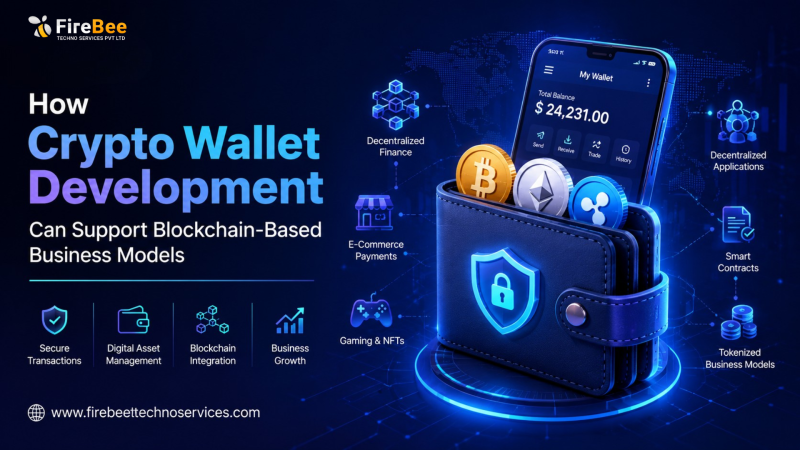
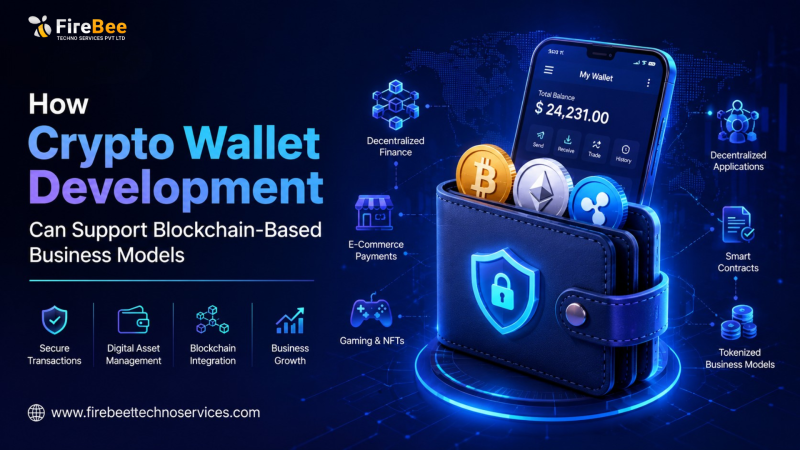
Crypto wallets can support different types of blockchain-based business models by providing access to digital assets and blockchain transactions. For example, a cryptocurrency exchange may use wallet infrastructure to manage deposits and withdrawals. A blockchain payment platform may use wallets to facilitate digital asset transfers between businesses and customers.
Wallets can also be used with decentralized applications. Users can connect their wallets to applications built on blockchain networks and authorize transactions through the wallet interface. This allows businesses to provide access to decentralized services without developing a separate account system for every application.
Businesses working with token-based models can also use wallets to allow users to receive, hold, and transfer tokens. This can apply to utility tokens, digital collectibles, and other blockchain-based assets.
A wallet can therefore represent a technological interface that interfaces a business application to blockchains for entrepreneurs. It acts in a role according to the type of digital asset/service concerned and the business model.
Key Components of a Business-Ready Crypto Wallet
A business-ready crypto wallet requires careful planning of its technical architecture and security controls. Private key management is a primary consideration because access to digital assets depends on the security of these credentials.
Blockchain network integration is another important component. A wallet may support one blockchain or multiple networks depending on the intended use case. Asset and token support should also be defined based on the requirements of the platform.
Other components may include user authentication, transaction history, wallet address management, backup and recovery options, and transaction monitoring. Businesses may also integrate wallets with payment systems, decentralized applications, exchanges, or other blockchain services.
The development approach should be based on factors such as the type of users, supported assets, transaction volume, security requirements & regulatory considerations. Crypto Wallet Development services can be structured around these requirements to create a wallet that fits a specific business application.
Future Scope of Crypto Wallets in Blockchain Businesses
The role of crypto wallets may expand as businesses continue to adopt blockchain technology. Future wallet applications may support a wider range of digital assets and blockchain networks while providing access to decentralized applications and blockchain-based services.
Wallets may also become more closely connected with digital identity, payment systems, and asset management platforms. Businesses could use these capabilities to provide users with a single interface for managing blockchain-based activities.
As blockchain applications develop, businesses will need wallet solutions that are secure, compatible with relevant networks, and suitable for their operational requirements. The focus is likely to remain on improving security, interoperability, transaction management & ease of use.
Conclusion
Cryptocurrency Wallets offer businesses with essential bridges to customers, blockchain transactions, and innovative new types of business models (digital assets, tokens, blockchains, cryptocurrencies, dApps, etc.) and business services; and a place to consolidate business services with digital assets, businesses and their relationships to clients.
For businesses considering blockchain adoption, Crypto Wallet Development can be used to build the infrastructure required for managing digital assets and interacting with blockchain networks. A suitable Crypto Wallet Development company can help define the technical architecture and develop wallet functionality according to the business's specific requirements. With a clear use case and appropriate technical planning, crypto wallets can serve as a practical component of different blockchain-based business models.
Source:
Click for the: Full Story
You might like