Close Menu
 World
World
 Biography
 Health
 Education
 Business
 Lifestyle
 Sports
 Technology
 Animals
 History
 Food
Food
 Religious
 Startups
 Movies
 Politics
 Fashion
 Covid
Covid
 Diet
Diet
 Fitness
 Marketing
 Travel
 Science
 Reviews
 Social media
 Stories
 Facts
Facts
 Art
Art
 Entertainment
Sakshi Padiyar

Education
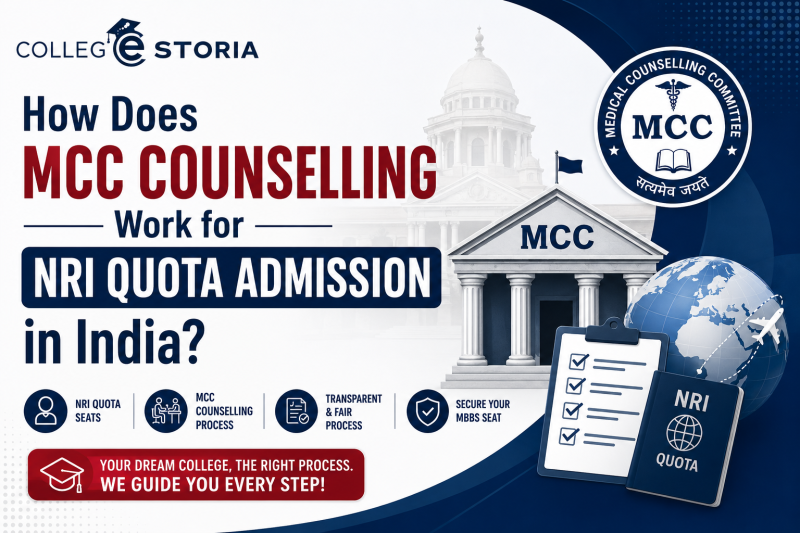
How Does MCC Counselling Work for NRI Quota Admission in India?
 Sakshi Padiyar
For students seeking NRI Quota Admission in India, understanding the counselling process is just as important as qualifying NEET UG. Every year, many eligible candidates miss out on good MBBS seats simply because they are unaware of how the Medical Counselling Committee (MCC) counselling process works.
MCC conducts centralized counselling for admission to MBBS seats in deemed universities, AIQ seats, and certain other participating institutions. Many deemed universities also offer seats under the NRI quota, making MCC counselling an important route for eligible candidates.
In this guide, you'll learn how MCC Counselling for NRI Quota Admission in India works, who can participate, the registration process, choice filling, seat allotment, and important tips to improve your chances of getting your preferred medical college.
What is MCC Counselling?
The Medical Counselling Committee (MCC) is responsible for conducting centralized online counselling for various MBBS and BDS seats across India.
For eligible NRI candidates, MCC plays an important role in admissions to deemed universities that offer NRI quota seats. Instead of applying separately to each college, candidates can register through MCC and participate in a centralized counselling process.
This makes the admission process more transparent and convenient.
Who Can Participate in MCC Counselling Under the NRI Quota?
Candidates applying for NRI Quota Admission in India through MCC generally include:
- Non-Resident Indians (NRIs)
- Overseas Citizens of India (OCI)
- Eligible NRI-sponsored candidates
- Other candidates as permitted under the applicable admission guidelines
Every applicant must satisfy the eligibility requirements announced for the respective admission year.
Is NEET Mandatory?
Yes.
Qualifying NEET UG is compulsory for every candidate seeking MBBS admission through MCC counselling under the NRI quota.
Without a valid NEET qualification, candidates cannot participate in the counselling process.
Although NRI seats have a separate category, admissions are still based on NEET eligibility and counselling rules.
Also Read:
Management Quota Admission in India
List of Top Private Medical Colleges Approved by NMC
Step-by-Step MCC Counselling Process
Understanding every stage helps candidates avoid confusion during counselling.
Step 1: Qualify NEET UG
The admission journey begins with qualifying the NEET UG examination.
Candidates should keep their scorecard and admit card ready before counselling registration begins.
Step 2: Register on the MCC Counselling Portal
Eligible candidates must complete online registration when MCC opens the counselling portal.
During registration, candidates provide:
- Personal information
- Academic details
- NEET information
- Contact details
- Category details
- Required declarations
Registration must be completed before the deadline.
Step 3: Pay the Counselling Fee
After registration, candidates are required to pay the prescribed counselling fee through the available online payment methods.
Always save the payment receipt for future reference.
Step 4: Upload Required Documents
Candidates must upload documents supporting their eligibility.
Common documents include:
- NEET Scorecard
- NEET Admit Card
- Class 10 Certificate
- Class 12 Marksheet
- Identity proof
- Passport-size photographs
- Passport of the NRI sponsor
- Proof of NRI status
- Sponsorship affidavit
- Relationship certificate
- Other documents specified by MCC
Ensure that all uploaded documents are clear and match the application details.
Step 5: Choice Filling
Choice filling is one of the most important stages of MCC counselling.
Candidates can select multiple medical colleges in the order of their preference.
Before locking choices, students should compare:
- Academic reputation
- Hospital facilities
- Infrastructure
- Clinical exposure
- Hostel facilities
- Tuition fees
- Internship opportunities
- Location
A carefully prepared preference list increases the chances of securing a suitable seat.
Step 6: Choice Locking
After reviewing the selected colleges, candidates must lock their choices before the deadline.
Unlocked choices may not be considered during seat allotment.
Therefore, always verify your list carefully before submitting it.
Step 7: Seat Allotment
MCC prepares the seat allotment list based on:
- NEET merit
- NRI eligibility
- Candidate preferences
- Seat availability
- Counselling rules
Candidates can download the allotment letter once the results are announced.
Step 8: Reporting to the Allotted College
Students allotted a seat must report to the respective medical college within the specified time.
During reporting, candidates complete:
- Original document verification
- Identity verification
- Fee payment
- Admission formalities
Failure to report on time may result in cancellation of the allotted seat.
How Many Rounds Are Conducted?
MCC counselling generally consists of multiple rounds, such as:
- Round 1
- Round 2
- Round 3
- Stray Vacancy Round (if applicable)
Candidates who do not secure a seat in earlier rounds may still have opportunities in later rounds, depending on seat availability and counselling rules.
How Are NRI Seats Allotted?
Admission under the NRI quota depends on several factors, including:
- NEET qualification
- Candidate eligibility
- Availability of NRI quota seats
- Choice filling order
- Merit among eligible applicants
- Successful document verification
A higher NEET score often improves the chances of getting a preferred college, but admission also depends on the competition and available seats.
Tips to Improve Your Chances During MCC Counselling
Proper planning can make a significant difference.
Here are a few practical tips:
- Register as soon as counselling begins.
- Keep all documents ready in advance.
- Verify NRI eligibility before applying.
- Research colleges thoroughly.
- Fill as many suitable college choices as possible.
- Lock choices before the deadline.
- Regularly check counselling announcements.
- Keep multiple copies of important documents.
Being proactive can help you avoid last-minute issues.
Common Mistakes to Avoid
Many candidates lose valuable opportunities due to simple mistakes.
Avoid these common errors:
- Missing the registration deadline
- Uploading incorrect or incomplete documents
- Forgetting to lock college choices
- Selecting colleges without proper research
- Ignoring counselling updates
- Not reporting to the allotted college within the given timeline
Staying organized throughout the counselling process can prevent unnecessary complications.
Why Understanding MCC Counselling Matters
MCC counselling is designed to provide a transparent and merit-based admission process. By understanding each stage, students can make informed decisions, prepare their documents in advance, and participate confidently in every counselling round.
Whether you are applying to a single deemed university or exploring multiple options, knowing how MCC counselling works helps you maximize your chances of securing a suitable MBBS seat under the NRI quota.
Conclusion
Understanding the MCC counselling process is essential for students planning to secure NRI Quota Admission in India. From NEET qualification and online registration to choice filling, seat allotment, and reporting, every stage requires careful planning and timely action. A well-informed approach can help you avoid common mistakes and improve your chances of getting admission to a reputed medical college.
If you are looking for expert guidance on Quota Admission in India, CollegeStoria is here to support you at every step. Our experienced admission counsellors help students with eligibility assessment, MCC counselling registration, document preparation, college shortlisting, choice filling strategies, and complete admission assistance. With transparent guidance and personalized support, CollegeStoria has helped many aspiring medical students make confident admission decisions. Get in touch with CollegeStoria today and take the next step toward your MBBS dream with trusted professional guidance.
Frequently Asked Questions (FAQs)
1. Does MCC conduct counselling for NRI quota MBBS seats?
Yes. MCC conducts centralized counselling for deemed universities and other participating institutions that offer NRI quota seats.
2. Is NEET compulsory for MCC counselling under the NRI quota?
Yes. Every candidate must qualify NEET UG to participate in MCC counselling.
3. Can I fill multiple college choices during MCC counselling?
Yes. Candidates are generally allowed to select multiple colleges according to their preferences during the choice filling process.
4. What documents are required for MCC NRI counselling?
Candidates usually need NEET documents, academic certificates, NRI sponsorship documents, passport, relationship proof, identity proof, and other documents specified by the counselling authority.
5. What happens if I don't get a seat in Round 1?
Eligible candidates may participate in subsequent counselling rounds, subject to the applicable counselling rules and seat availability.
Source:
Click for the: Full Story
You might like