Close Menu
 World
World
 Biography
 Health
 Education
 Business
 Lifestyle
 Sports
 Technology
 Animals
 History
 Food
Food
 Religious
 Startups
 Movies
 Politics
 Fashion
 Covid
Covid
 Diet
Diet
 Fitness
 Marketing
 Travel
 Science
 Reviews
 Social media
 Stories
 Facts
Facts
 Art
Art
 Entertainment
Ice Bath Dubai

Health
How Hyperbaric Oxygen Therapy Works: A Simple Guide
 Ice Bath Dubai
Hyperbaric oxygen therapy sounds complex, and the clinical literature surrounding it certainly can be. But the fundamental principle is elegantly simple, and understanding it clearly helps you make better decisions about whether HBOT is appropriate for your goals, what type of chamber to use, and what results to realistically expect.
This guide explains HBOT in plain terms — the physics, the biology, what your body actually does during a session, and why the therapy produces the health outcomes it is known for. No unnecessary jargon. No overblown claims. Just a clear, accurate explanation of how it works and what it does.
The Basic Principle: Pressure and Oxygen
Everything in hyperbaric oxygen therapy starts with one physical law: Henry's Law. Formulated by English chemist William Henry in 1803, it states that the amount of gas that dissolves in a liquid is directly proportional to the partial pressure of that gas above the liquid.
In practical terms for HBOT: when you increase the atmospheric pressure around your body and breathe oxygen-enriched air, significantly more oxygen dissolves directly into your blood — not just into hemoglobin in red blood cells, but into the plasma, the liquid portion of blood itself.
This matters because under normal conditions, hemoglobin in red blood cells carries almost all oxygen in your circulation, and it is already 95–99% saturated at sea level. You cannot meaningfully increase the amount of oxygen your hemoglobin carries by breathing more oxygen at normal atmospheric pressure — it is already nearly full. But plasma can dissolve additional oxygen under elevated pressure because it follows Henry's Law directly.
At 2.4 ATA with 100% oxygen — a standard clinical HBOT protocol — plasma oxygen concentration increases by approximately 1,000% above the normal atmospheric baseline. This plasma-dissolved oxygen travels independently of red blood cells and reaches tissues that compromised circulation struggles to supply. That is the mechanism behind everything that follows.
What Happens Inside Your Body
When you enter a hyperbaric chamber and the pressure rises, the sequence of events in your body is predictable and well-characterized.
As pressure increases, more oxygen dissolves into your plasma. This plasma oxygen moves through capillary walls into interstitial fluid and then into cells — particularly cells in hypoxic, poorly-perfused, or damaged tissues that normal circulation cannot adequately reach.
Inside cells, the elevated oxygen concentration reaches the mitochondria — the organelles responsible for cellular energy production. Mitochondria use oxygen as the final electron acceptor in the respiratory chain, and elevated oxygen availability accelerates this process, increasing ATP production rates. More ATP means more energy available for cellular repair, protein synthesis, and immune function.
The hyperoxic environment also has direct effects on inflammation. Elevated oxygen suppresses certain NF-κB-mediated inflammatory signaling pathways, reduces the production of pro-inflammatory cytokines including IL-1β and TNF-alpha, and promotes the synthesis of anti-inflammatory mediators. This is the mechanism behind HBOT's documented anti-inflammatory effects across conditions ranging from sports injuries to neurological damage.
Simultaneously, HBOT triggers the mobilization of stem cells and growth factors from bone marrow into circulation. Research published in the American Journal of Physiology found that HBOT at 2.0 ATA produced up to an 800% increase in circulating stem cell concentrations compared to baseline — a finding with significant implications for tissue regeneration and repair.
Finally, as the session ends and the chamber depressurizes, the body transitions from the hyperoxic state back to normal oxygen levels. This relative change itself triggers a secondary response — upregulation of antioxidant defense systems that persist beyond the session duration, providing sustained protective effects.
The Four Key Biological Effects
Enhanced tissue oxygenation: The primary and most immediate effect. Plasma-dissolved oxygen reaches hypoxic tissue that normal circulation cannot adequately supply — wound beds, post-surgical sites, areas of vascular compromise, and neurological tissue. This oxygenation is the foundation of HBOT's wound healing and tissue repair benefits.
Anti-inflammatory modulation: HBOT suppresses acute and chronic inflammatory pathways through multiple mechanisms. For sports recovery, this means faster clearance of exercise-induced inflammation. For chronic conditions, it means reduction of the persistent inflammatory signaling that drives ongoing tissue damage.
Stem cell mobilization: The documented increase in circulating stem cells following HBOT sessions supports regenerative processes in damaged tissue. This effect is one of the proposed mechanisms behind HBOT's benefits in neurological rehabilitation — providing regenerative cells to areas of brain or neural tissue damage.
Angiogenesis promotion: HBOT stimulates the formation of new blood vessels in previously hypoxic tissue — a process called angiogenesis. New capillaries improve long-term oxygen delivery to damaged areas, creating a sustained benefit that extends well beyond the treatment course itself. This is why diabetic wound healing responds so well to HBOT — new vascularity in previously ischemic tissue transforms the wound's healing capacity.
What Conditions Respond to HBOT
The evidence base for HBOT spans both well-established medical applications and emerging wellness and performance uses.
Medical-grade indications with strong evidence include decompression sickness in divers, carbon monoxide poisoning, diabetic foot ulcers, radiation tissue damage (osteoradionecrosis), necrotizing soft tissue infections, and chronic refractory osteomyelitis. These conditions respond through the tissue oxygenation and angiogenesis mechanisms described above.
Athletic and performance applications with growing evidence include accelerated recovery from muscle damage and soft tissue injuries, faster return to training following injury, improved cognitive performance and reduced mental fatigue, and post-concussion symptom management. These applications exploit the anti-inflammatory and mitochondrial energy production mechanisms.
Emerging applications with early-stage but promising evidence include traumatic brain injury rehabilitation, post-COVID long-haul symptom management, autism spectrum disorder, age-related cognitive decline, and general longevity and anti-aging protocols based on the stem cell mobilization and angiogenesis effects.
The Difference Between Pressure Levels
Not all HBOT is equivalent. Pressure level is the single most important variable determining the magnitude of every biological effect described above.
At 1.3 ATA — the entry level of most soft-shell home chambers — plasma oxygen concentration increases modestly. Measurable but limited biological effects. Appropriate for general wellness maintenance and mild recovery support.
At 1.5 ATA with an oxygen concentrator delivering 90–95% O2 — the practical standard for serious home wellness use — plasma oxygen concentration increases significantly. Meaningful anti-inflammatory effects, measurable stem cell mobilization, real mitochondrial energy enhancement. This is where the majority of wellness and athletic recovery benefits become clinically relevant.
At 2.0–2.4 ATA with 100% medical oxygen — the standard for most clinical medical indications — plasma oxygen concentration increases dramatically. Full stem cell mobilization, strong angiogenic stimulus, complete expression of the anti-inflammatory cascade. This is where the landmark clinical research evidence was generated.
At 3.0 ATA — used for specific conditions including decompression sickness and carbon monoxide poisoning — plasma oxygen is maximized but the risk of oxygen toxicity increases and sessions must be managed by trained clinical staff.
What a Session Actually Feels Like
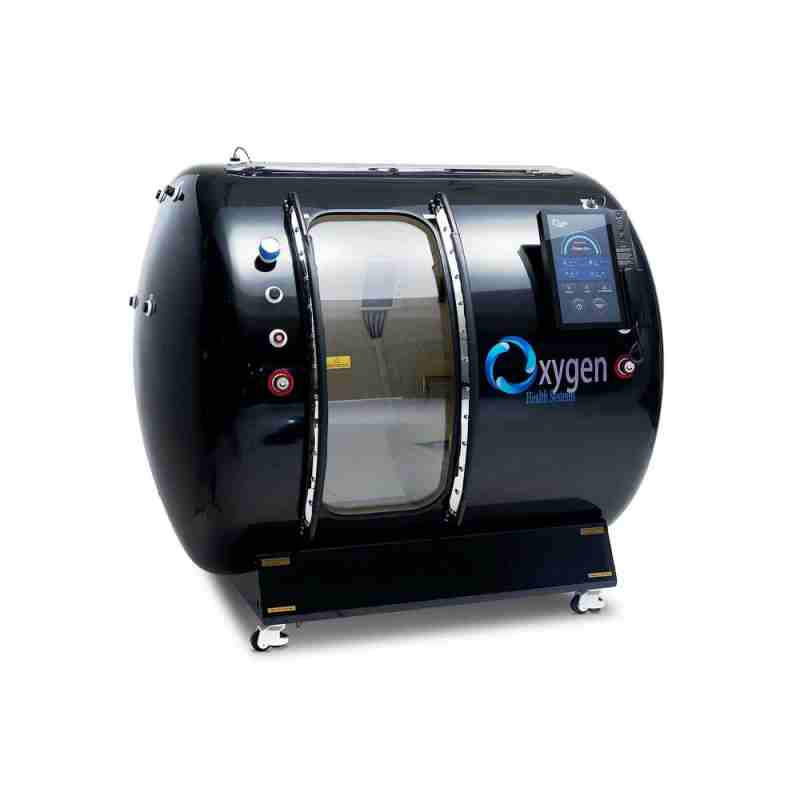
The experience of an HBOT session is frequently described as unremarkable in the best possible way. There is no pain, no discomfort beyond the ear equalization of pressurization, and no sensory experience of the therapy itself — you simply lie or sit inside the chamber and breathe.
Pressurization takes 10–15 minutes in clinical chambers, 5–10 minutes in soft-shell home units. During this phase, you may notice a feeling of fullness in your ears, identical to the sensation of an aircraft descending. Swallowing, yawning, or performing the Valsalva maneuver — gently exhaling against closed nostrils — equalizes pressure and resolves the sensation within seconds.
Once at treatment pressure, the session simply passes. Most people read, listen to audio content, sleep, or rest. Some notice a mild feeling of warmth from improved peripheral circulation. The chamber environment is quiet in quality units — 45–58 dB — and the session is frequently described as deeply restful.
Post-session, the most consistent experiences reported are a sense of mental clarity and alertness, mild physical relaxation, and — particularly after the first 5–10 sessions — progressively deeper energy levels and recovery quality.
Conclusion
Hyperbaric oxygen therapy works through mechanisms that are well-understood, physically straightforward, and biologically profound. Elevated pressure dissolves more oxygen into plasma. Plasma oxygen reaches hypoxic tissue. Cells produce more energy, inflammation resolves more completely, stem cells mobilize, and new blood vessels form in damaged areas. The pressure level determines the magnitude of every effect. Understanding this framework lets you evaluate HBOT claims intelligently, choose the right chamber and protocol for your goals, and apply the therapy with realistic and well-founded expectations. The science is solid. The application requires matching the right protocol to the right goal.
FAQs
Does HBOT hurt?
No. The only sensation during pressurization is mild ear fullness, equivalent to an aircraft descent, which resolves immediately with equalization technique.
How quickly does HBOT work?
Most users notice initial effects — improved energy, reduced soreness — within 5–10 sessions. Cumulative benefits build over 20–40 session courses.
Can I fall asleep during an HBOT session?
Yes, and many people do. Sleeping during sessions does not reduce their effectiveness — your body continues absorbing elevated oxygen regardless of consciousness level.
Is the oxygen from HBOT different from breathing pure oxygen at normal pressure?
Yes. At normal pressure, breathing pure oxygen cannot increase plasma oxygen meaningfully since hemoglobin is already nearly saturated. Only elevated pressure forces additional oxygen into plasma.
How long do HBOT benefits last after a course of treatment?
Many benefits — particularly angiogenesis and neurological regeneration — are long-lasting or permanent. Anti-inflammatory and performance benefits require maintenance sessions to sustain.
Source:
Click for the: Full Story
You might like