


 Close Menu
 World
 Biography
 Health
 Education
 Business
 Lifestyle
 Sports
 Technology
 Animals
 History
 Food
 Religious
 Startups
 Movies
 Politics
 Fashion
 Covid
 Diet
 Fitness
 Marketing
 Travel
 Science
 Reviews
 Social media
 Stories
 Facts
 Art
 Entertainment
Nelson Richard

Business
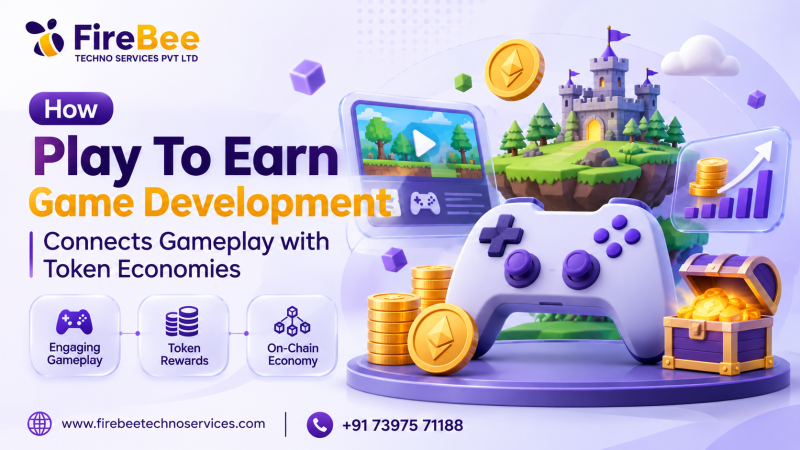
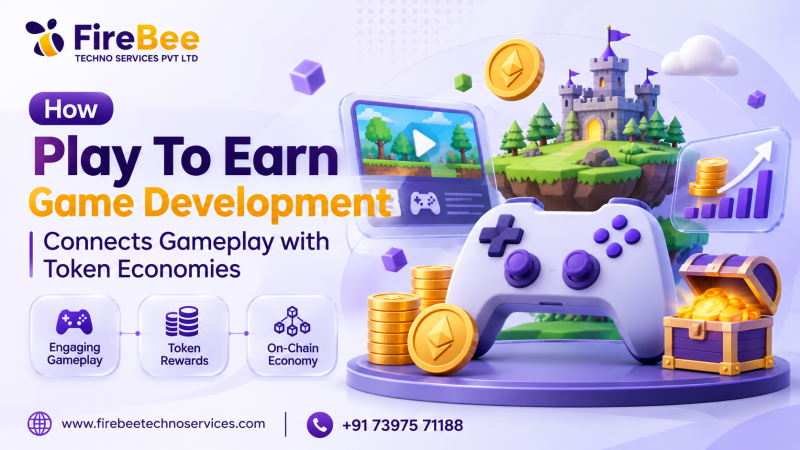
How Play To Earn Game Development Connects Gameplay with Token Economies
 Nelson Richard
Introduction
Blockchain has created a different economic role for interactive entertainment through linking ownership of in-game actions and non-fungible tokens (NFTs). While traditional gaming systems effectively kept each person's virtual achievement within that game, blockchain gaming has brought people's progress to their in-game account of transferable digital items. Play to Earn Game Development has intertwined these two with game dynamics, smart contracts, and token economics.
The Business Economics of Play to Earn Gaming Platforms
Blockchain has created a different economic role for interactive entertainment through linking ownership of in-game actions and non-fungible tokens (NFTs). While traditional gaming systems effectively kept each person's virtual achievement within that game, blockchain gaming has brought people's progress to their in-game account of transferable digital items. Play to Earn Game Development has intertwined these two with game dynamics, smart contracts, and token economics.
How Blockchain Game Economies Influence Player Participation
Game economies built on blockchain bring ownership and trading to the game. Game economies leave space for players to earn tokens through milestones or missions, acquire digital assets, or trade eligible collectibles via the marketplace, and in doing so establish an economic link to game actions.
Player participation also depends on how rewards relate to actual game progression. If token generation becomes disconnected from gameplay difficulty or resource consumption, the economy can experience inflation. P2E game development must account for player behaviour, reward frequency, asset circulation, and in-game spending patterns when defining economic rules.
Token Utility and Reward Distribution in P2E Game Development
The utility of tokens defines how the digital currencies used in the gaming platform work. There can be a set of models that can explain what the tokens are used for, like for upgrades of the characters, buying on the marketplace, tournaments, or accessing certain game features.
Reward allocation needs to be thought of the same.
Smart contracts may have set criteria for payment to ensure that when players earn entry, they get paid out accordingly. But the reward calculation depends on the game logic, players' qualification, and token reserves, which is a key element of P2E game development.
The Technical Mechanisms Behind Play To Earn Game Platform Development
A Play to Earn Game platform requires integration of game servers, blockchain network, digital wallets, and smart contract execution. One not so widely known part is Merkle Proof Verification, a functionality that will enable the platform to validate a player reward record from a much larger dataset without the need of the blockchain.
This method might also alleviate the on-chain overhead when dealing with large quantities of gameplay outcomes. Developers could keep reward records off-chain and subsequently file cryptographic proofs for on-chain validation during the distribution process.
Development choices need to prioritize blockchain actions against a playable game with clear reward reporting.
Conclusion
Connecting interactive gameplay with token economies requires more than adding cryptocurrency rewards to a gaming application. Businesses must consider economic balance, player incentives, digital ownership, reward verification, and blockchain transaction costs as interconnected parts of platform development. A clear relationship between gameplay progression and token utility forms the foundation of a functional gaming economy. Play to Earn Game Development brings these business and technical considerations together when building blockchain gaming platforms with defined economic structures.
Source:
Click for the: Full Story
You might like







You Might Like this